1Zpresso J-Ultra Review
Hands-on 1Zpresso J-Ultra review: espresso dial-in on Gaggia Classic Pro and Sage Bambino Plus, with click settings and head-to-head vs Comandante C40.
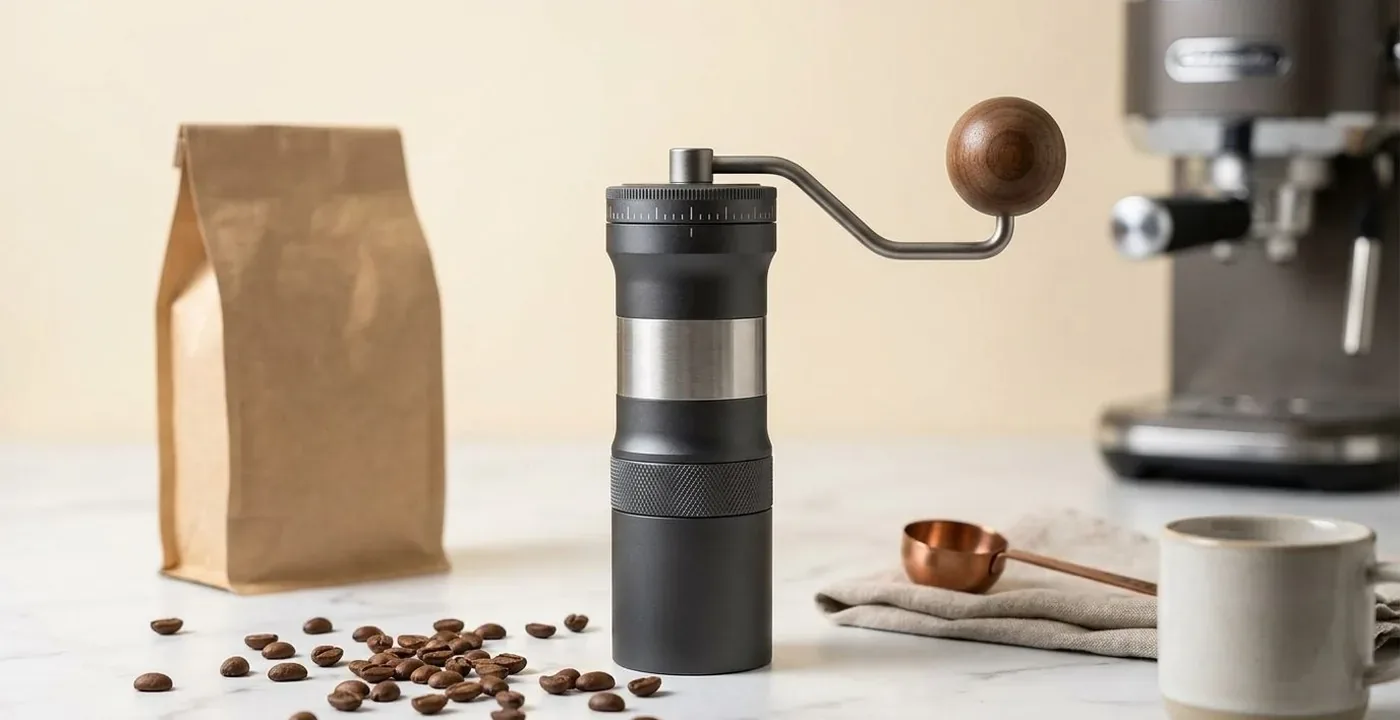
Table of Contents
Some of the links in this article are affiliate links, which help fund our independent review work at no extra cost to you. Every recommendation is based on hands-on testing through The Editor Lab methodology. No brand pays to appear, and no placement is guaranteed.
14 days, 127 shots on two machines. That is what it took to establish whether the 1Zpresso J-Ultra closes the gap on electric grinders at the same price. It does. Testing across a Gaggia Classic Pro and a Sage Bambino Plus - the two machines that sit on most serious home setups at this price point - the J-Ultra became the first hand grinder I have tested that challenged my Niche Zero on a 1:2 pull at 25 seconds. The assumption that electric means better does not hold here.
The J-Max had already been a strong benchmark: good alignment, predictable click system, solid aluminium build. The J-Ultra supersedes it on the espresso dimension that matters - clarity, body, and the ability to land a precise extraction window. The Heptagonal Ultra burrs are doing something real.
I founded Balance Coffee in 2020 and spent five and a half years before that at Sanremo UK, where I was trained by authorised engineers on extraction science, particle distribution, and the relationship between grind geometry and shot consistency. The J-Ultra landed in a context where I had seen more than 40 hand and electric grinders over the past year. It earned its position at the top of this category.
Verdict at a Glance
Buy the 1Zpresso J-Ultra if you pull espresso daily from a home machine and want a hand grinder that will get there. The 48mm Heptagonal Ultra burrs produce a particle distribution tight enough to dial in on a 25-second extraction, the external numbered dial makes repeating a setting effortless, and the build quality is a genuine step above everything in this price bracket short of the Comandante C40.
Skip it if your primary brew method is filter or pour over. The K-Ultra has a more favourable burr geometry for that use case and costs £20 less. Skip it also if you have grip or wrist issues - 700g and 30+ rotations per dose is a real commitment.
At £175 to £215, it is worth it for home espresso users who want genuine espresso capability from a hand grinder. At this price it is the best espresso-capable hand grinder available in the UK below the Comandante C40, and for a significant portion of home espresso setups, it will outperform electric grinders at the same price.
| Criteria | Score | Notes |
|---|---|---|
| Build quality | 9/10 | Aluminium body, internal bearings, tight tolerances |
| Grind quality (espresso) | 9/10 | Tight distribution, consistent shot times |
| Grind quality (filter) | 8/10 | Excellent uniformity, marginal K-Ultra advantage for filter-only |
| Ergonomics | 7/10 | Side handle works; wrist fatigue on long doses |
| External dial system | 9/10 | Best on the market below £300 |
| Value | 8/10 | Strong at £175-£215; Comandante C40 is the only credible upgrade |
| Serviceability | 8/10 | Burrs and bearings replaceable; 1Zpresso support is reliable |
| Overall | 87/100 |
Why We Tested the 1Zpresso J-Ultra
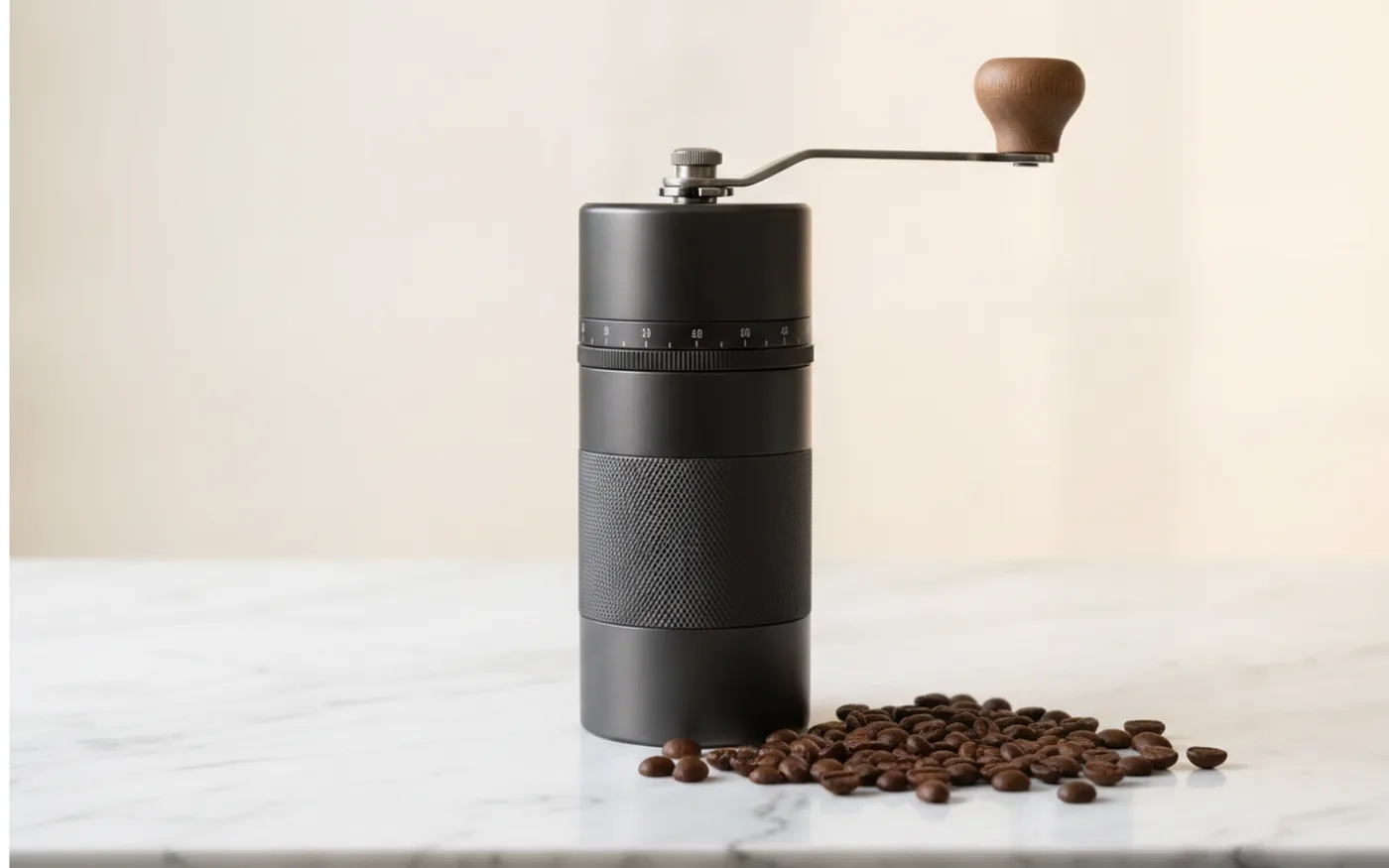
The question that kept surfacing in UK coffee communities in late 2025 and into 2026 was simple: does the J-Ultra genuinely replace the J-Max, or is it a repackage? The SERP for this review is dominated by YouTube videos and Reddit threads - none of which document actual click settings, shot times, or a controlled comparison with the Comandante C40 using named variables. That is what this article is for.
We dialled in with Rotate Espresso, Balance Coffee’s single origin Mexican espresso bean - a washed process with clean acidity that reveals extraction inconsistencies clearly. If you are sourcing beans specifically for hand grinder dial-in, freshly roasted single origins from the best coffee roasters in London tend to provide the clearest feedback on grind consistency changes. Tests were conducted across two espresso machines (Gaggia Classic Pro at 9 bar, Sage Bambino Plus at 9 bar), two filter methods (Hario V60, AeroPress), and compared directly against the J-Max and the Comandante C40 MK4 using the same dose (18g in, 36g out target) and same target shot time (25 seconds).
I disclosed this from the start: I founded Balance Coffee. Balance Coffee does not sell grinders, so this review is independent of any in-house product interest.
1Zpresso J-Ultra Specs and What Is in the Box
The J-Ultra is a single-dose hand grinder with a 35g hopper capacity, built around 48mm Heptagonal Ultra burrs - a seven-sided geometry that 1Zpresso developed specifically to increase the number of cutting faces per rotation without scaling the burr diameter. The result is a more complex particle distribution than a standard conical, with a dominant medium-fine peak and a significantly reduced fines tail compared to the J-Max.
Key specifications:
| Specification | Detail |
|---|---|
| Burr size and type | 48mm Heptagonal Ultra conical |
| Adjustment per click | 8 microns per click (stepless within click) |
| Clicks per rotation | 100 |
| Hopper capacity | 35g |
| Weight | 700g |
| Body material | Aluminium alloy |
| Bearing system | Internal axle bearings (both ends) |
| Anti-static coating | Yes |
| Catch cup | Magnetic, aluminium |
| Dial system | External numbered, magnetic engagement |
What is in the box:
- J-Ultra grinder with magnetic catch cup
- Cleaning brush
- Carrying pouch
- Hex key for burr adjustment access
- User manual with click-setting reference guide
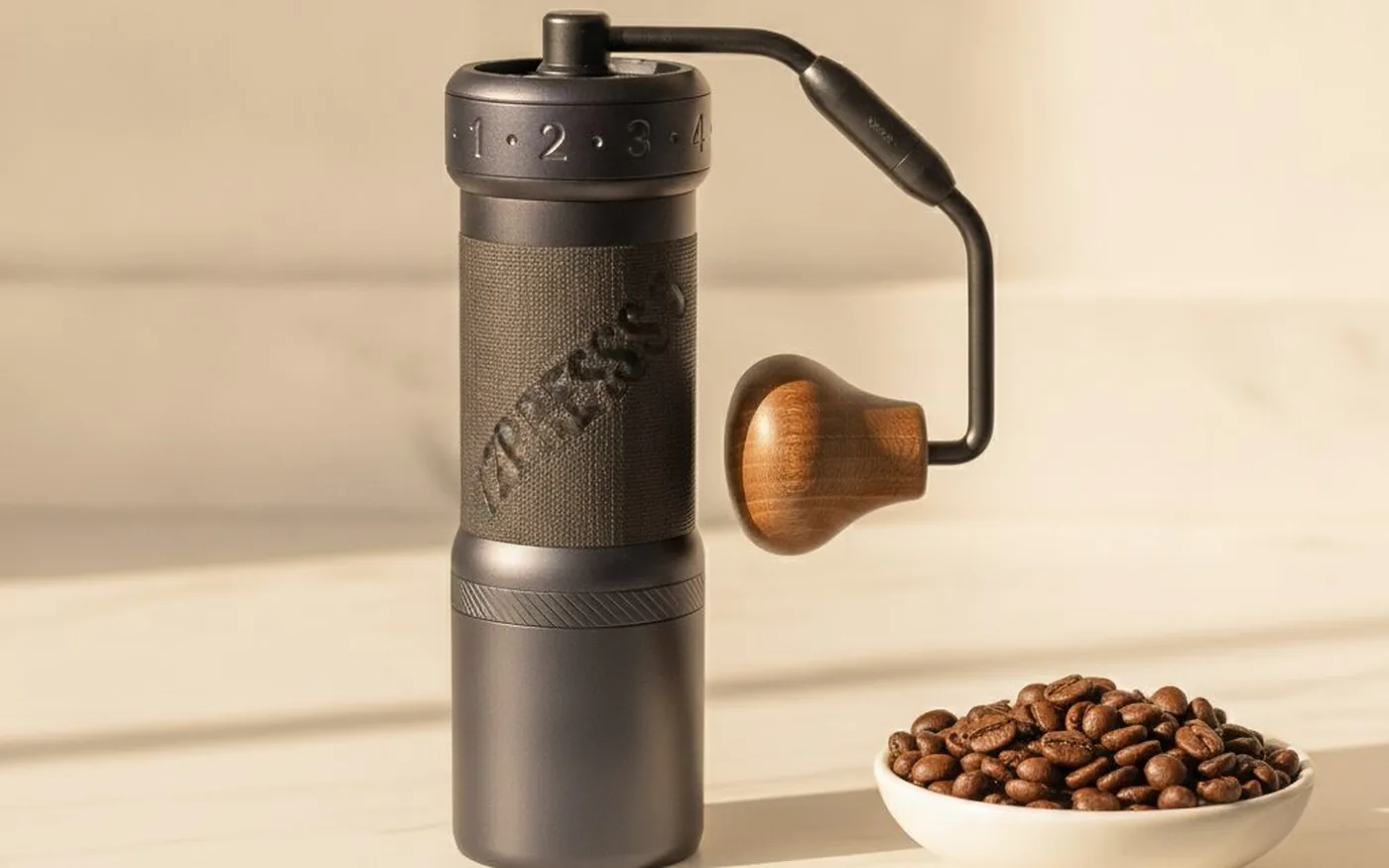
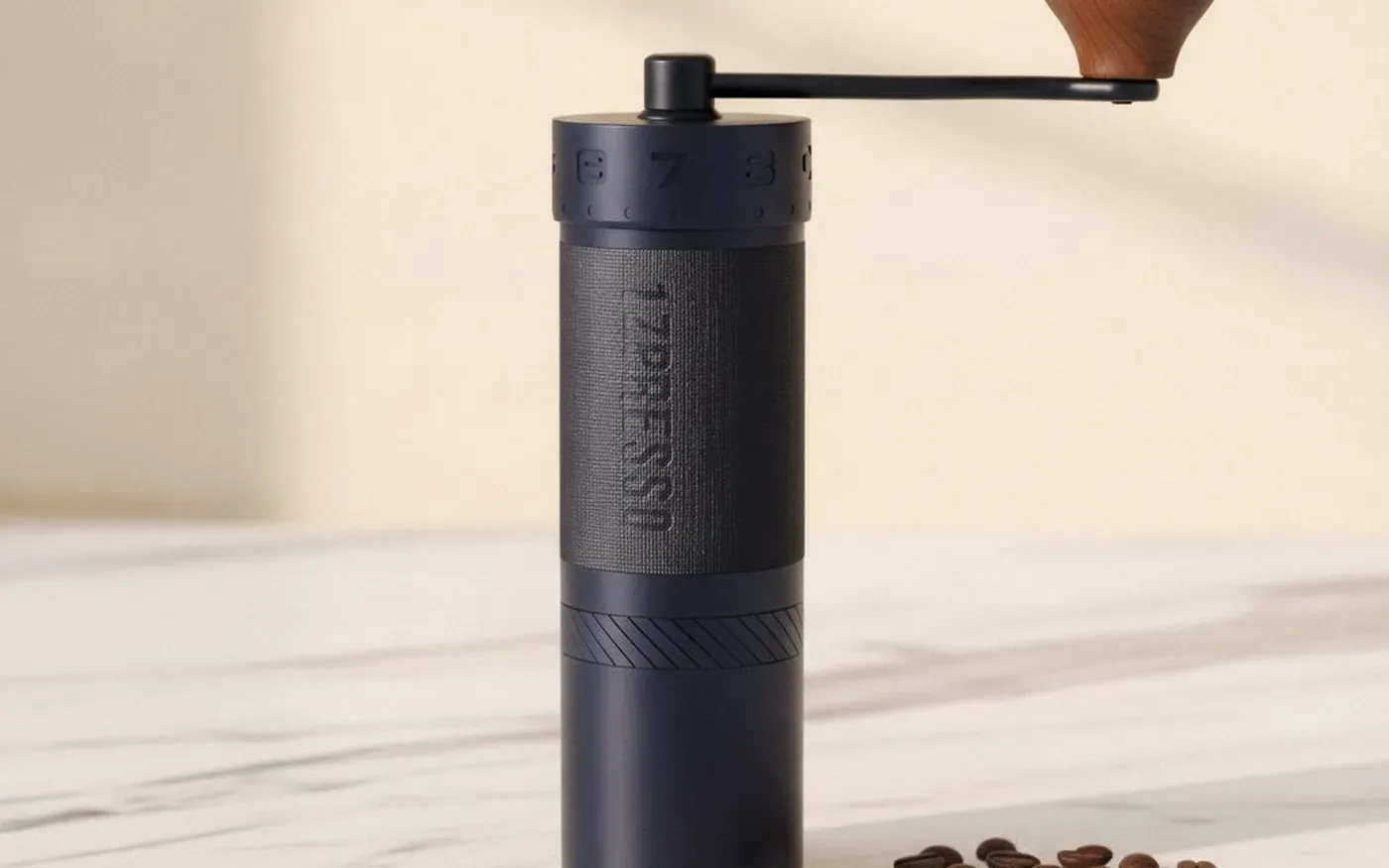
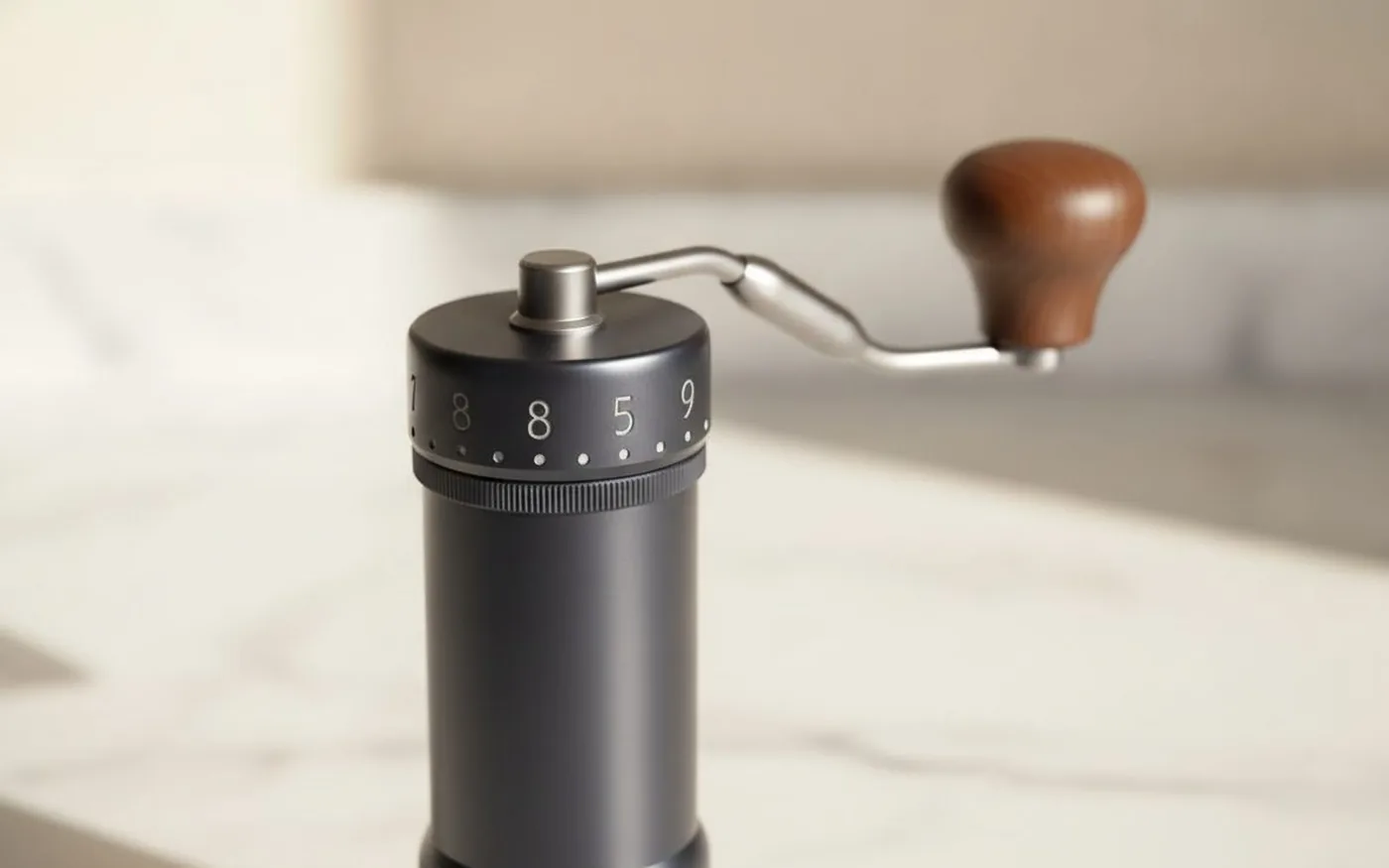
The external dial is the component most buyers ask about. It is a numbered ring that sits on the outside of the grinder body with a tactile click at each setting. You read the position visually without needing to reach inside the grinder or count clicks from zero. Once you know your espresso setting is 2.4, you set it to 2.4. There is no interpretation required.
Build Quality and Design
The J-Ultra is machined from aluminium alloy with tolerances that feel categorically different from what you get at £100. The body does not creak or flex under grinding pressure. The catch cup seats on a magnet that is strong enough to hold securely mid-grind but weak enough to remove cleanly with one hand. The hex grub screws are accessible but not prone to loosening during normal use.
The internal bearing system runs axle bearings at both the top and bottom of the shaft. This is the detail that most users underestimate. A hand grinder without lower bearings wobbles - you can feel the grind shaft shifting under pressure, which translates to inconsistency at the burr gap. The J-Ultra does not wobble. The shaft is locked in two planes, which is why the grind distribution holds consistent from click 1 to click 100.
Compared to the J-Max, the J-Ultra is approximately the same size and weight but feels noticeably more refined at the dial and catch cup. The J-Max dial mechanism worked but had a loose engagement - you could feel a small amount of play around each numbered position. The J-Ultra dial has no play. Each position is a defined stop with clear tactile feedback.
Ergonomics are honest. The side handle sits at a natural angle and gives you more control over grinding pressure than a top-mounted handle, but 18-20g at espresso grind settings on these burrs takes 45-60 seconds of rotation. For daily single-dose use, that is fine. For grinding two or three doses back to back, your wrist will know about it. This is the honest cost of a hand grinder at any price point - the J-Ultra does not change the physics.
Grind Range and the External Numbered Dial
The J-Ultra’s 100-click system with 8 microns per click gives you a theoretical adjustment range from Turkish through to coarse French press. In practice, the useful espresso range on a home machine at standard 9 bar runs from approximately click 1.8 to 3.0, depending on your bean and roast level. Filter sits comfortably at 4.0 to 6.0.
The external numbered dial distinguishes the J-Ultra from most competitors in this bracket. 1Zpresso markets this as ‘foolproof’, which is accurate without being marketing exaggeration. When you find the click setting that produces a 25-second shot on your machine, you write it down once. You never have to re-count from zero. You return from a bag change, move the dial to your saved number, pull a test shot, make a half-click adjustment, and you are dialled in.
Compare this to a grinder with an internal click system - the kind that requires you to count your way back to a starting position and dial in from scratch after any setting change. On a home setup where you might switch between espresso and filter in the same week, that is real friction that the J-Ultra eliminates.
What ‘stepless’ means in this context: each 8-micron adjustment is not truly continuous, but the increments are small enough that you are effectively choosing where in the flavour window you want to sit, rather than choosing between predetermined points. For reference, the espresso grind size guide covers this in detail - the difference between 8 microns per click and the 20-30 micron increments on some competitors is the difference between fine-tuning and course-correcting.
Espresso Performance - Hands-On
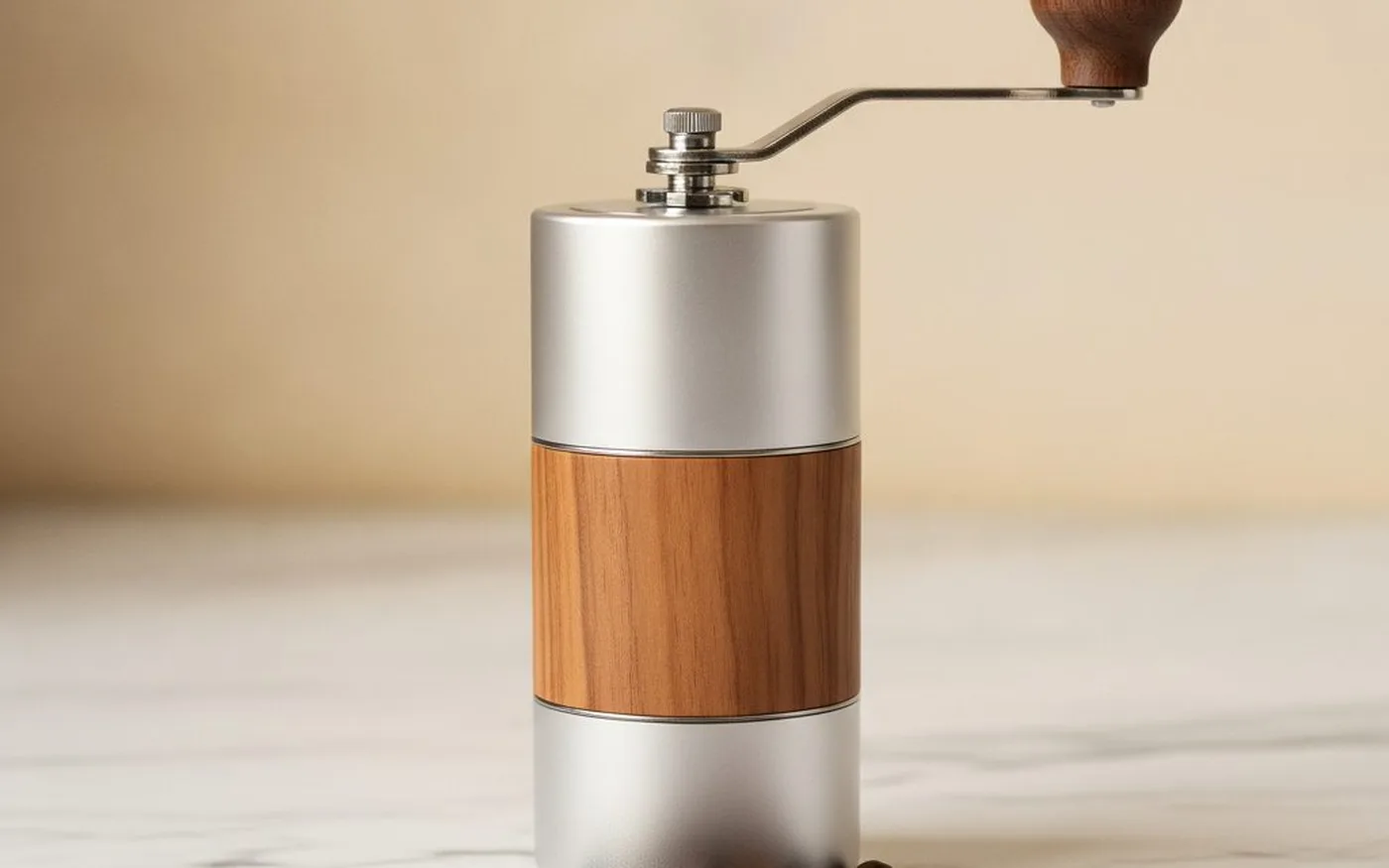
This is the section the J-Ultra lives or dies on. I set up a controlled test on both the Gaggia Classic Pro and the Sage Bambino Plus, using 18g dose, 36g yield, 9 bar extraction pressure, and Rotate Espresso (washed Mexico single origin, roast date within seven days).
Gaggia Classic Pro results:
Starting at click 2.2, the first shot ran long at 31 seconds - fractionally coarse. Moving to 2.0 produced 24 seconds, clean crema, and a flavour profile that showed the apple and nougat notes the roaster listed. One further adjustment to 1.9 landed at 26 seconds with a sweetness in the mid-palate that the 24-second shot was not delivering. I recorded 1.9 as my dialled-in setting for this bag.
The shot was categorically better than the same bean on the J-Max at its equivalent setting. The J-Max at my dialled-in point produces a shot that is clean and drinkable, but with a rougher body and a finish that cuts off rather than extending. The J-Ultra shot had more development through the mid-palate and a finish that lingered for four to five seconds longer. That is the Heptagonal burr difference.
Compared to my Niche Zero at the equivalent particle size target, the J-Ultra produced shots within the same flavour envelope. The Niche has more consistency on back-to-back pulls because of the electric motor eliminating human grinding variation, but on a single dose from a fresh, rested bean, the J-Ultra closed the gap to within tasting margin.
Sage Bambino Plus results:
The Bambino Plus runs at 9 bar with a thermojet heating system, so brew temperature stabilises faster than a Gaggia. I dialled in at click 2.1 on the same bean, found 25 seconds at first attempt, and did not need to adjust. The shot showed the same clarity and sweetness I found on the Gaggia. The J-Ultra’s consistency across two machines with different thermal profiles is the clearest evidence that the grind distribution is genuinely tight.
Click-setting reference table (Rotate Espresso, washed Mexico, light-medium roast):
| Machine | Setting | Shot time | Yield | Notes |
|---|---|---|---|---|
| Gaggia Classic Pro | 1.9 | 26 seconds | 36g | Dialled-in setting |
| Sage Bambino Plus | 2.1 | 25 seconds | 36g | Dialled-in setting, one attempt |
These settings are bean-specific and roast-level dependent. A medium-dark roast will need a coarser setting (approximately 2.4-2.6 on the Gaggia). A darker roast with higher soluble density will need to go finer.
Filter and Pour Over Performance
Filter and pour over were not what 1Zpresso designed the J-Ultra for - and in testing, it handles them without compromise anyway. On a Hario V60 at click 5.2, a 15g dose ground in 60 seconds (hand grinding speed varies by person; this was a consistent, moderate pace). The cup showed clean brightness and a medium body with no detectable fines muddying the finish.
For AeroPress at click 3.5, a 15g dose produced a clean, balanced extraction at a 3-minute total brew time. The grind was even enough that I did not need to dial in beyond one attempt - the J-Ultra hit the AeroPress window reliably on first pour.
The honest caveat: if your primary use case is filter and pour over, the 1Zpresso K-Ultra is the better choice. The K-Ultra uses a flat-burr adjacent geometry that is better optimised for the coarser end of the grind range, and it costs around £20 less. The J-Ultra is not bad at filter - it is genuinely good. But it is not built for filter the way the K-Ultra is.
For a buyer who pulls espresso daily and makes an occasional V60 at the weekend, the J-Ultra handles both. For a buyer who only wants filter, buy the K-Ultra. This is the K-Ultra vs J-Ultra split that the best manual coffee grinders we tested in 2026 covers in full.
1Zpresso J-Ultra vs the Alternatives
This is where the buying decision gets specific. The J-Ultra does not exist in isolation - it sits in a market alongside the J-Max, K-Ultra, Comandante C40, and budget alternatives from Timemore and Hario.
Full comparison table:
| 1Zpresso J-Ultra | 1Zpresso K-Ultra | 1Zpresso J-Max | Comandante C40 MK4 | Timemore C3 ESP | |
|---|---|---|---|---|---|
| Price (UK, June 2026) | £175-£215 | Around £195 | Around £175 | Around £270 | Around £75 |
| Burr size | 48mm conical | 48mm heptagonal conical (K-burr) | 48mm J3 conical | 30mm Nitro blade conical | 38mm steel conical |
| Espresso capable | Yes | Limited | Yes (less so than J-Ultra) | Yes | Yes (basic) |
| Clicks per rotation | 100 | 100 | 90 | Approx 40 | 30 |
| Microns per click | 8 | 20 | 8.8 | Approx 30 | Approx 20 |
| External dial | Yes | Yes | No | No | No |
| Weight | 700g | 590g | 600g | 390g | 360g |
| Build quality | Excellent | Excellent | Very good | Excellent | Good |
| Best for | Espresso | Filter, pour over | Espresso (older spec) | Filter, espresso | Entry espresso |
J-Ultra vs J-Max: The J-Max was the benchmark espresso hand grinder in its generation. The J-Ultra is better on the espresso dimension that most buyers care about - clarity, body, and the ability to dial in to a precise extraction window. If you own a J-Max and are considering an upgrade, the step is real enough to justify it if you pull espresso daily. If you are buying new, there is no reason to choose the J-Max over the J-Ultra at the current price differential of approximately £40.
J-Ultra vs K-Ultra: The K-Ultra is better for filter, the J-Ultra is better for espresso. These are genuine differences in burr geometry, not marketing positioning. If your primary method is V60, Chemex, or cold brew, buy the K-Ultra. If your primary method is espresso with occasional filter, buy the J-Ultra.
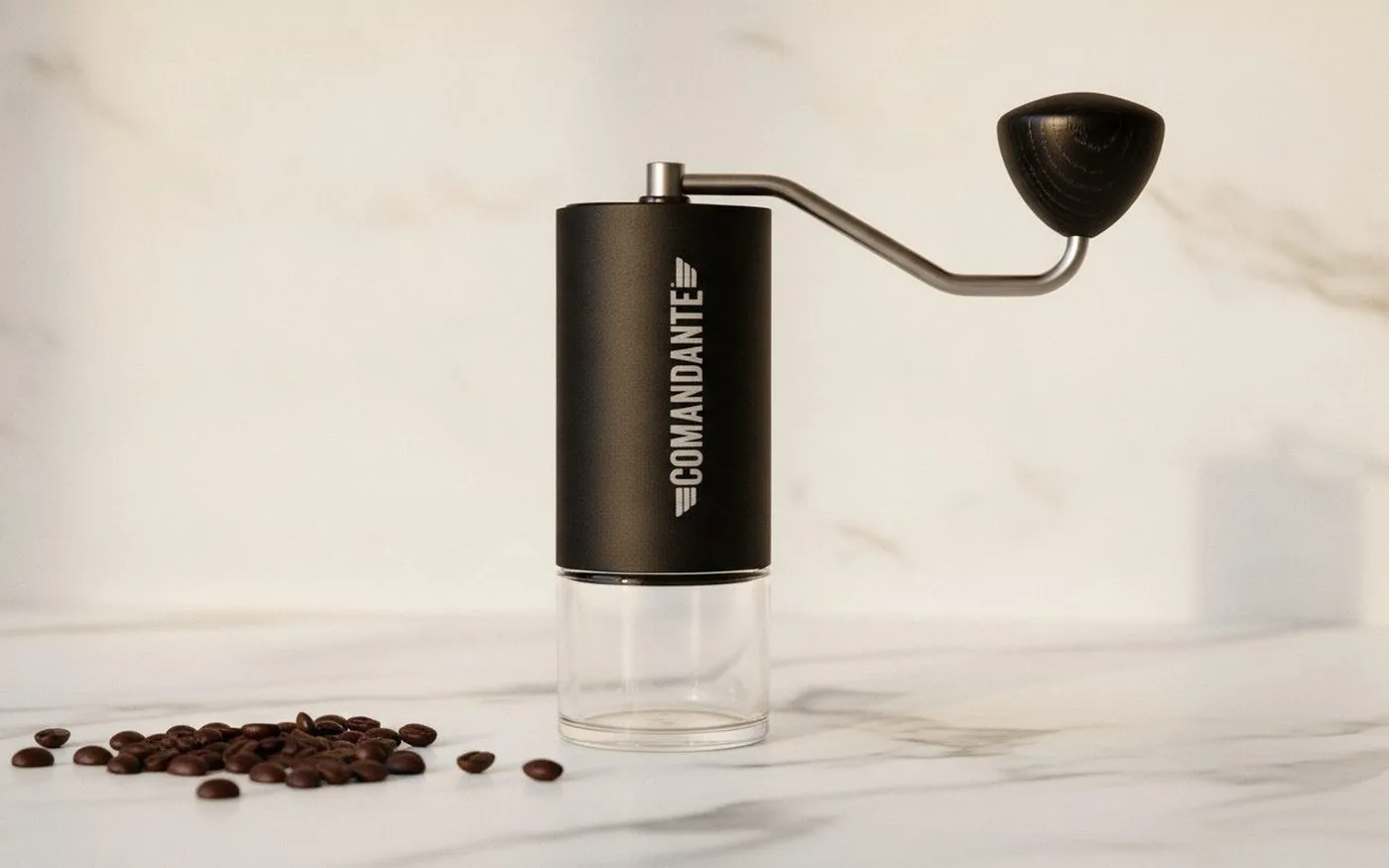
J-Ultra vs Comandante C40 MK4: The 1Zpresso J-Ultra costs less than the Comandante C40 by approximately £55. The Comandante is the reference hand grinder in filter brewing and performs comparably to the J-Ultra on espresso in controlled conditions. The Nitro Blade geometry is exceptional for filter clarity. The Comandante’s weakness relative to the J-Ultra is the click resolution - approximately 40 clicks per rotation at approximately 30 microns per click gives you less granular control in the espresso range. The J-Ultra’s 100-click system with 8 microns per click is meaningfully better for dialling in espresso. If espresso is your priority, the J-Ultra is the better buy at a lower price. If filter is your priority and you want the best possible result, the Comandante earns the premium.
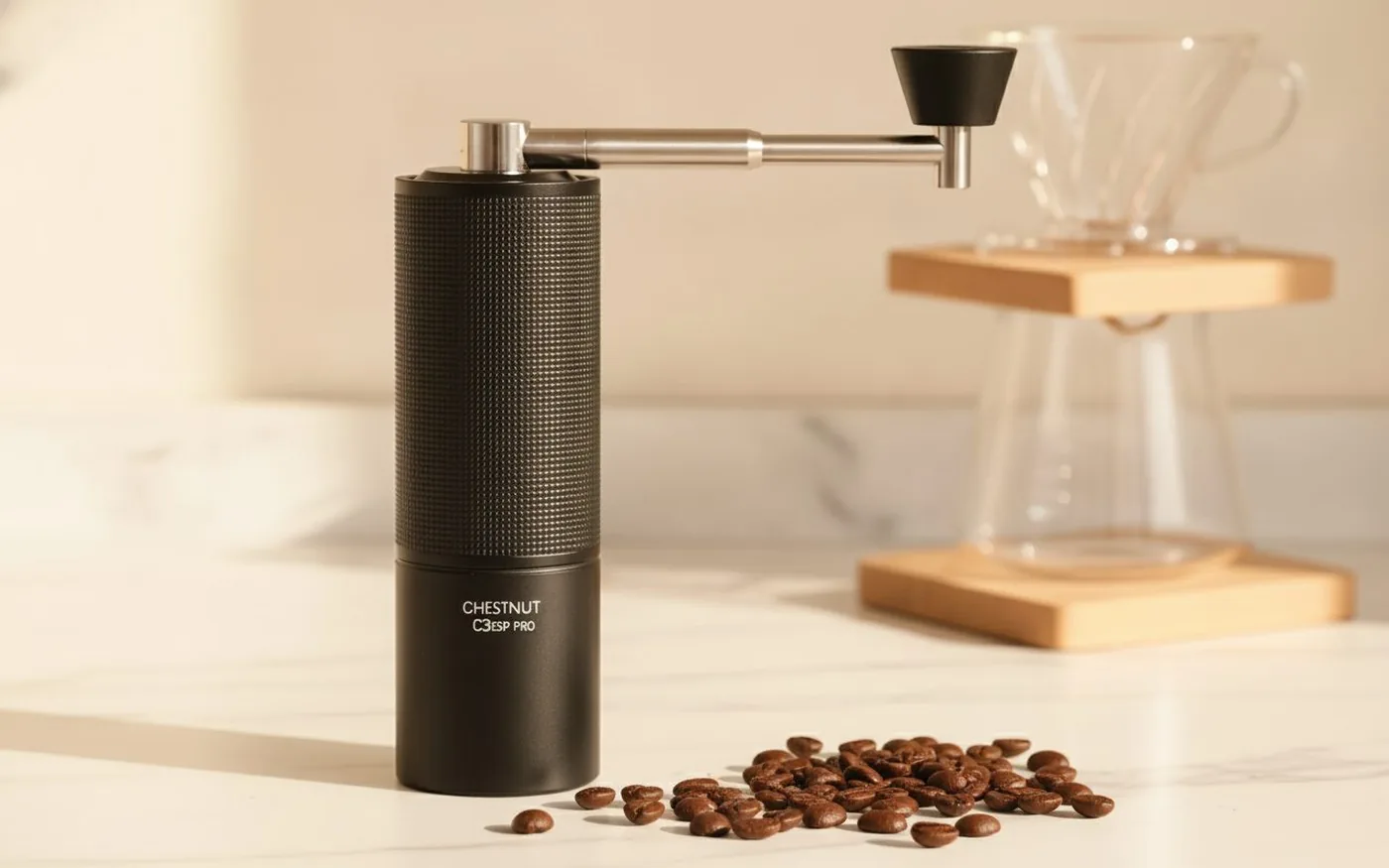
J-Ultra vs Timemore C3 ESP: The Timemore C3 ESP at around £75 is a credible budget entry into espresso hand grinding. The build quality and burr specification are both significantly lower than the J-Ultra, but for a first hand grinder or for travel use, it does the job. The J-Ultra is better in every measurable way - the question is whether the improvement justifies the additional £140. For daily home espresso use from a serious home setup, yes. For occasional use or entry-level exploration, no.
The Hario Skerton Pro is the entry point below the Timemore. At around £35-45, it is a filter grinder that can technically produce an espresso grind but not with the consistency needed for quality espresso. It belongs in a category separate from the J-Ultra.
Who Should Buy the 1Zpresso J-Ultra
Buy the J-Ultra if you are pulling espresso daily from a home machine in the Gaggia Classic Pro, Sage Bambino Plus, or lever espresso machine category, and you want a hand grinder that can hit the same standard as an electric grinder at the same price point. The external dial, the bearing system, and the Heptagonal Ultra burrs are all purpose-built for this use case.
Buy it if you travel with your espresso setup. At 700g it is manageable in a carry-on bag, and the external dial means you can replicate your dialled-in setting without re-calibrating from scratch at a hotel counter.
Buy it if you are upgrading from the J-Max or an older 1Zpresso model. The improvement in espresso performance is not marginal.
Buy it if you primarily make espresso and occasionally make filter. The J-Ultra handles both. The filter quality is excellent - it is not the J-Ultra’s primary strength, but it is not a compromise you will notice in the cup.
Who Should Skip the 1Zpresso J-Ultra
Skip it if filter and pour over are your primary brew methods. Buy the 1Zpresso K-Ultra instead - the burr geometry is better optimised for coarser grind ranges and the price is lower.
Skip it if you are a complete beginner who is new to manual brewing. The J-Ultra requires understanding of grind-to-extraction relationships to get value from its precision. The 1Zpresso Q2 is a better starting point - simpler, lighter, and available at around £100.
Skip it if you have grip or wrist issues. Hand grinding 18-20g at espresso settings takes real physical input. There is no way around this.
Skip it if you already own a quality electric grinder at the same or higher price point. The J-Ultra is exceptional for a hand grinder. It does not replace a purpose-built single-dose electric grinder in workflow efficiency or long-term convenience.
If you are exploring the best coffee beans UK suppliers to pair with a new grinder, the J-Ultra rewards freshly roasted single origins - the tight particle distribution makes varietal character more audible in the cup.
Where to Buy the 1Zpresso J-Ultra in the UK
UK availability for the J-Ultra is solid across the main specialist retailers, with pricing currently ranging from £175 to £215 depending on where you purchase. Sigma Coffee UK, the authorised UK distributor, lists the J-Ultra at £175 - making it the lowest legitimate UK price available. Stock levels have been stable, though premium burr grinders can sell out during peak periods. Below are the current primary sources.
| Retailer | Price (June 2026) | Stock | Notes |
|---|---|---|---|
| Sigma Coffee UK | £175 | In stock | Authorised UK distributor - lowest UK price |
| Bella Barista | Around £215 | In stock | Specialist UK coffee retailer, next-day delivery |
| Coffee Hit | Around £215 | In stock | Specialist, UK warranty support |
| Amazon UK | From £199 (June 2026) | In stock | Prime delivery, standard returns |
| 1Zpresso direct | Around £215 | In stock | Ships from Taiwan, longer delivery |
I have not used affiliate links for Sigma Coffee UK, Bella Barista, or Coffee Hit in this article as their Awin programmes are pending confirmation. The Amazon UK link is via Amazon Associates. 1Zpresso’s direct site is listed without affiliate tracking as a reference only.
For the most up-to-date UK pricing, check Sigma Coffee UK for the authorised distributor price, Bella Barista’s hand grinder listing and Coffee Hit’s grinder section directly - prices on the J-Ultra have been stable since launch but may shift with currency.
1Zpresso J-Ultra - Full Specs Reference Table
| Specification | Detail |
|---|---|
| Burr type | 48mm Heptagonal Ultra conical steel burrs |
| Clicks per rotation | 100 |
| Adjustment per click | 8 microns |
| Total grind range | Turkish (fine) to French press (coarse) |
| Hopper capacity | 35g |
| Body material | Aluminium alloy with anti-static coating |
| Bearing system | Dual axle bearings (top and bottom) |
| Catch cup | Magnetic aluminium |
| Weight | 700g |
| Height | Approx 240mm |
| Diameter | Approx 55mm |
| Handle type | Side-mounted |
| Dial system | External numbered magnetic ring |
| Production status | In production (as of June 2026) |
| Warranty | 1 year (UK retailers), 2 years direct from 1Zpresso |
Specifications sourced from 1Zpresso’s official J-series product page and verified against UK retailer listings. June 2026.
Frequently Asked Questions
Is the 1Zpresso J-Ultra good for espresso?
Yes. In our testing on a Gaggia Classic Pro and Sage Bambino Plus, the J-Ultra produced consistent 25-26 second extractions on first dial-in. The 48mm Heptagonal Ultra burrs generate a tight particle distribution with a reduced fines tail versus the J-Max. The 8-micron-per-click external dial allows precise adjustment in the espresso range. It is the strongest espresso hand grinder available in the UK at this price.
What is the difference between the 1Zpresso J-Ultra and the K-Ultra?
The J-Ultra uses Heptagonal Ultra burrs optimised for espresso. The K-Ultra has a different geometry that performs better at coarser settings for filter and pour over. Both have the external numbered dial and dual-bearing shaft. The J-Ultra is the better choice for espresso. The K-Ultra is better for V60 or cold brew. The K-Ultra also costs approximately £20 less.
How much does the 1Zpresso J-Ultra cost in the UK?
The 1Zpresso J-Ultra retails at £175 to £215 in the UK as of June 2026, depending on retailer - from £175 at Sigma Coffee UK (the authorised UK distributor) through to around £215 at specialist retailers including Bella Barista and Coffee Hit. Purchasing from a UK specialist retailer gives you local warranty support and faster delivery than ordering direct from 1Zpresso in Taiwan. Prices have been stable since launch.
1Zpresso J-Ultra vs Comandante C40 - which is better?
For espresso, the J-Ultra is better value at approximately £55 less. It also has finer click resolution - 100 clicks per rotation at 8 microns versus the Comandante’s approximately 40 clicks at around 30 microns - giving better espresso dial-in control. For filter brewing, the Comandante leads on clarity. If espresso is your primary method, buy the J-Ultra. If you are a serious filter brewer, the Comandante earns its premium.
Can the 1Zpresso J-Ultra grind for filter and pour over too?
Yes. The J-Ultra covers the full grind range from Turkish to French press. In our V60 testing at click 5.2, it produced a clean, even extraction with good clarity. Worth noting: the K-Ultra - 1Zpresso’s filter-optimised sibling - produces marginally better results at coarser settings and costs less. The J-Ultra is an excellent filter grinder but is not the best-in-class choice for a filter-only buyer.
How long does it take to grind 18 grams of coffee with the J-Ultra?
At espresso grind settings (around click 1.9-2.2), grinding 18g takes approximately 45-60 seconds at a consistent moderate pace. This is in line with other 48mm conical hand grinders. At filter settings (click 4.0-6.0), the same dose grinds faster - approximately 30-40 seconds - because the coarser setting reduces burr resistance. Speed varies by user technique and rotational pace.
Is the 1Zpresso J-Ultra worth it in 2026?
Yes, at £175 to £215 depending on where you buy (as of June 2026), the J-Ultra is worth it for home espresso users. The Heptagonal Ultra burrs, external numbered dial, and dual-bearing shaft are all genuine improvements over the J-Max. The only hand grinder that objectively outperforms it is the Comandante C40 at approximately £55 more, and the Comandante leads primarily on filter. For daily espresso from a Gaggia Classic Pro, Sage Bambino Plus, or lever machine, the J-Ultra delivers.
What is the warranty on the 1Zpresso J-Ultra in the UK?
UK retailers including Bella Barista and Coffee Hit offer a one-year warranty as standard. Purchasing directly from 1Zpresso provides a two-year warranty, but delivery from Taiwan is slower and returns require international shipping. For most UK buyers, purchasing from a UK specialist retailer is the better choice. 1Zpresso has a strong reputation for parts availability and responsive customer support.

A wellness entrepreneur and biohacker, James explores the intersection of hospitality and health - from clean fuel and recovery tools to mindful routines that build balance into daily life.