Sage Smart Grinder Pro Review: Honest 2026 Verdict After 60 Days of Use

Coffee & Wellness Writer
Sixty days, two hundred shots. The definitive verdict on whether the Smart Grinder Pro earns its place at £200.
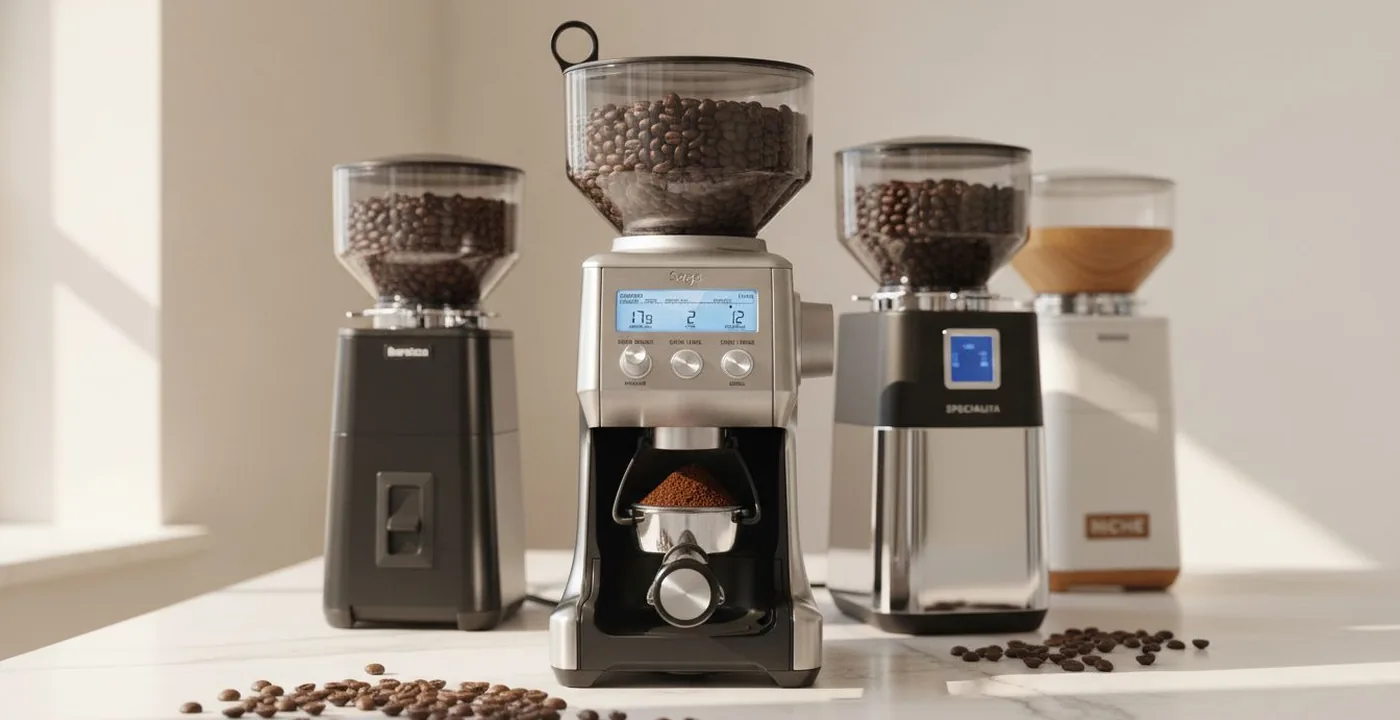
Table of Contents
Some of the links in this article are affiliate links, which help fund our independent review work at no extra cost to you. Every recommendation is based on hands-on testing through The Editor Lab methodology. No brand pays to appear, and no placement is guaranteed.
At £200, the Sage Smart Grinder Pro sits in the most contested band of the grinder market - above hand grinders, below the Eureka Mignon range, squarely in the sightline of anyone who has just bought a Bambino Plus and is doing the maths on what to put alongside it. In the UK home espresso market, that gap swallows more first-time grinder budgets than any other price point. I have spent sixty days pulling shots through it in our cafe environment, dialling in across espresso and filter, and running it against two of its natural competitors. Here is what I found.
I test every piece of equipment through The Editor Lab, our structured evaluation framework covering grind consistency, retention, dose accuracy, and daily usability. The results below come from that process, not from a single afternoon with the machine.
I founded Balance Coffee in 2020 after spending the previous five and a half years with Sanremo UK - one of Italy's leading espresso machine manufacturers. In that role I was trained directly by Sanremo engineers on grind distribution, PID temperature control, and extraction mechanics, and I spent those years visiting close to three hundred roasteries across the UK. I now run a Niche Zero at home, which gives me an honest reference point when I am testing grinders at a different tier. When I tell you what the Smart Grinder Pro gets right and where it falls short, that assessment comes from seeing how these machines perform across a professional range, not from reading spec sheets.
Verdict in 30 Seconds
For most people pairing this with a Bambino Plus or similar prosumer machine, it is the right call at £200. It dials in reliably, produces enough consistency to pull decent shots, and the dose-by-weight or dose-by-time options make daily use genuinely easy. At around £200, it sits in a gap in the UK market: cheaper than the Eureka Mignon Specialita, more espresso-capable than the Baratza Encore, and far more convenient than a hand grinder.
Rating: 7.5 / 10
Buy it if you own or are buying a Sage Bambino Plus, Barista Express, or similar prosumer machine and want a grinder that keeps pace with it without doubling the budget.
Skip it if you single-dose exclusively, grind light roasts for filter as your primary method, or your budget stretches to the Eureka Mignon Specialita (around £350-400). At that step up, the retention difference and build quality are noticeable.
What Is the Sage Smart Grinder Pro?
Model SCG820 - also sold as the Breville Smart Grinder Pro in Australia and North America - is a domestic espresso and filter burr grinder designed to pair with prosumer machines in the £200-500 range. It uses 40mm conical steel burrs, offers 60 grind settings across a broad range from French press to espresso, and provides two dosing modes: dose by time (in seconds) or dose by weight (using an optional weighing mat accessory). It sits at around £200 RRP in the UK as of June 2026, available via John Lewis, Sage Direct, Currys, and Lakeland.
For espresso, 60 grind settings sounds like plenty. In practice, espresso dialling lives in a narrow band of around 10-15 of those settings, with micro-adjustment steps available within each click. That narrower working range is worth understanding before you buy.
The grinder launched in 2013 and has seen incremental updates since. There is no 2025 hardware refresh to note - what you are buying in 2026 is the same core product that has been on shelves for a decade. That longevity is either a reassurance (the design is mature and well-supported) or a limitation (no meaningful burr upgrade in that period), depending on how you look at it.
For context on where this sits in the broader ecosystem of espresso machines under £500, the Smart Grinder Pro is designed to complement rather than replace the grinder built into the Barista Express - it is a step up for those who want a standalone grinder separate from their machine.
Build, Design and Footprint
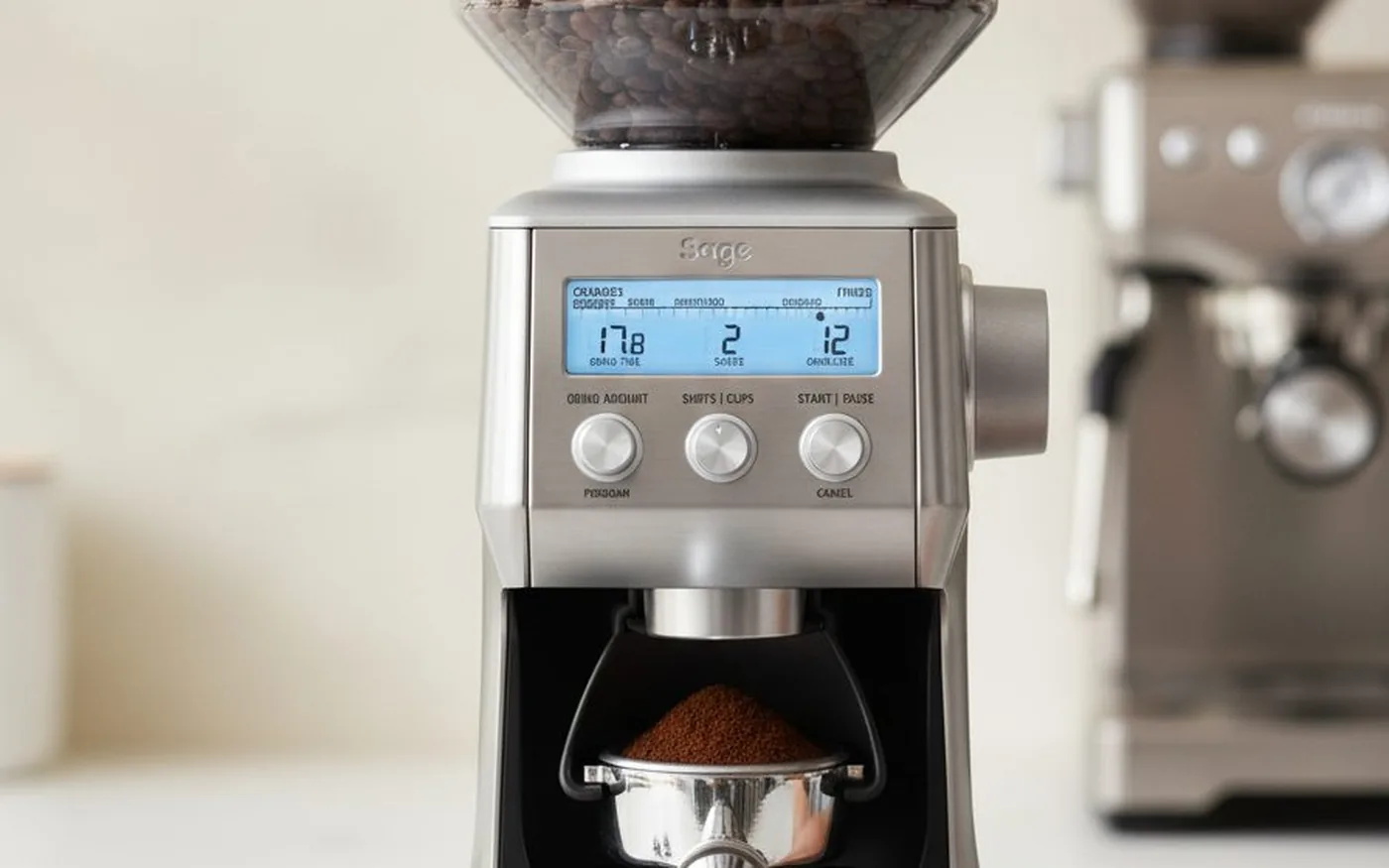
Compact is the right word for this grinder. At roughly 17cm wide, 25cm tall, and 32cm deep, it fits comfortably under most kitchen cabinets. The hopper holds 450g of beans. The housing is brushed stainless on the front panel with plastic sides - it does not feel as premium as the Eureka Mignon range, but it is built with enough heft that it sits firmly on the counter and does not walk during grinding.
The grounds bin holds around 230g. It attaches magnetically and seals reasonably well. The digital display shows grind time (in 0.2-second increments) or weight target, and the interface is clear enough that you do not need the manual after a day or two.
Noise sits at around 70-75dB during operation - not quiet, but not louder than most domestic grinders in this class. Finer espresso settings push into the 77-78dB range. If you grind early in the morning in a flat with thin walls, it will be heard.
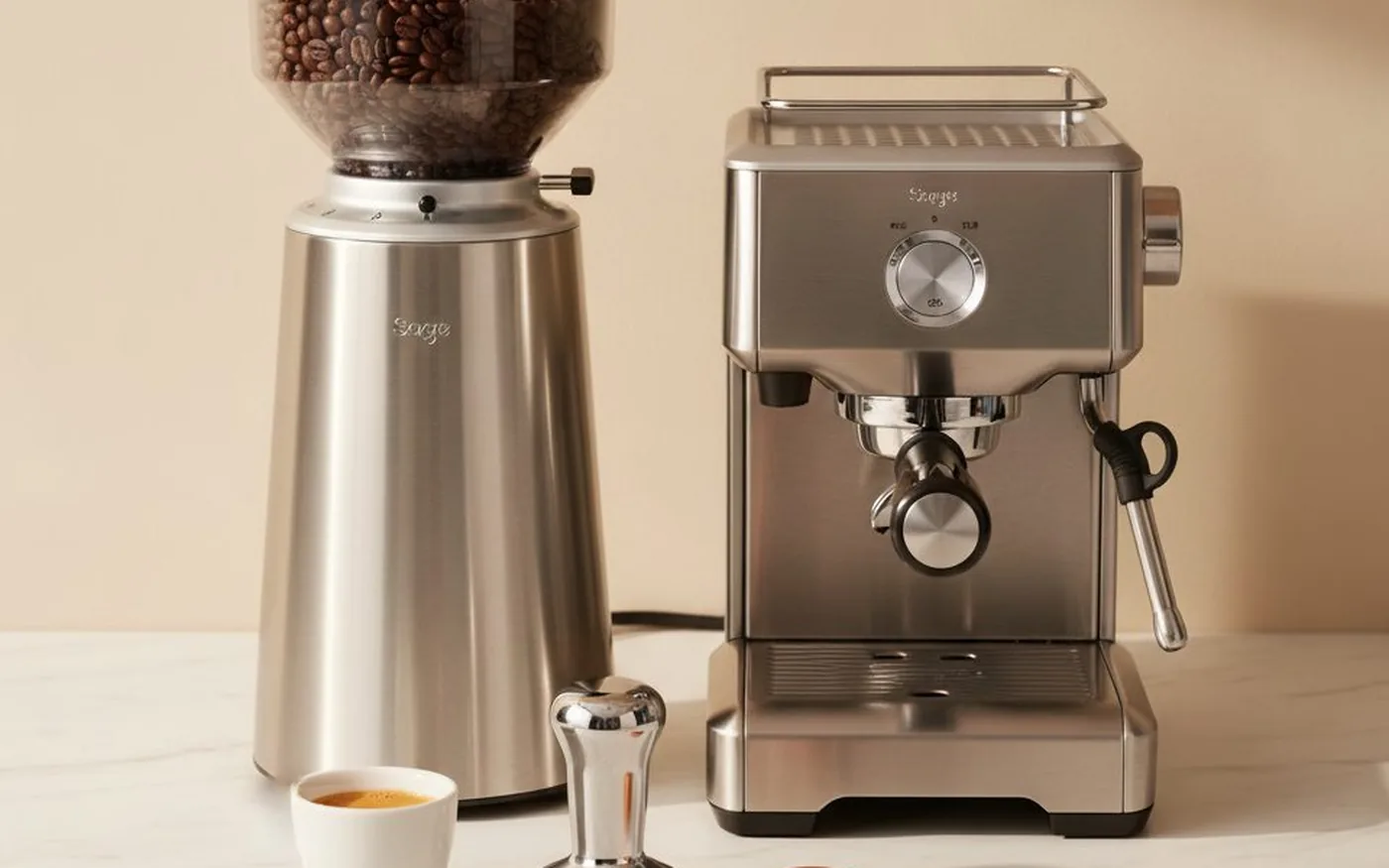
The footprint and design make it a natural pair for a Sage Bambino Plus or Barista Express on the same counter. It mirrors the brushed steel aesthetic of the Sage machine range. Whether that is a feature or a deliberate lock-in depends on your perspective.
Burr Quality and Grind Range
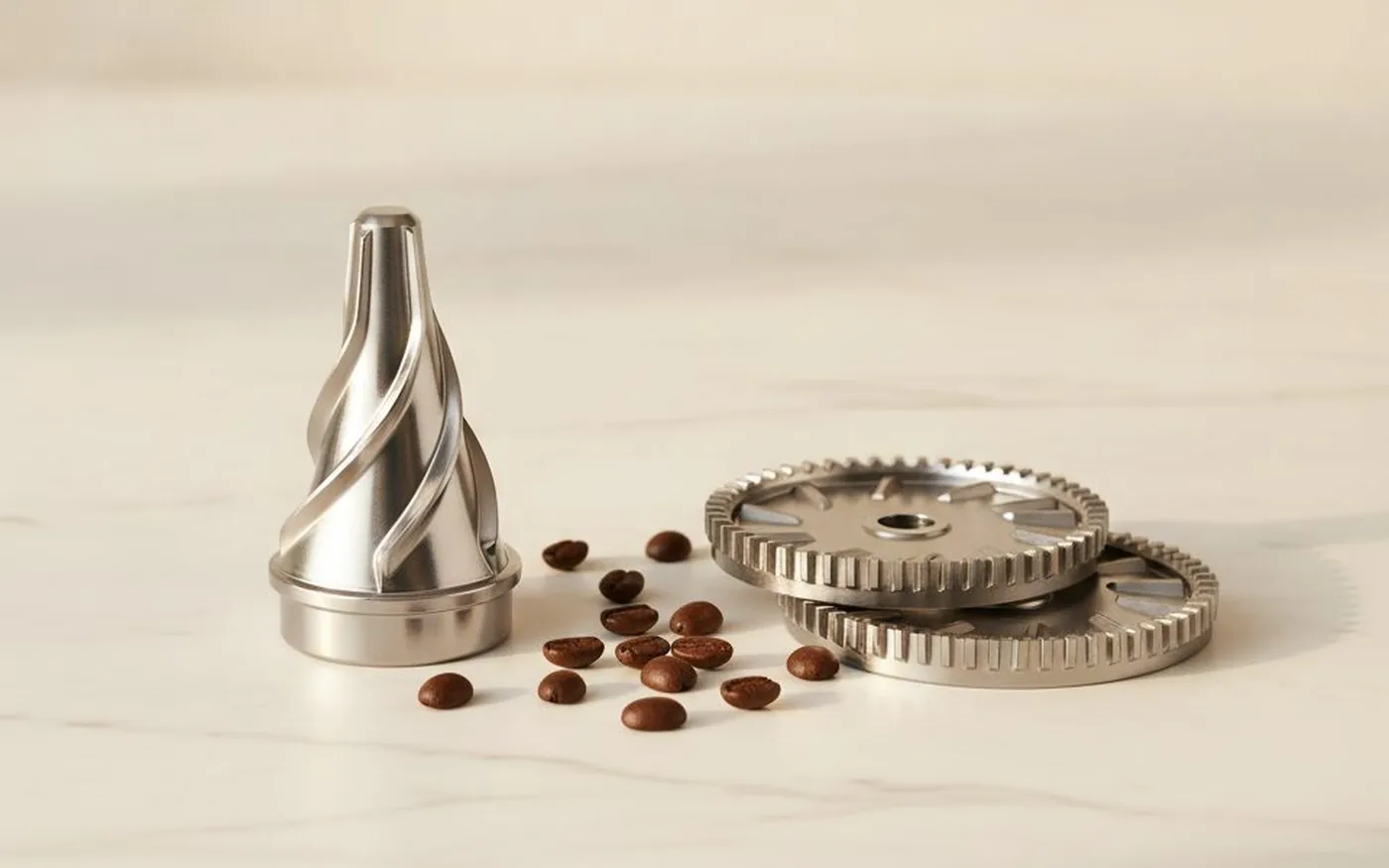
Forty-millimetre conical steel burrs drive this machine. For context: Speciality Coffee Association grind research consistently shows that burr diameter affects throughput and heat generation more than particle distribution in the domestic range. At 40mm, the Smart Grinder Pro sits in the middle of the domestic market - larger than a hand grinder, smaller than the Eureka Mignon Specialita's 55mm.
Conical burrs are well-suited to espresso because they produce a bimodal grind distribution - a mix of larger particles and fines - that builds the resistance espresso extraction requires. Flat burr grinders produce a more uniform distribution. For most home espresso drinkers, the difference in the cup is subtle rather than decisive.
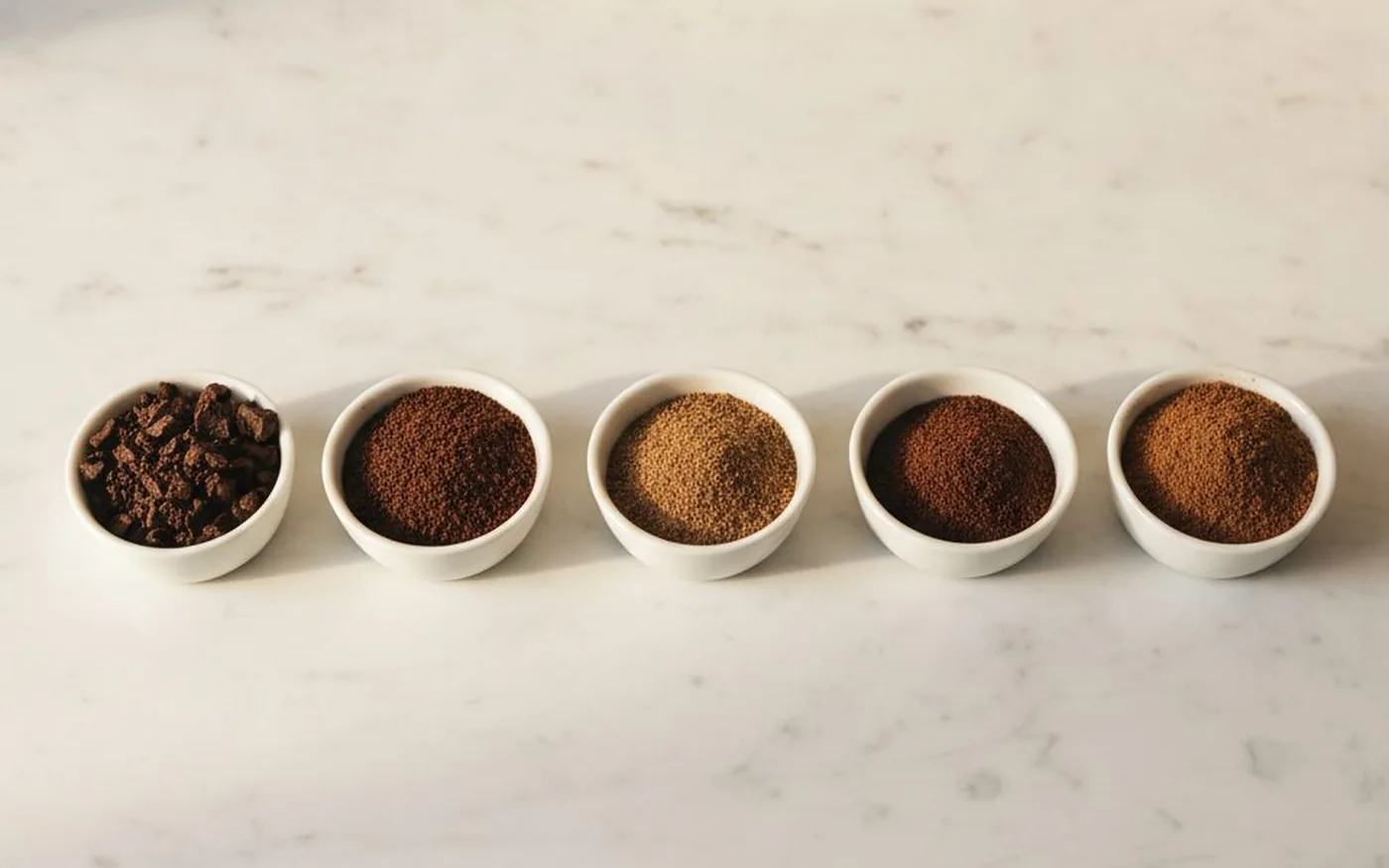
The 60 grind settings cover a broad range from coarse through medium to fine. In testing across best coffee beans for espresso styles - medium and dark roasts in particular - the espresso band between settings 10 and 25 gave consistent results. Light roasts required 1-3 settings coarser to avoid overextraction, which is normal for the burr type.
Burr replacement is user-friendly. The top burr comes out with a quarter-turn after removing the hopper. Replacement burrs are available from Sage UK and third-party suppliers at around £25-40 as of June 2026. Given a burr life of roughly 500-800kg of coffee before the edge degrades meaningfully, this is a cost that arrives approximately every 3-5 years for a daily home user.
Espresso Performance: Can It Dial In Single Shots?
This is the question most people buying this grinder actually want answered. Is the Sage Smart Grinder Pro good for espresso? Yes - with one honest qualification.
I dialled this grinder in on Balance Coffee's Rotate Espresso - the bean I built specifically for espresso extraction. Full disclosure: I am the founder of Balance Coffee, so take that pairing as a preference, not a paid placement. Rotate is a 100% Mexico single origin roasted for espresso, and it is the bean I use as my reference point when evaluating how cleanly a grinder dials in.
Over sixty days and more than two hundred shots, here is what I observed:
Grind consistency is good but not exceptional. Particle distribution produces clean espresso at the right settings, but you will notice more fines than a flat-burr grinder at a similar price point produces. Those fines accelerate extraction slightly, which means your dial-in target will land shorter than brewing guides suggest. Not a problem once you understand it - it is a property of conical burr grinders.
Retention is around 0.5-1g per grind cycle. That is moderate. If you single-dose, you will lose around half a gram to a gram of your dose to the burr chamber. For most espresso drinkers who keep the hopper loaded, this is irrelevant. For single-dosers, the Niche Zero handles this with near-zero retention - but that is a £500+ machine.
Distribution out of the grounds bin is reasonable. You will still want to distribute grounds in the basket before tamping - the chute drops grounds unevenly. A distribution tool or Weiss Distribution Technique tool helps. I used one throughout the test period.
Channeling in my testing was a function of distribution quality, not the grinder itself. With proper distribution and tamping, I saw clean pucks and good espresso. Skipping the distribution step produced channeling - but that is true of any grinder at this price point.
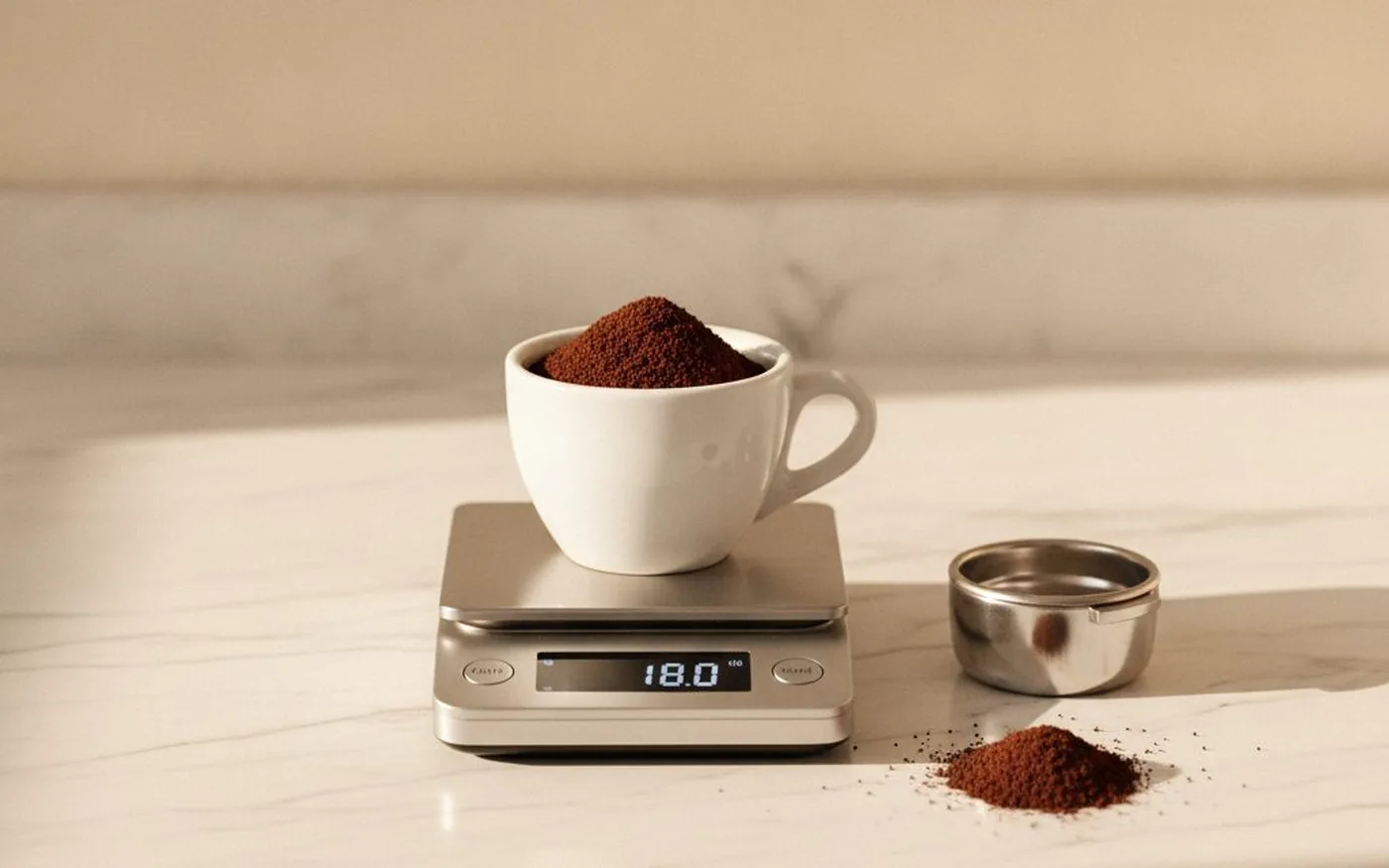
The dose-by-weight mode is the most practically useful feature. Load a scale, set your target dose, press once, and the grinder stops when it reaches that weight. It removes the grinding-then-weighing step that slows down daily espresso workflow. Having spent years at Sanremo learning why dose precision matters to extraction quality, I find this feature genuinely useful rather than a marketing add-on.
Filter Performance: Pour-Over, French Press, AeroPress
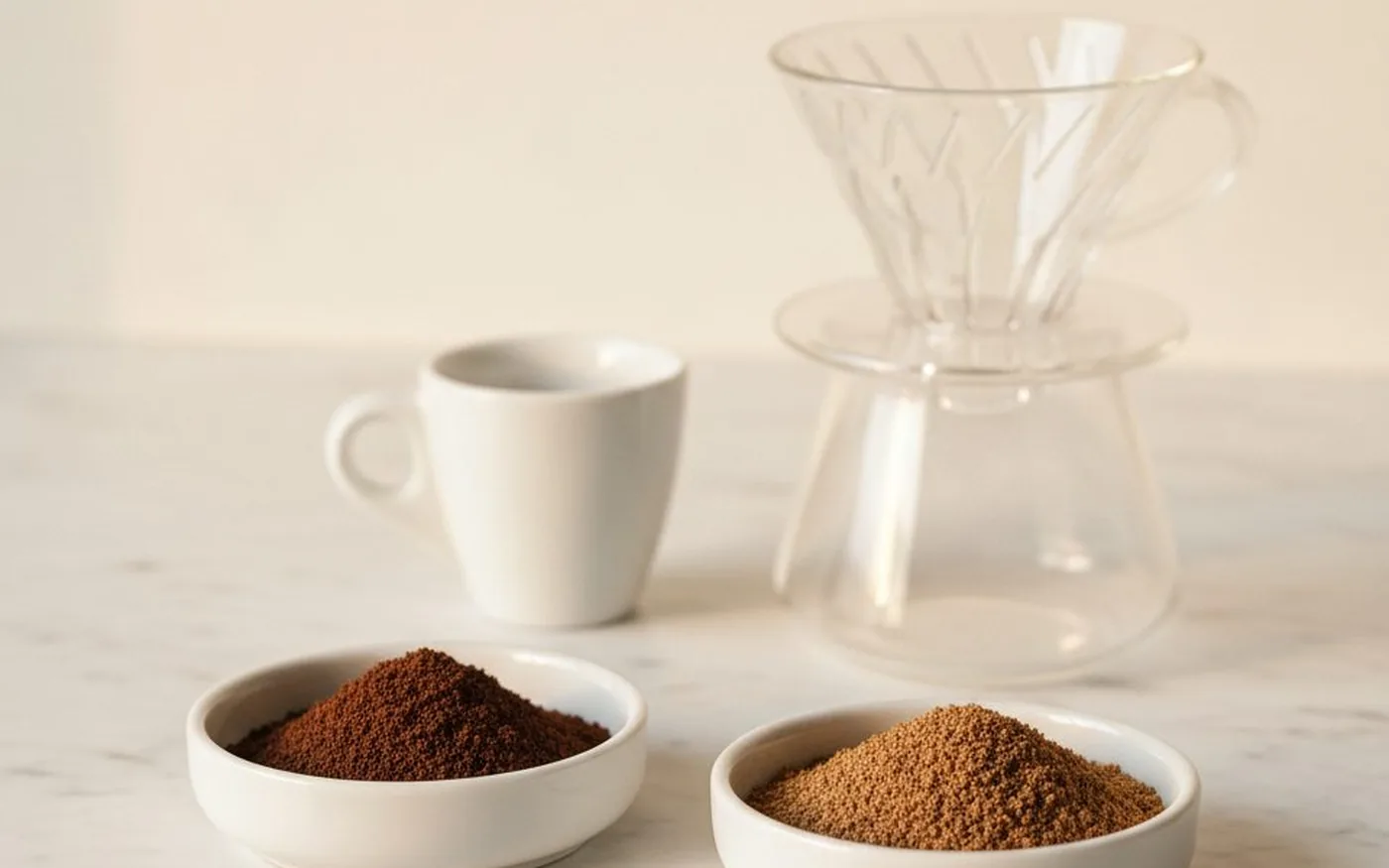
For those who also use a manual coffee grinder for the occasional pour-over, the Smart Grinder Pro handles filter brewing well at medium and coarser settings. Pour-over at settings 30-40 produces a uniform enough grind that the extraction is clean. French press at 55-60 gives you coarse enough grounds to reduce fines in the cup.
AeroPress sits happily in the 20-30 range, where the grinder performs consistently. I tested it on espresso-specific beans and lighter single-origin filter coffees. Light roasts at AeroPress settings produced good results - noticeably brighter than the same settings on darker roasts.
One limitation worth noting: pour-over on the finest filter settings requires precise grind size control. The Smart Grinder Pro's steps are wide enough here that you may find yourself between settings with no micro-adjustment available at that range. A stepless grinder like the Eureka Mignon Specialita gives you finer control. For occasional pour-over alongside daily espresso, it is a minor inconvenience. For dedicated filter brewing as a primary method, it is worth weighing up.
Daily Use, Mess and Cleaning
The most common complaint about this grinder online is static. Reddit espresso threads are full of comments about grounds flying out of the bin or clinging to the sides. I saw this too, but found it manageable.
Static is worse in low-humidity environments, with freshly roasted beans, and at lighter roast settings. Adding a few drops of water to the beans before grinding (the Ross Droplet Technique) reduces static dramatically. It is a three-second step and it works.
The grounds bin detaches easily and the magnetic seal holds it in place during grinding. Cleaning is straightforward - the bin rinses out and the chute area is accessible with the included brush. I cleaned the burrs at the 30-day mark: hopper off, top burr out with a quarter-turn, brush through, reassemble. Under five minutes.
Retention means you lose a small dose each time you change bean type or grind size. Purging takes around five to ten seconds and clears the burr chamber. It is a standard step with any grinder that retains grounds.
Sage Smart Grinder Pro vs the Alternatives
Three grinders come up most often when buyers are cross-shopping the Smart Grinder Pro:
Sage Smart Grinder Pro vs Baratza Encore
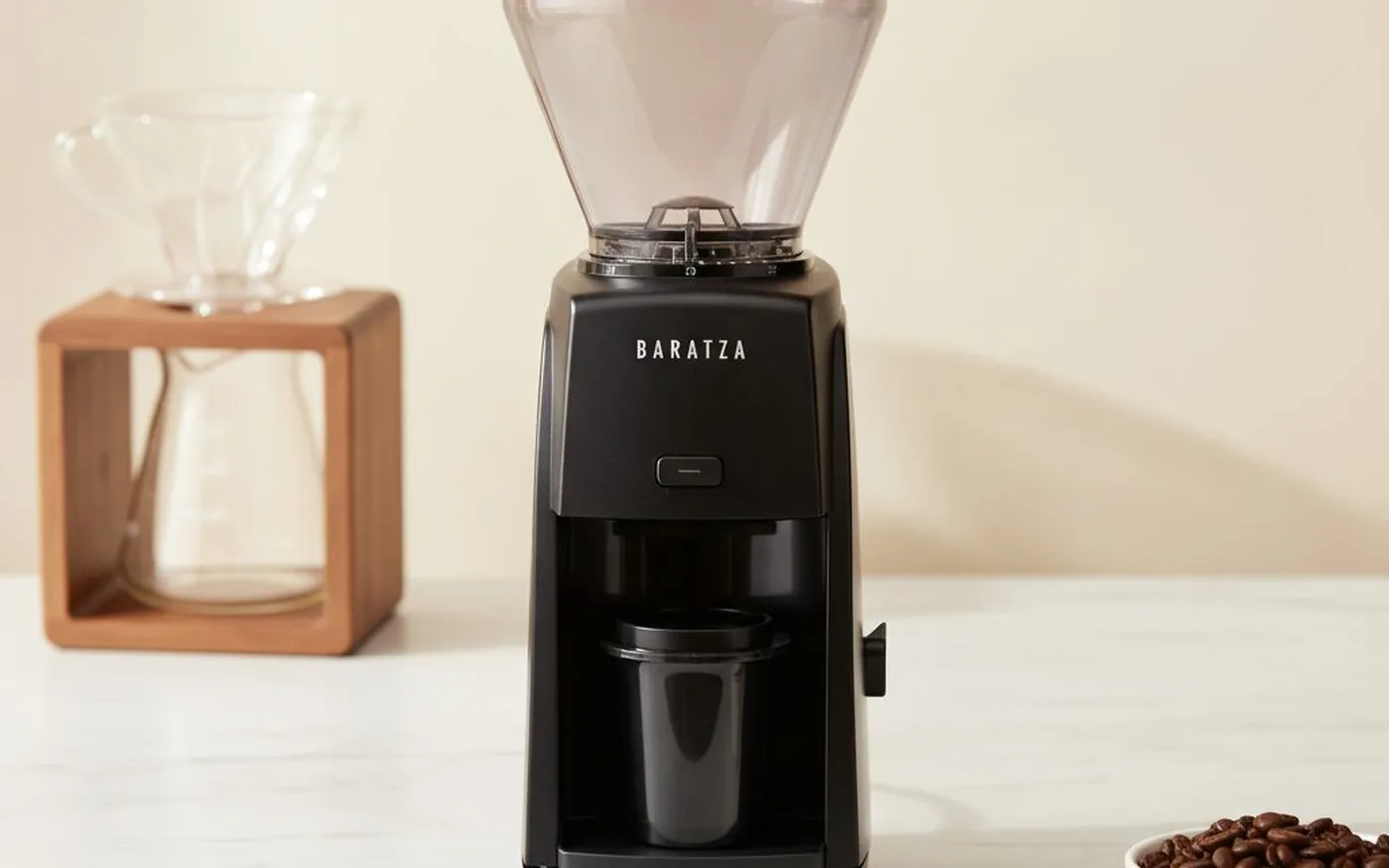
The Baratza Encore review will tell you the same thing I will tell you here: these two grinders do different things well. The Encore at around £130 is purpose-built for filter. Its burrs produce a clean, uniform particle for pour-over, AeroPress, and French press. It is consistently recommended as the entry-level filter grinder in specialty coffee circles. But it does not dial in espresso particularly well - the grind range is less fine, the adjustment steps are designed for filter extraction, and the motor profile suits longer filter grinds rather than short espresso doses.
The Smart Grinder Pro is more espresso-capable. Its 60 settings cover a finer range, the dose-by-weight feature is directly useful for espresso workflow, and the hopper design suits a daily espresso habit. Sage Smart Grinder Pro vs Baratza Encore: the Sage is purpose-built for espresso dialling, the Encore is purpose-built for filter.
Sage Smart Grinder Pro vs Eureka Mignon Specialita
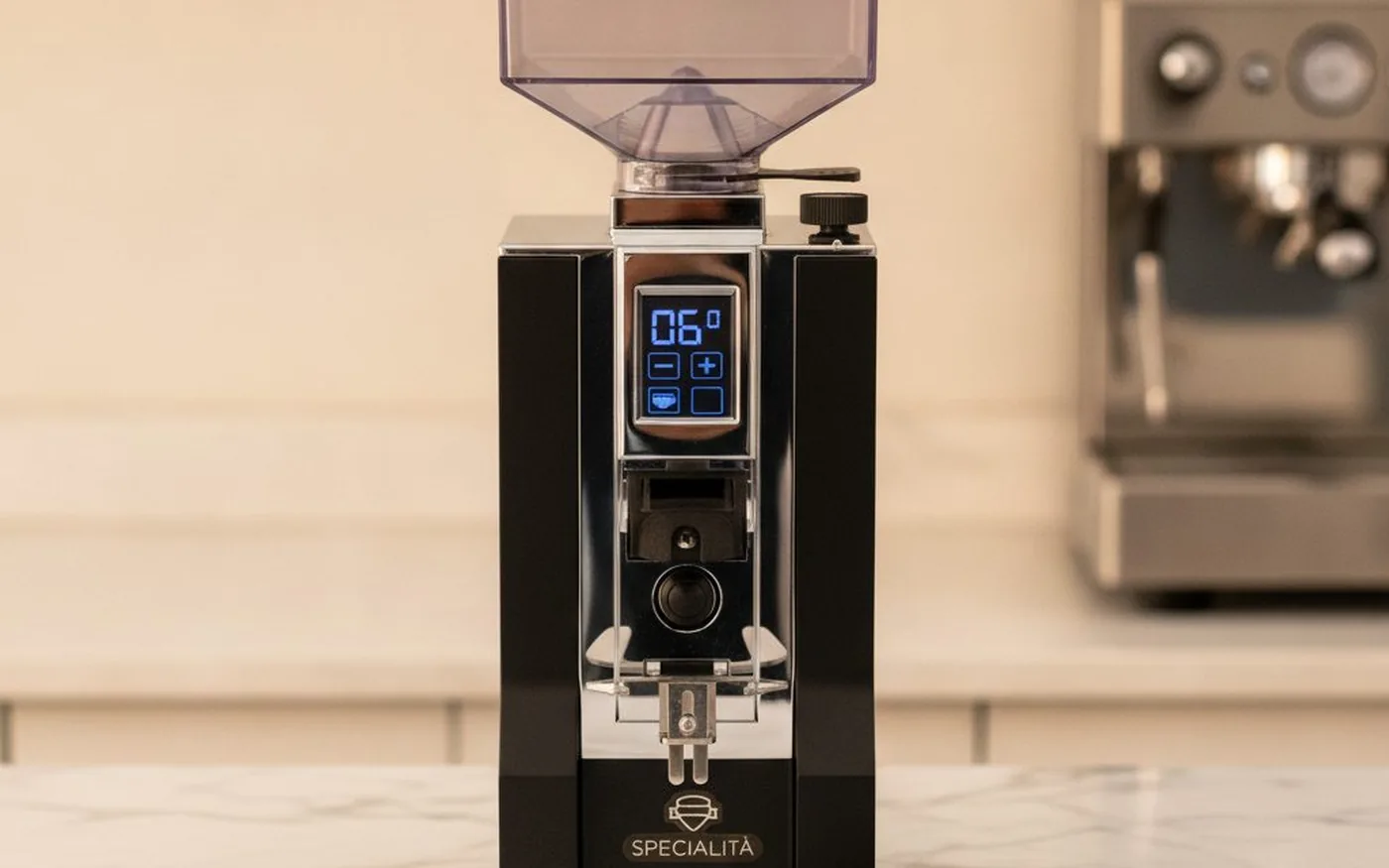
At around £360-400 in the UK, the Eureka Mignon Specialita is the first significant step up from the Smart Grinder Pro's price band. The difference is real: 55mm flat steel burrs, near-zero retention, a stepless micrometric adjustment, and a build quality that feels meaningfully more premium. In blind tasting across the same bean, the Specialita produces a noticeably cleaner finish on light roasts - sharper separation between sweetness and acidity that the Smart Grinder Pro's conical burrs flatten out.
Sage Smart Grinder Pro vs Eureka Mignon Specialita: similar espresso quality at roughly half the price, but the Eureka has lower retention and greater precision on light roast extraction.
If you are buying your first proper espresso grinder and your machine is a Bambino Plus or similar entry-level semi-automatic, the price difference to the Specialita is harder to justify when the machine itself has its own limitations. The Smart Grinder Pro is the right call at that pairing. As your machine improves, the Specialita becomes the natural next step.
Sage Smart Grinder Pro vs Niche Zero
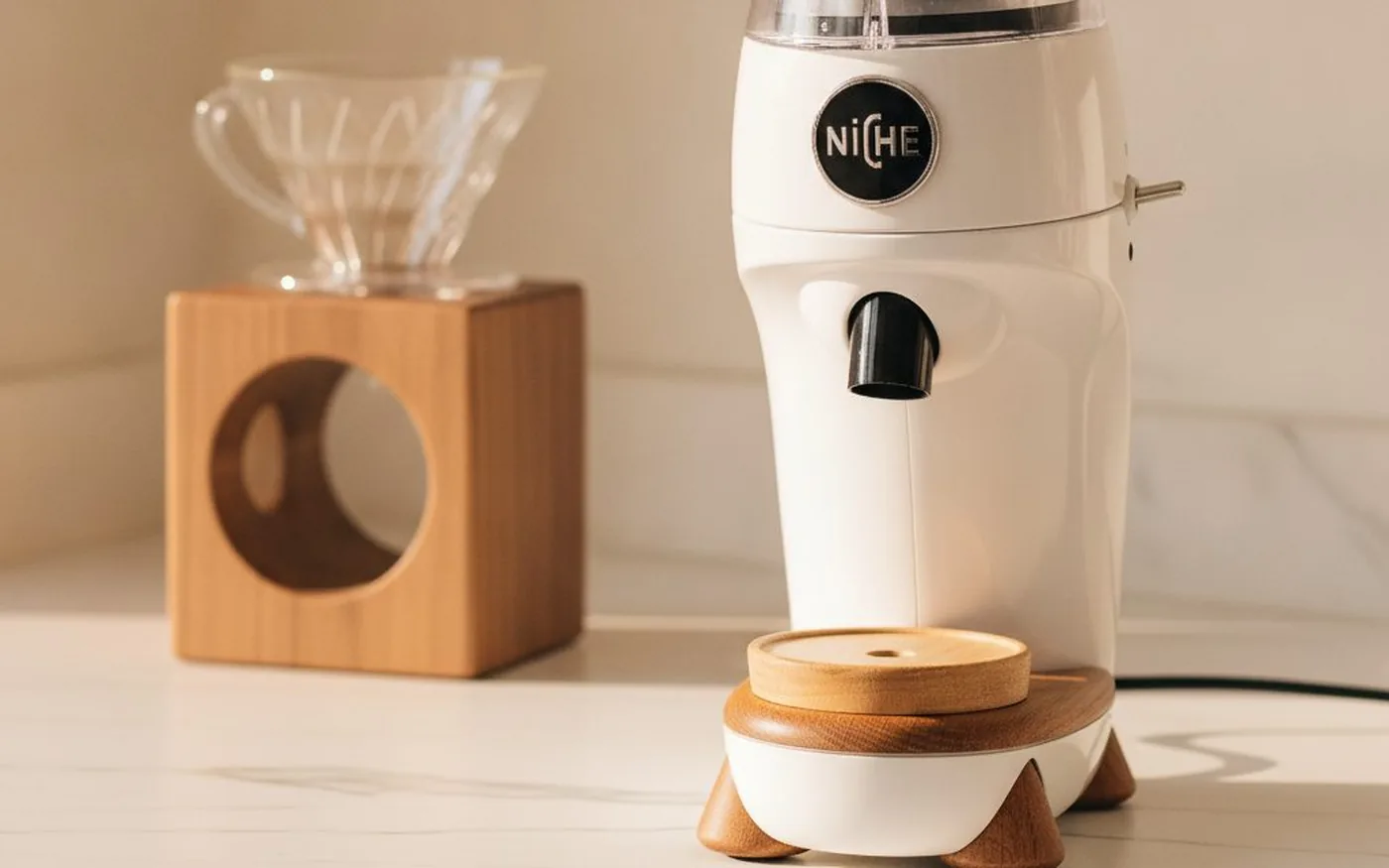
At around £500-550, the Niche Zero sets the ceiling for the single-dose espresso grinder market at home barista level. Near-zero retention, 63mm conical burrs, exceptional particle distribution. It is substantially better than the Smart Grinder Pro. It should be, at 2.5 times the price.
If your budget is £500 for a grinder and your machine is a Bambino Plus or Barista Express, you have a mismatched setup. Grinder quality should match machine quality. The Niche Zero pairs best with machines in the Sage Oracle or La Marzocco Linea Mini tier.
What We Wish Was Different
Retention is the main frustration. Half a gram to a gram per cycle does not matter if you grind from a full hopper every morning. But it makes single-dosing less precise than the Niche Zero or Specialita, and it means you purge grounds every time you change settings. Competitors at this price point do not solve it either - this is a property of the burr design - but it is worth knowing.
The grounds chute geometry causes uneven distribution in the basket. A Weiss Distribution Technique tool (around £10-15) solves it. You will need one.
The hopper lid seal is imperfect. If you leave beans in the hopper for more than a day or two, the freshness drop is noticeable. Loading single doses or emptying the hopper between uses extends bean freshness. Most espresso drinkers developing their workflow tend toward single-dosing anyway.
Who Should Buy the Sage Smart Grinder Pro?
Buy this grinder if you are pairing it with a Sage Bambino Plus, Barista Express, or any prosumer espresso machine in the £200-500 range. It matches the capability of those machines without outpacing them, and the dose-by-weight mode makes daily espresso genuinely easy to reproduce. It is also a solid step up from a hand grinder if you are grinding for multiple people daily.
The best espresso machines under £500 segment is where this grinder earns its place cleanly. Above that machine tier, the Eureka Mignon Specialita becomes the natural upgrade.
Skip it if your primary brew method is filter (the Baratza Encore is a better match), you single-dose exclusively and retention frustrates you (the Niche Zero solves this), or your total budget for machine and grinder is under £300 (a Sage Barista Express with its integrated grinder may serve you better as a single purchase). If you are weighing the overall cost decision, our piece on whether coffee machines are worth the investment covers the full decision framework.
Where to Buy (UK Retailers + Current Pricing)
UK pricing as of June 2026:
Sage Direct: £199.95 (sageappliances.com/uk) - includes two-year UK warranty.
John Lewis: £199.95 - includes two-year John Lewis guarantee.
Currys: £189.00 - check Sage UK warranty eligibility before buying.
Lakeland: £199.95.
Amazon UK: from £174.99 via third-party sellers - verify seller warranty terms; Sage UK warranty requires an authorised UK retailer.
The official Sage Direct carries current pricing, the full spec sheet, and the current warranty terms. Sage's UK trade-in programme may apply if you are replacing an older grinder - worth checking before paying full price.
One note on the Sage/Breville naming: Sage is the UK and European trade name for Breville products. Breville Group Limited (ASX: BRG) is an independent Australian company - it is not owned by or affiliated with De'Longhi, which is a separate Italian manufacturer. The Smart Grinder Pro is identical to the Breville Smart Grinder Pro sold in Australia and North America. UK warranty and support are handled by Sage UK separately from Breville Australia.
Evaluation Table
| Criteria | Score (out of 10) | Notes |
|---|---|---|
| Grind consistency | 7 | Good at espresso settings; slight variation at very fine settings |
| Retention | 6 | 0.5-1g per grind cycle - moderate for the price |
| Dose accuracy | 8 | Dose-by-weight mode is genuinely reliable |
| Espresso capability | 8 | Dials in reliably for the target machine pairing |
| Filter versatility | 7 | Solid across methods; stepless control missing |
| Build quality | 7 | Functional; not as premium as Eureka range |
| Daily usability | 8 | Interface is clear, workflow is fast |
| Noise | 6 | 70-75dB - typical for domestic electric grinders |
| Cleaning | 8 | Easy burr access, straightforward maintenance |
| Value for money | 8 | Strong at £200 for the espresso performance delivered |
| Overall | 7.5 |
Spec Table
| Spec | Detail |
|---|---|
| Burr type | 40mm conical steel |
| Motor | DC motor |
| Grind settings | 60 (plus micro-adjustment within each setting) |
| Dose modes | Dose by time (0.2s increments) / dose by weight (with compatible scale) |
| Hopper capacity | 450g |
| Grounds bin | 230g |
| Dimensions (approx) | 170 x 250 x 320mm |
| Weight | 3.1kg |
| Warranty | 2 years (UK, Sage Direct and authorised retailers) |
| RRP (UK, June 2026) | £199.95 |
| Model number | SCG820BSS |
Source: Sage UK official product page.
Comparison Table
| Sage Smart Grinder Pro | Baratza Encore | Eureka Mignon Specialita | |
|---|---|---|---|
| Price (UK, June 2026) | £199.95 | from £130 | £360-400 |
| Burr size | 40mm conical | 40mm conical | 55mm flat |
| Grind settings | 60 | 40 | Stepless micrometric |
| Retention | 0.5-1g | Less than 0.5g | Less than 0.2g |
| Best for | Espresso + filter | Filter primary | Espresso primary |
| Dose modes | Time + weight | Time only | Time + weight (optional) |
| Verdict | Right call at Bambino/Barista Express pairing | Better if filter is primary | Worth it when your machine catches up |
Frequently Asked Questions
Is the Sage Smart Grinder Pro good for espresso?
Yes, with one honest caveat on retention. Across sixty days and two hundred shots, it dials in reliably for domestic espresso machines in the two hundred to five hundred pound range. The forty millimetre conical burrs produce a distribution that suits espresso extraction, and the sixty settings give you enough range to find your target. Retention of half a gram to a gram per cycle is manageable for most users.
How many grind settings does the Sage Smart Grinder Pro have?
Sixty grind settings on the main dial, covering a range from very coarse for French press and cold brew through medium for pour-over and AeroPress to fine for espresso. Within each numbered setting there is a micro-adjustment step allowing you to fine-tune between the main clicks. In practice, espresso dialling lives within settings ten to twenty-five. The granularity is sufficient for daily home espresso.
Can you replace the burrs on a Sage Smart Grinder Pro?
Yes. The upper burr is user-replaceable without tools. Remove the hopper, turn the top burr assembly a quarter-turn anti-clockwise, and it lifts out. Replacement burrs from Sage UK and third-party suppliers run between twenty-five and forty pounds as of June 2026. Burr life is approximately five hundred to eight hundred kilograms of coffee, which translates to roughly three to five years of daily home use.
Sage Smart Grinder Pro vs Baratza Encore: which is better?
It depends on your primary brew method. The Baratza Encore at around one hundred and thirty pounds is purpose-built for filter and consistently outperforms the Smart Grinder Pro on filter grind consistency. The Smart Grinder Pro at around two hundred pounds is more capable for espresso: finer grind range, dose-by-weight feature, and better suited to tight extraction tolerances. Espresso primary: buy the Sage. Filter primary: buy the Encore.
How much does the Sage Smart Grinder Pro cost in the UK?
Around one hundred and ninety-nine pounds ninety-five pence RRP as of June 2026. Available from Sage Direct, John Lewis, and Lakeland at that price. Amazon UK listings from third-party sellers can run lower, from around one hundred and seventy-five pounds, but verify warranty terms before buying - Sage UK warranty requires purchase from an authorised UK retailer.
Does the Sage Smart Grinder Pro work with the Sage Bambino Plus?
Yes, and it is the most natural pairing. The Smart Grinder Pro grind range covers both the pressurised and non-pressurised baskets on the Bambino Plus, the dose-by-weight feature matches the precision requirements of the non-pressurised basket, and the aesthetics align. If you are weighing this pairing against a Sage Barista Express with its integrated grinder, the key consideration is counter space.
Is the Sage Smart Grinder Pro worth the money in 2026?
Yes, for the right machine pairing. At two hundred pounds, it matches the capability of prosumer espresso machines in the two hundred to five hundred pound range. The dose-by-weight feature and reliable dialling justify the step up from a hand grinder. The Eureka Mignon Specialita and Niche Zero both outperform it, but at this price point and machine tier, the Smart Grinder Pro is the right call.
What is the best grinder for the Sage Barista Express?
The Barista Express has an integrated conical burr grinder built in. If you own one and want to upgrade, the most common path is adding a Smart Grinder Pro and grinding directly into the portafilter, bypassing the integrated grinder. The Smart Grinder Pro is the natural match at this level. The Eureka Mignon Specialita becomes the relevant upgrade when the integrated grinder is genuinely limiting your espresso quality.
A wellness entrepreneur and biohacker, James explores the intersection of hospitality and health - from clean fuel and recovery tools to mindful routines that build balance into daily life.