What Is a Macchiato? The Three Drinks Behind One Name

Coffee Writer & Biohacker
One word, three drinks: why your macchiato came as a thimble of espresso one day and a tall sweet glass the next.
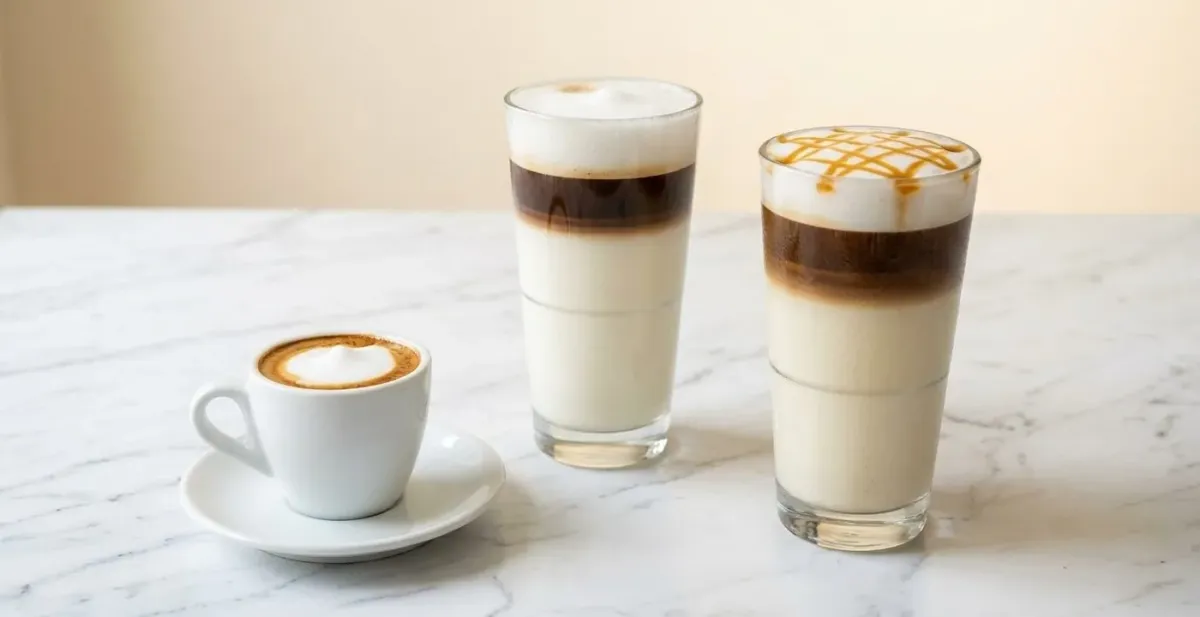
Table of Contents
Some of the links in this article are affiliate links, which help fund our independent review work at no extra cost to you. How we assessed these products is explained in this article and our Editor Lab methodology. No brand pays to appear, and no placement is guaranteed.
You order a macchiato, and two different drinks can turn up depending on where you are standing. At an independent coffee bar, you get a thimble of espresso with a dab of foam on top, gone in two sips. At a chain, you might get something closer to a milkshake in a tall glass, and both are called a macchiato.
A macchiato is a single or double espresso 'marked' with a spoonful of steamed milk foam, served in a small espresso cup of roughly 60-90ml. The word is Italian for 'stained' or 'spotted'. A latte macchiato is a different, much larger drink: a glass of steamed milk marked with a shot of espresso poured in last.
This guide is written from the barista counter: the drink definitions, cup sizes and build orders are the ones I trained baristas to use, and the UK menu details were checked against chain menus in October 2026. How we research and test is set out in The Editor Lab.
What Is A Macchiato?
'Macchiato' is Italian for 'stained' or 'spotted', a literal translation that also gives you 'stained coffee' or 'marked coffee', per Wikipedia's entry on caffè macchiato. The name describes exactly what happens in the cup: a shot of espresso gets marked, or stained, with a small amount of milk, usually foamed.
The marking idea has a practical origin, not a decorative one. Baristas needed a quick way to show you, at a glance, which cup held milk and which did not, so they marked the milk version with a spoonful of foam. Portuguese cafes solved it with 'café pingado', meaning 'coffee with a drop'.
You can order a macchiato as a single shot or a double. A single macchiato is one shot of espresso topped with a spoonful of foam. A double doubles the espresso and usually adds a touch more foam, though never enough to turn it into a milk drink.
As an SCA-certified barista, I judge a macchiato on how little it strays from a straight espresso. Properly built, it comes in a demitasse, not the mug you might reach for at home. A spoon of dense, textured foam sits on top, not a flood of warm milk.
The crema, the reddish-brown layer on top of a good shot, should still be visible at the edges once the foam goes on, and you can check for it yourself at the counter.
What a well-built macchiato looks like:
- Served in a demitasse or small espresso cup, not a mug or a tall glass
- A spoonful of dense, textured foam on top, not loose, bubbly milk
- Crema still visible around the rim after the foam goes on
- Finished in one pour, with no layering or stirring
A macchiato is also a small drink, gone in a few sips. If you want something to sit with for twenty minutes, order a latte or a flat white instead - a macchiato is the wrong order for that.
The Three Drinks Called Macchiato
The confusion is not your fault. Three different drinks share the same name on UK menus, and only one of them is a macchiato in the Italian sense.
Espresso Macchiato
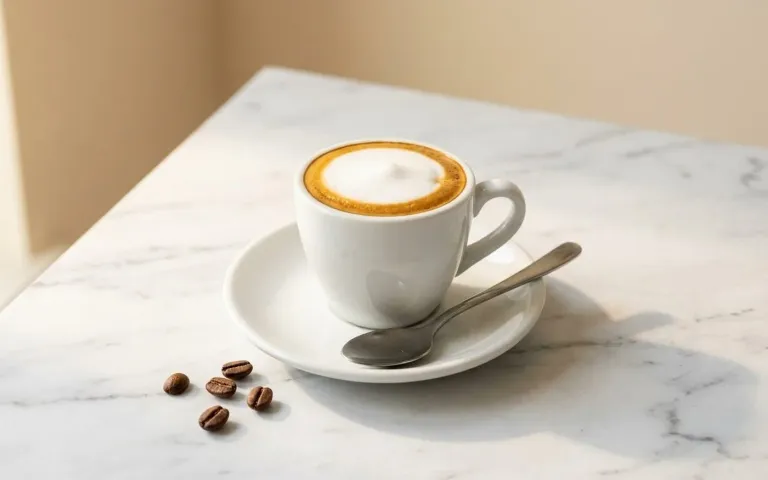
This is the original drink described above: espresso first, a spoonful of foam marking it second. You will sometimes see it written simply as 'macchiato' on an independent menu, because to most baristas, this is the only macchiato.
Latte Macchiato
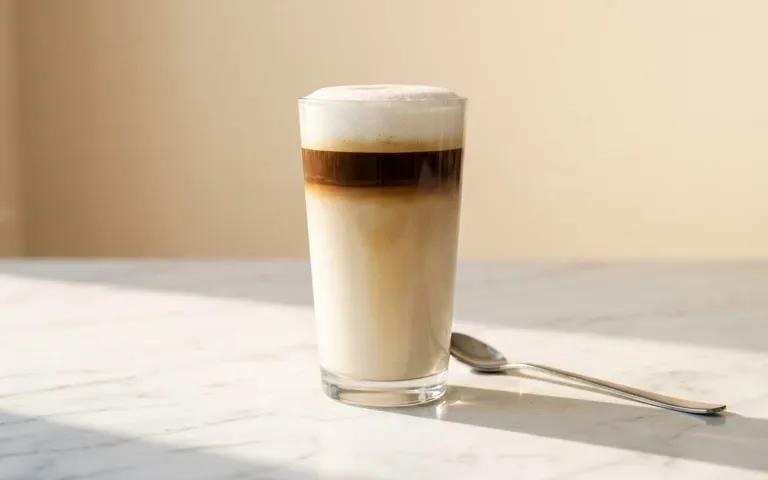
A latte macchiato reverses the build. You start with a tall glass of steamed milk, then pour a shot of espresso in last, so it sinks partway and marks the milk with a visible coffee layer near the top. Per the Cambridge Dictionary, a latte macchiato is milk marked with espresso - the opposite relationship to the espresso macchiato above.
Caramel Macchiato
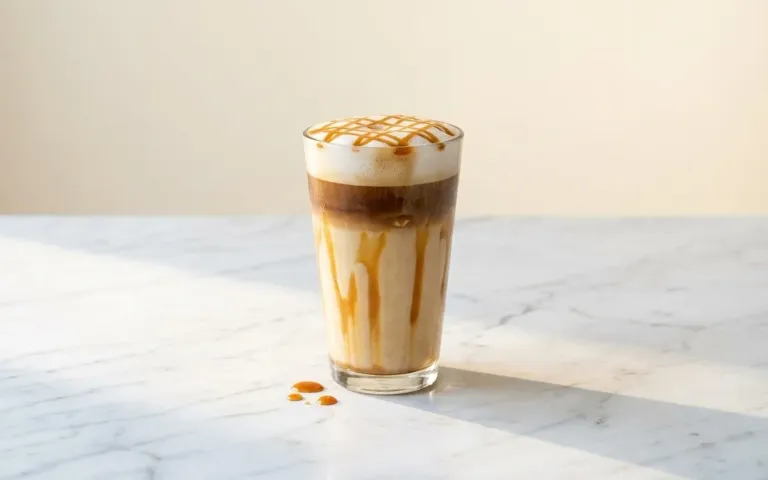
A caramel macchiato takes the latte macchiato build above and sweetens it for you: vanilla syrup goes into the cup, steamed milk follows, then espresso is poured in and marks the milk, and caramel drizzle finishes it on top. Here is the friction point worth naming plainly: a caramel macchiato is not a macchiato in the Italian sense. It is a sweetened latte macchiato, dressed up with vanilla and caramel.
Comparing the three side by side:
| Drink | Build order | Typical volume | Milk | Taste | Where you will see it |
|---|---|---|---|---|---|
| Espresso macchiato | Espresso first, foam spooned on top | Small cup, by convention roughly 60-90ml | A spoonful of foam only | Strong, espresso-led, a light milk sweetness on the finish | Independent coffee bars, most UK chains |
| Latte macchiato | Steamed milk poured first, espresso poured in last | A tall glass, much larger than an espresso cup | Mostly steamed milk | Mild, milk-led, a gentle coffee top note | UK chains, some independents |
| Caramel macchiato | Vanilla syrup and steamed milk, espresso poured in, caramel on top | A tall glass, similar to a latte macchiato | Mostly steamed milk plus syrup | Sweet, vanilla and caramel over a mild coffee base | Mainly chains such as Starbucks UK |
Macchiato vs Latte
You are comparing an espresso-led drink against a milk-led one, and the proportions do most of the explaining. An espresso macchiato is espresso marked with milk; a latte macchiato is milk marked with espresso. A caffe latte is espresso topped up with a large volume of steamed milk and a thin layer of foam, served in a tall cup or glass.
Here is where it gets genuinely confusing, and it is worth being honest with you about why. A latte macchiato and a caffe latte use near-identical ingredients in similar proportions, and the only real difference is build order. A latte pours the espresso first and adds milk on top, so the two mix as you drink.
A latte macchiato pours the milk first and adds the espresso last, so you get a visible marked layer before it settles. Taste them side by side once they have settled and the difference narrows further, because gravity does the same job the barista's pour just did.
The espresso macchiato is the one that stands apart. Nothing about a small cup with a spoonful of foam resembles a latte's glass of milk. If you remember one rule, remember who marks whom: in an espresso macchiato, milk marks the espresso; in a latte macchiato, espresso marks the milk; a plain latte has no marking relationship at all.
Is a Macchiato Stronger? Taste vs Caffeine
A macchiato tastes stronger than a latte, and it is worth being precise about why this matters to you. It tastes stronger because there is less milk to dilute the espresso, not because it contains more caffeine. Here is the friction point directly: a macchiato is not higher in caffeine than a latte made with the same number of shots.
A single macchiato is one shot of espresso, exactly like a single latte, and caffeine tracks the number of shots pulled, not the name on the cup. You will see some brands' marketing suggest otherwise, and you should treat that framing with scepticism.
If caffeine intake matters to you, the guidance comes from health bodies, not drink names. The European Food Safety Authority (EFSA) says single doses up to 200mg, around 3mg per kilogram of body weight, from all sources do not raise safety concerns for healthy adults, and that daily intakes up to 400mg do not raise concerns for healthy adults, except pregnant women. For pregnant or breastfeeding women, EFSA's guidance sits at up to 200mg a day, and the NHS gives the same ceiling for pregnancy: no more than 200mg of caffeine a day.
What You Get When You Order a Macchiato in the UK
Independents and chains answer differently to the same word, and it matters which one you are standing in front of. At most UK independent coffee bars, 'macchiato' on its own means the espresso macchiato: a small, strong, espresso-forward drink. The chains complicate this.
Starbucks UK's hot coffees menu lists Espresso Macchiato, Latte Macchiato and Caramel Macchiato as three separate drinks, alongside an Iced Caramel Macchiato and seasonal flavoured versions such as a Pumpkin Spice Caramel Macchiato and a Maple Pecan Macchiato. That is four or more drinks sharing one name on a single menu, so the word alone does not tell staff what you want.
I began in coffee as a barista trainer at UCC Coffee in 2012, and the instruction I gave baristas then still applies now: say the full name, not the short one. Ask for an 'espresso macchiato' if you want the small, strong, traditional drink. Ask for a 'latte macchiato' if you want the tall milk-led glass with no sweetener.
Ask for a 'caramel macchiato' if you want the sweetened, vanilla-and-caramel version. At an independent, 'macchiato' alone is usually safe; naming it in full removes any doubt at a chain.
Macchiato vs Cortado, Flat White and Cappuccino
Milk volume is the cleanest way to sort these drinks for you, from least milk to most. A macchiato uses only a spoonful of foam. A cortado uses roughly equal parts espresso and milk, so it sits between a macchiato and a flat white in body.
A flat white uses more steamed milk than a cortado, poured as a thin, tight layer of microfoam you will notice on the surface. The fuller comparison is flat white vs latte. A cappuccino uses roughly equal parts espresso, steamed milk and milk foam, with the foam sitting thicker than a flat white's, a comparison covered in latte vs cappuccino.
If you remember only one rule from this list, remember that a macchiato is barely a milk drink at all. Everything else on this list adds milk in increasing volume, and the macchiato sits alone at the bottom of that scale.
How to Make a Macchiato at Home
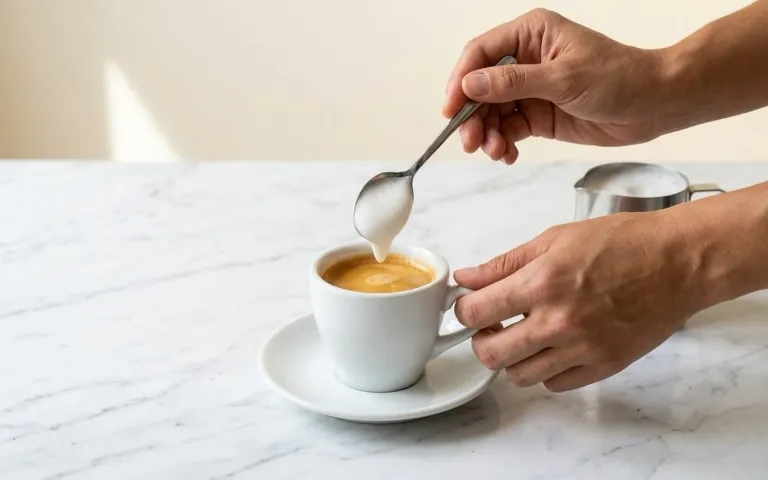
You can get close to a café macchiato at home, but it is worth saying plainly that it is harder to get right than a latte, not easier. A latte forgives a slightly rough pour because there is so much milk to absorb it. A macchiato has almost nowhere to hide a mistake.
With a Steam Wand
If you own an espresso machine with a steam wand, pull a single or double shot into a small cup, then steam just enough milk to produce a dense spoonful of foam. This is the awkward part most reviews skip: a teaspoon of foam is such a small amount that your steam jug barely covers the tip of the wand, so getting a clean, even texture takes more patience than steaming a full jug for a latte. Spoon the foam on top of the shot and stop there.
If you do not yet own a machine, how to make espresso at home covers the basics, and best espresso machine for beginners is a sensible next read. Grind size changes extraction more than almost anything else you control, so espresso grind size is worth a look before you dial anything in. The same steaming skill carries over to how to make a flat white or how to froth milk more generally.
Without a Machine
If you do not own an espresso machine, a moka pot or an Aeropress using a concentrated recipe will give you strong, espresso-style coffee, but it will not be true espresso and will not produce crema. Say that to yourself before you start, so you are not disappointed by the result.
For the milk side, a handheld or electric milk frother gets you a usable spoonful of foam without a steam wand. If you want to go the moka pot route properly, best moka pot has the detail on choosing one.
Beans and Milk for a Good Macchiato
In a macchiato, the espresso is almost the whole drink, so the bean matters more here than it does in a latte, where milk covers a lot of flaws. A medium to medium-dark espresso roast tends to hold up best, giving you body and sweetness that still comes through under a spoonful of foam. For a wider look at what separates a genuinely good bean from an average one, speciality coffee explains the grading behind that difference.
Best coffee beans for espresso is where I rank the ones worth you trying first. Having visited almost 300 UK roasteries during my Sanremo years, I have tasted a wide range of espresso roasts, and the medium-dark end of that range is consistently the safer choice for a macchiato.
On the milk side, whole milk foams the densest and holds its texture longest, which matters for a drink that is mostly foam rather than liquid milk. If you prefer a plant-based option, a barista-edition oat milk is the closest substitute for texture, and best oat milk for coffee covers which ones actually foam well.
I founded Balance Coffee in 2020, and its Rotate Espresso is a medium-dark roast, 100% Arabica bean sourced from Mexico with notes of dark chocolate and cranberry, sold in wholebean, ground for filter and ground for espresso through Grind for Espresso. It is one option among the medium-dark roasts worth trying, alongside whichever beans you land on from the ranking above.
Frequently Asked Questions
What is the difference between a latte and a macchiato?
A macchiato is espresso with a spoonful of foam, served in a small cup. A latte is espresso in a large cup of steamed milk with a thin layer of foam on top, so you get far more milk and far less visible espresso in a latte than in a macchiato.
What is a macchiato in the UK?
At most UK independents, a macchiato means the espresso macchiato, a small, strong, espresso-led drink. Chains such as Starbucks UK list three separate macchiato drinks on the same menu, so if you want the traditional small one, say 'espresso macchiato' to avoid getting a sweetened milk drink instead.
Is a macchiato stronger than coffee?
A macchiato tastes stronger than milky drinks like a latte or flat white, because there is far less milk to dilute the espresso. It is not stronger in caffeine terms than a plain espresso of the same size, since caffeine depends on the number of shots, not the drink's name.
What is stronger, a latte or a macchiato?
Made with the same number of espresso shots, a latte and a macchiato contain the same amount of caffeine. The macchiato tastes stronger because it carries far less milk, so the espresso flavour comes through directly rather than being diluted across a full glass of steamed milk.
Is a Starbucks macchiato just a latte?
The caramel macchiato is essentially a vanilla latte macchiato with caramel drizzle on top, built the same way as a latte macchiato with syrup and caramel added. The espresso macchiato is a genuinely different drink: a small, strong shot with only a spoonful of foam, much closer to a traditional Italian macchiato.
What is the point of a macchiato?
A macchiato gives you espresso flavour with the sharp edge softened by a small amount of milk, without turning the drink into a milk-led one. Originally, the point was practical rather than about taste: baristas marked an espresso with a spoonful of foam specifically to flag that it contained milk, telling it apart from a plain shot.
Are macchiatos healthier than lattes?
An espresso macchiato contains far less milk than a latte, simply because the drink is smaller and milk-led additions are minimal. Syrup-based versions such as a caramel macchiato add sugar through the vanilla syrup and caramel drizzle, which a plain espresso macchiato does not carry, so the two should not be grouped together on this question.
What does 'upside down' mean at Starbucks?
'Upside down' means the usual build order is reversed, so the espresso goes in first and the milk goes in after, rather than milk first and espresso marked in last. An upside-down caramel macchiato effectively becomes a vanilla latte with caramel on top, because reversing the pour removes the visible marked layer that defines the regular drink.
What is the difference between a macchiato and a cortado?
A cortado uses roughly equal parts espresso and milk, giving it a noticeably milkier body than a macchiato. A macchiato uses only a spoonful of foam on top of the espresso, so a cortado sits well above a macchiato on milk volume while still carrying far less milk than a latte or flat white.
Can you make a macchiato without an espresso machine?
You can make a close version using a moka pot or an Aeropress with a concentrated recipe, combined with milk frothed by a handheld or electric frother. It will not have the crema that true espresso produces under pressure, so expect strong, espresso-style coffee with a spoonful of foam, rather than an exact match.

A wellness entrepreneur and biohacker, James explores the intersection of hospitality and health - from clean fuel and recovery tools to mindful routines that build balance into daily life.