Bean to Cup vs Espresso Machine

Coffee & Wellness Writer
The verdict from the person who ran both commercially. Not which is better - which is right for you.
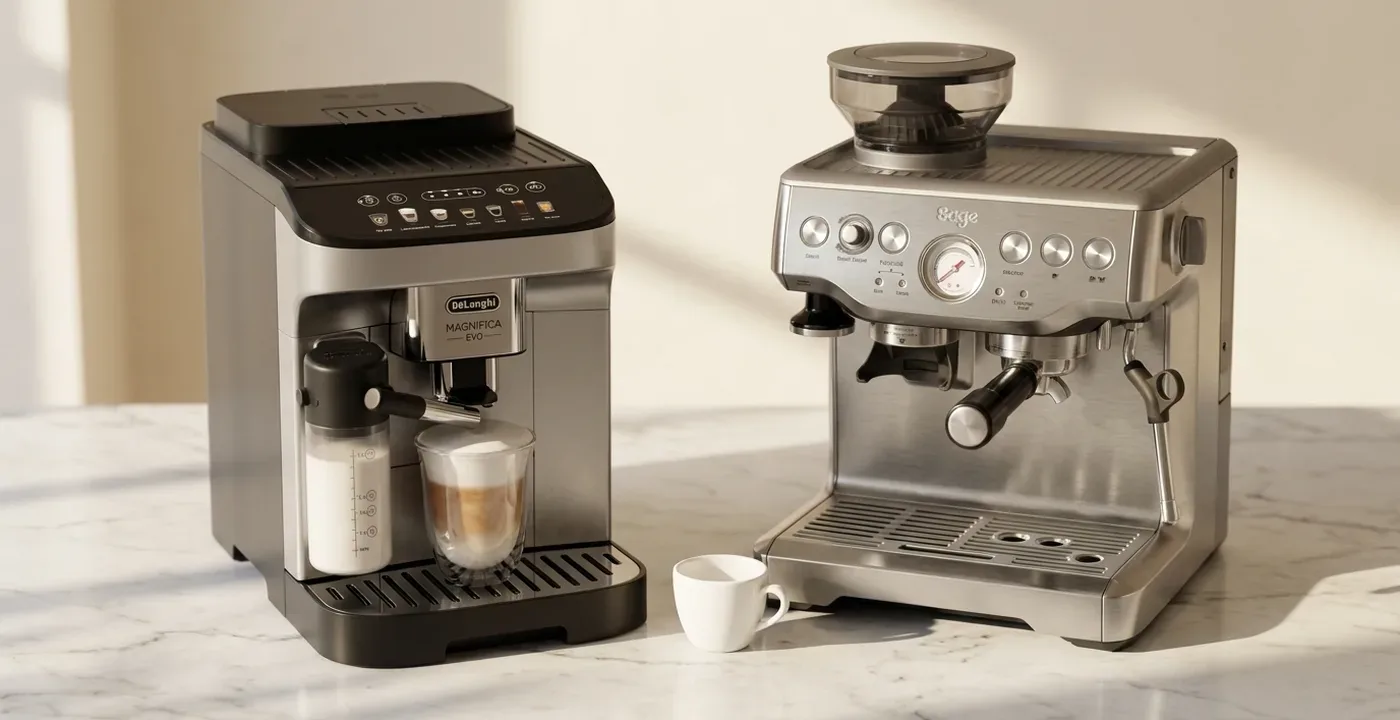
Table of Contents
Some of the links in this article are affiliate links, which help fund our independent review work at no extra cost to you. Every recommendation is based on hands-on testing through The Editor Lab methodology. No brand pays to appear, and no placement is guaranteed.
Should you buy a bean to cup machine, or a traditional espresso machine? It is the first real question every home-coffee buyer faces, and it is bigger than picking a brand or comparing specs. It is a question about how you want to make coffee every day for the next decade.
A bean to cup machine grinds, doses, tamps and extracts behind one button. Press the button, walk away, drink the coffee. A traditional espresso machine asks you to grind, dose, tamp, lock in the portafilter, pull the shot and texture the milk yourself. Same drink at the end. Very different daily life.
This comparison draws on years calibrating commercial bean to cup machines across hundreds of UK sites, training on traditional espresso machines at manufacturer level, and using both at home. UK prices were web-verified in 2026 at the time of writing.
This verdict comes from 14 years in coffee on both sides of the question. I started at UCC Coffee in 2012 calibrating commercial bean to cup machines for London law firms, McDonald's and Wetherspoons - the high-volume automatic side - before five and a half years at Sanremo UK, where I was trained by their engineers on traditional espresso machines, PID systems and multi-boiler architecture. I have pulled shots on the manual machines and recalibrated the automatic ones, professionally and at home. I founded Balance Coffee in 2020. We sell coffee, not machines, so this comparison has no machine of mine to push.
Editor's Note
Quick Verdict
Bean to Cup machine - best for one-button convenience and consistency, with effortless milk drinks. Character: removes decisions and just makes coffee. Typical price: £350-£1,500. Right for you if you want excellent coffee with no daily effort.
Espresso machine - best for the highest quality ceiling and full control over the cup. Character: hands you the decisions and rewards practice. Typical price: £300-£1,000 for the machine, plus £100-£250 for a grinder. Right for you if coffee is a hobby, not just a habit.
Bean to Cup vs Espresso Machine: The Quick Verdict
Bean to cup wins on convenience, consistency and milk drinks made without skill. An espresso machine wins on the quality ceiling, control over every variable and the craft of making coffee yourself. The right answer turns on whether you want coffee to be a quick utility or a hands-on hobby.
If you make milk drinks every morning, drink more than three coffees a day, and want every one to taste the same with no fuss, a bean to cup machine is the honest choice. It will not produce the best espresso you have ever tasted. It will produce a very drinkable one in twenty seconds, with steamed milk, without you thinking about grind size or steam wand technique.
If your coffee is one or two drinks a day, you find the routine of dialling in a shot enjoyable rather than annoying, and you want to taste exactly how a natural Ethiopian is supposed to taste, a traditional espresso machine is the honest choice. It rewards attention. It also punishes inattention.
The middle ground is real. All-in-one espresso machines like the Sage Barista Express include a built-in grinder and a guided shot timer, which narrows the gap. The line between the two categories is blurrier in 2026 than it was five years ago. But the question you are answering still comes down to one thing: how much do you want to be involved in making the coffee.
What's the Difference? How Each Type Works
A bean to cup machine is a fully automatic coffee machine. The hopper holds whole beans, the machine grinds the dose on demand, presses it inside a sealed brew unit, pumps water through it, and pours espresso into your cup. Most models also pull milk from a carafe or carton, steam it, and dispense a cappuccino or flat white from the same touchscreen. Press button, drink coffee.
A traditional espresso machine is manual. You grind the beans (usually in a separate grinder), dose the ground coffee into a portafilter basket, distribute it, tamp it with a calibrated weight, lock the portafilter into the group head, start the pump, watch the shot pour, and stop it at the right point. You then steam milk yourself with a steam wand, pitching the jug at the right angle, listening for the right sound, pouring the latte art (or not). Every step is yours.
There is a third category that blurs the line: the all-in-one espresso machine. The Sage Barista Express and Barista Pro carry a built-in conical burr grinder, an integrated tamper, a programmable shot timer and a manual steam wand. It is still a traditional espresso machine in the way it works - you still tamp, pull and texture milk - but the grinder and the dose are taken care of. For a buyer who likes the idea of espresso but does not want a second machine on the counter, this is the genuine bridge between the two categories.
I have calibrated commercial bean to cup machines across hundreds of UK sites and trained on traditional espresso machines at manufacturer level. The mechanical difference between the two categories matters far less than the daily question they ask of you: do you want the machine to make the decisions, or do you want to make them yourself.
Coffee Quality and Control
A well-run traditional espresso machine has a higher quality ceiling than any bean to cup machine. That is the honest answer to the question the Specialty Coffee Association treats as the basis of coffee quality: extraction relies on grind consistency, dose precision and water temperature stability, and a manual machine lets you adjust all three independently. With a bean to cup machine the adjustments are limited - grind setting, strength, volume - and the brew unit applies a fixed pressure and contact time. The cup is consistent. The ceiling is lower.
This is the point a coffee enthusiast on r/JamesHoffmann was making when he wrote that “bean to cup feels like McDonald’s level coffee.” It is harsh, but it points at something real. A bean to cup machine will not let you taste the boozy strawberry notes of a natural-processed Ethiopian the way a manual espresso machine can. If your reference point is a third-wave specialty coffee shop, a bean to cup machine will feel like a step down from that ceiling.
Here is the honest counterweight. Most home buyers do not run an espresso machine well. Dialling in a new bag takes practice. A badly extracted shot on a £1,000 machine is worse than a competently extracted one on a £600 bean to cup. The relevant comparison is not “best possible espresso machine shot” against “best possible bean to cup shot.” It is the shot you will actually pull, on the equipment you actually own, on a Tuesday morning before work.
Whichever type you pick, the beans matter more than people expect. Fresh, traceable specialty-grade coffee makes a bigger difference to the cup than the next £200 of machine. The lateral guide to the best coffee beans UK sits alongside this one for that reason - whichever route you choose, feed it good coffee.
Convenience, Effort and Maintenance
A bean to cup machine takes about twenty seconds from press to pour. The brew unit grinds, doses, tamps and extracts behind a hopper that needs topping up every few days. Most models with an automatic milk system require the milk circuit to be flushed after every drink and the carafe cleaned daily. The brew unit itself needs a deeper clean roughly once a week, and a descale cycle every two to three months depending on water hardness. The interface does the thinking. You do the wiping.
A traditional espresso machine takes about three to four minutes from cold start. You purge the group head, lock in the portafilter, run a blank shot to warm everything, grind for the dose, distribute, tamp, pull. Between drinks you knock out the puck, rinse the basket, wipe the steam wand and purge it. At the end of the session, you back-flush the group head with a blind basket roughly once a week, swap the gasket and shower screen on the manufacturer’s schedule, and descale on the same kind of timetable as a bean to cup.
The disadvantages of a bean to cup machine that the British Coffee Association PAA flags are real: the milk system can develop a sour smell if neglected, the brew unit gets gummy with coffee oils over time, and the touchscreen makes problems harder to diagnose when something goes wrong. The good ones (the De’Longhi Magnifica line and equivalents) keep maintenance manageable. The bad ones become a chore within months.
Here is the friction the manual route hides until you live with it. An espresso machine is not just a purchase, it is a routine. Some buyers find the ritual genuinely pleasurable - the dial-in, the puck-prep, the smell of a fresh shot at the weekend. Other buyers find it exhausting by week three and quietly retire the machine to a cupboard. Be honest with yourself about which one you are before you spend the money. For newer buyers worried about the curve, the best espresso machine for beginners guide narrows the field.
Cost: Upfront Price and the Hidden Grinder
Bean to cup machines look pricier on paper because the price you see includes everything. A capable bean to cup machine sits around £400-£800. A high-end model with a touchscreen, automatic milk and dual hoppers sits at £1,000-£1,500. The grinder, the brew unit and the milk system are all inside the box.
A traditional espresso machine’s sticker price is misleading because it usually excludes a grinder, and a good grinder is not optional. Pre-ground coffee loses freshness within days of opening, and espresso punishes stale grounds harder than any other brew method. A capable entry-level grinder adds £100-£250 to your spend (a Sage Smart Grinder Pro is around £200, a Niche Zero around £500). Which? and most independent UK testers price the espresso route as machine plus grinder for exactly this reason.
A worked example. A £500 traditional espresso machine plus a £200 grinder lands at £700 plus the counter space for two devices. A £600 bean to cup machine is £600 with one device. An all-in-one such as the Sage Barista Express, a single counter footprint with a built-in grinder, sits between the two categories on total cost. The brand-level shape of this decision is mapped out further in gaggia vs delonghi.
If you have already chosen the espresso route and budget is tight, the grinder is the line you do not cut. A £200 grinder paired with a £400 machine outperforms a £600 machine paired with pre-ground coffee. This is not marginal. It is the order of priority every serious home barista learns first.
Bean to Cup vs Espresso Machine: Which Type Should You Buy?
Choose a bean to cup machine if at least three of these are true: you drink milk drinks daily, you want coffee in under thirty seconds, you do not want a second machine on the counter, the people sharing the kitchen do not want to learn anything, and consistency matters more to you than the highest possible ceiling. Start with the best bean to cup coffee machine roundup for current picks across price bands, or read the full De’Longhi Magnifica review for a concrete example of the category done well.
Choose a traditional espresso machine if at least three of these are true: coffee is a hobby and not just a habit, you enjoy learning a craft, you mostly drink black coffee or one milk drink a day, you want the freedom to chase the best possible cup, and you have the budget for the machine plus a separate grinder. Start with the best espresso machine roundup, or look at the Sage Barista Express review for an all-in-one that bridges the two worlds.
A bean to cup machine will never beat a well-run espresso machine for the best possible cup, but it will beat a badly-run one every single morning. A traditional espresso machine will reward attention with the best espresso you have made at home, and punish inattention with worse coffee than a bean to cup would have given you. Fourteen years in coffee taught me that the right choice is really a question about you, not the machine. Be honest about which buyer you are. The rest of the decision falls out of that.
Comparison Table
| Bean to Cup Machine | Traditional Espresso Machine | |
|---|---|---|
| How it works | Fully automatic - grinds, doses, tamps, extracts behind one button | Manual - you grind, dose, tamp, pull, texture milk |
| Coffee quality ceiling | Solid and consistent | Higher, when run well |
| Control over the cup | Limited (grind setting, strength, volume) | Full (grind, dose, ratio, time, temperature) |
| Milk drinks | Automatic carafe or wand on most models | Manual steam wand |
| Learning curve | Negligible | Real - weeks to months |
| Upfront cost | £350-£1,500 (all-in-one price) | £300-£1,000 machine plus £100-£250 grinder |
| Counter footprint | One unit | Two units (or one all-in-one) |
| Daily effort | Press button, wipe drip tray | Grind, dose, tamp, pull, clean |
| Routine maintenance | Weekly brew-unit clean, monthly descale | Weekly back-flush, regular gasket swaps, monthly descale |
| Typical lifespan | 5-8 years | 7-15 years (longer on prosumer models) |
| Best for | Convenience, consistency, milk drinks | Craft, control, top-quality cup |
Frequently Asked Questions
Is bean to cup better than an espresso machine?
Neither is better in absolute terms - they are designed for different buyers. A bean to cup machine is better for convenience, consistency and milk drinks made without effort. A traditional espresso machine is better for the highest quality ceiling and full control over the shot. The right answer turns on whether you want coffee to be a quick utility or a hands-on hobby.
What are the disadvantages of a bean to cup coffee machine?
The main disadvantages are a lower quality ceiling than a well-run espresso machine, limited control over grind and extraction, a milk system that needs cleaning daily, and a brew unit that requires weekly maintenance to avoid build-up. Touchscreen-driven diagnostics make repairs harder when something goes wrong, and the integrated grinder cannot be replaced independently if it eventually fails.
Do you need a separate grinder for an espresso machine?
Yes, in most cases. A traditional espresso machine without a built-in grinder relies on freshly ground coffee to produce a decent shot, because espresso punishes stale grounds harder than any other brew method. A capable entry-level grinder costs £100-£250 on top of the machine. The exception is all-in-one models such as the Sage Barista Express, which include a built-in grinder.
Which is easier to use, bean to cup or espresso machine?
A bean to cup machine is easier - one button, no grind size to dial in, no tamping technique, no steam wand skill required. A traditional espresso machine has a real learning curve, typically weeks to months before consistent shots become routine. If "easy" is the priority, choose bean to cup. If "rewarding" matters more than easy, choose an espresso machine.
A wellness entrepreneur and biohacker, James explores the intersection of hospitality and health - from clean fuel and recovery tools to mindful routines that build balance into daily life.