Mushroom Coffee vs Regular Coffee: Which Is Better?

Coffee & Wellness Writer
Mushroom coffee vs regular coffee: an honest side-by-side that refuses to crown a universal winner.
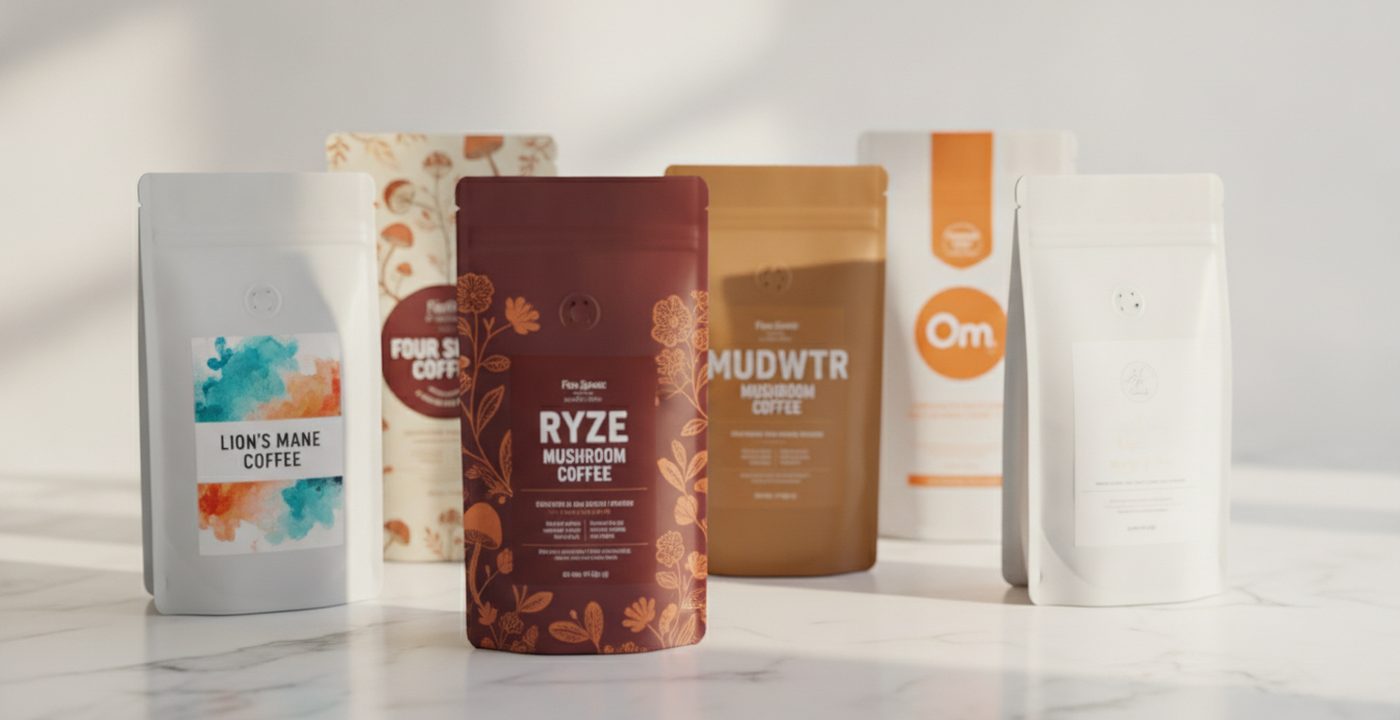
Table of Contents
Some of the links in this article are affiliate links, which help fund our independent review work at no extra cost to you. Every recommendation is based on hands-on testing through The Editor Lab methodology. No brand pays to appear, and no placement is guaranteed.
Mushroom coffee vs regular coffee is one of those comparisons that sounds stranger than it is. You are not choosing between your morning brew and a glass of soil. You are choosing between your regular cup and a blend of ground coffee and dried mushroom extract - usually lion's mane, chaga, cordyceps, or reishi - that delivers a noticeably different caffeine and energy profile.
I founded Balance Coffee in 2020 after spending more than a decade in the coffee industry, starting out as a barista trainer at UCC Coffee and then spending five and a half years at Sanremo UK, latterly as Sales & Marketing Manager, one of the world's leading espresso machine manufacturers. In that time I visited almost 300 roasteries and worked directly with some of the UK's best specialty coffee producers. I have also spent more than six months testing mushroom coffee recipes in our own roastery before launching our Lion's Mane Coffee blend. This comparison is built on that background, not on wellness marketing.
Mushroom Coffee vs Regular Coffee: The Short Answer
If you tolerate caffeine well and love the taste of your current cup, there is no urgent reason to switch. If you get jitters, an afternoon crash, anxiety, or disrupted sleep from your regular coffee, mushroom coffee is worth trying as a replacement or a blend-in. If you are curious about adaptogens or cognitive support, it is a genuinely interesting category - just approach the health claims with appropriate scepticism.
| Factor | Regular Coffee | Mushroom Coffee |
|---|---|---|
| Caffeine per cup | ~95mg (drip), ~63mg (espresso) | Varies - typically 30-70% lower than regular |
| Taste | Bold, distinct coffee flavour | Close to coffee, earthy undertones depending on blend |
| Health claims | Antioxidants, longevity associations | Cognitive support, immune modulation, adaptogenic effects |
| Cost per cup | 15-80p (supermarket to specialty) | 50p-£1.80 (depending on brand and format) |
| Evidence base | Strong (decades of research) | Emerging (early human studies, promising) |
| Caffeine crash risk | Moderate to high | Lower, due to reduced caffeine and adaptogenic balance |
| Best for | Coffee lovers who tolerate caffeine well | Caffeine-sensitive drinkers seeking smoother energy |
What Mushroom Coffee Actually Is
Mushroom coffee is not coffee brewed with mushrooms. It is a blend - typically 70-80% ground coffee and 20-30% dried mushroom extract - that you brew exactly the same way you brew regular coffee. The mushroom content is extract, not whole mushroom powder, which is why properly made blends do not taste like the forest floor.
The four mushrooms you will see most often in mushroom coffee blends are:
Lion’s mane (Hericium erinaceus): The most studied for cognitive function. Early research, including a 2009 double-blind trial published in Phytotherapy Research, found that lion’s mane consumption was associated with improved cognitive scores in adults with mild cognitive impairment. The mechanism proposed is support for Nerve Growth Factor (NGF) production. Balance Coffee’s Lion’s Mane Coffee contains 1,800mg lion’s mane per cup - a quantity consistent with the doses used in early human studies.
Chaga (Inonotus obliquus): A birch fungus with a high antioxidant content. Often associated with immune support. Less studied in human trials than lion’s mane.
Cordyceps (Ophiocordyceps sinensis): Used in traditional Chinese medicine. Early studies suggest potential benefits for oxygen utilisation and endurance, though most research is in animals or very small human cohorts.
Reishi (Ganoderma lucidum): The most widely used adaptogenic mushroom in Asian wellness traditions. Associated with stress modulation and immune support. Evidence in humans is limited but growing.
The ratio of coffee to mushroom extract matters. A product with 500mg lion’s mane per serving is not the same as one delivering 1,800mg. If the cognitive angle is your reason for switching, check the dosage on the label before buying. For more detail on the top brands and what they actually deliver, the best mushroom coffee UK guide on this site covers the full category ranking.
Mushroom coffee is typically available as ground coffee (the most common format in the UK), instant powder, or coffee pods. The ground format gives you the most control over brew strength and is closest to a regular specialty coffee experience.
What Is In Regular Coffee
Regular coffee, at its most straightforward, is roasted and ground Coffea arabica or Coffea robusta beans extracted with hot water. What you get in the cup depends heavily on which of those you start with.
Arabica accounts for roughly 60% of global production. It has lower caffeine than robusta, more complex flavour - fruit, floral, chocolate, nut profiles depending on the origin - and is the basis for almost all specialty coffee. If you are buying from a specialty roaster or grinding whole beans at home, you are almost certainly drinking arabica.
Robusta has roughly twice the caffeine of arabica, a harsher flavour with more rubbery and bitter notes, and a thicker crema. It is the backbone of many commercial espresso blends and most supermarket coffee. Higher caffeine does not mean better quality - in practice, high-robusta blends are a cost-reduction strategy, not a premium choice.
Beyond caffeine, regular coffee delivers:
Chlorogenic acids: Antioxidant compounds that have been associated with reduced inflammation and blood glucose regulation in observational studies. The Harvard T.H. Chan School of Public Health Nutrition Source on coffee notes that coffee is one of the largest sources of antioxidants in Western diets.
Polyphenols: A broader family of plant compounds with antioxidant activity. Regular coffee consumption has been associated with reduced risk of certain chronic conditions in large-scale observational studies, including a 2017 BMJ umbrella review covering 201 meta-analyses that found coffee consumption was associated with reduced risk of several cancers, cardiovascular outcomes, and neurological conditions. These are associations, not causation, and individual response varies significantly.
Caffeine: The main pharmacologically active compound. More on this in the section below.
What specialty regular coffee does not do is deliver adaptogens, fungi-derived beta-glucans, or the cognitive-support compounds found in lion’s mane. That is the actual gap mushroom coffee fills - not superior antioxidants, but a different class of functional compounds that regular coffee simply does not contain.
For an in-depth look at sourcing quality and what separates specialty from mass-market, the best coffee beans UK guide covers the full ranking and what to look for.
Caffeine Content: How They Compare
This is the practical question most people are actually asking. The answer is straightforward: mushroom coffee contains less caffeine than regular coffee, but how much less varies significantly by brand and blend ratio.
| Brew method | Average caffeine per cup |
|---|---|
| Drip / filter (250ml) | ~95mg |
| Espresso (30ml) | ~63mg |
| Flat white (double shot) | ~126mg |
| Instant coffee | ~65mg |
| Cold brew concentrate | ~150-200mg |
These figures are from standard industry data. Individual cups vary by origin, roast level, and extraction.
Balance Coffee’s Lion’s Mane Coffee is marketed as delivering around 20% lower caffeine than regular coffee - so roughly 75-80mg per cup, based on a standard ~95mg regular cup baseline. The brand does not publish an absolute mg figure, and I would be cautious about taking any brand’s precise caffeine claim at face value without third-party lab verification. What you can rely on is that blended mushroom coffees are lower in caffeine than a straight cup made with the same amount of pure ground coffee, because the mushroom extract is replacing a portion of the coffee content.
Caffeine content varies by brand. Brand-stated figures (verify at purchase):
- Four Sigmatic Think Lion’s Mane: brand states around 50mg caffeine per serving - significantly lower than a regular cup.
- Ryze Mushroom Coffee: brand states around 48mg caffeine per serving.
- MUD\WTR :rise: uses a cacao and mushroom base with a small amount of black tea - caffeine content is around 35mg per serving, significantly lower than any standard mushroom coffee.
- Om Mushroom Master Blend: can vary depending on mix format; check current label.
The lower caffeine is not a bug - it is the mechanism behind the ‘smoother energy’ claim. When you combine reduced caffeine with adaptogenic mushrooms that modulate stress response, the result for many drinkers is sustained focus without the spike-and-crash pattern that comes from a higher caffeine dose.
Health Benefits: Side by Side
Both categories offer genuine health-adjacent reasons to drink them. Neither category is the straightforward winner the wellness industry would have you believe.
Regular coffee (what the evidence actually shows):
The research base for regular coffee is deep and broadly positive. Large observational studies - including the 2017 BMJ umbrella review mentioned above - have found associations between regular coffee consumption and reduced risk of type 2 diabetes, Parkinson’s disease, liver disease, and certain cancers. These are associations in large populations, not controlled clinical trials, and they do not prove that drinking coffee directly causes these outcomes.
For cognitive function, caffeine’s mechanism is well-understood: it blocks adenosine receptors, reducing the perception of fatigue and improving alertness and reaction time. The effect is real, dose-dependent, and temporary. Tolerance builds with regular use, which is why regular coffee drinkers often find the energy boost less pronounced over time.
Mushroom coffee (what the evidence actually shows):
The evidence base here is considerably thinner, but it is not nothing.
For lion’s mane: the most-cited human study is Mori et al. (2009), a small double-blind trial in 30 adults with mild cognitive impairment, which found that 16 weeks of lion’s mane supplementation at 3g/day was associated with improved cognitive function scores. The improvement reversed after supplementation ended. It is an encouraging early result. It is not proof of effect in healthy adults, and the dosing context matters - 3g/day in the Mori study is a higher dose than most mushroom coffee blends deliver. The PubMed listing for Mori et al. is the reference point; this is the study that launched the lion’s mane cognitive category.
For immune support (chaga, reishi, cordyceps): most of the evidence base is animal studies or in-vitro (lab cell) research. The mechanism - beta-glucans activating innate immune response - is plausible and well-understood in immunology. Human clinical trial data is limited.
The honest read: regular coffee has a stronger and more consistent evidence base for broad health outcomes. Mushroom coffee has a more targeted and specific mechanism (NGF support via lion’s mane, adaptogenic stress modulation) that early evidence supports but that is not yet conclusively proven in large human trials.
For the deeper dive into whether mushroom coffee is good for you, the is mushroom coffee good for you article covers the evidence in full. If you are specifically interested in the cognitive-support category, best lion’s mane coffee UK has the full breakdown of dosage, format, and what to look for.
Taste and Brewing: Honest Comparison
The taste question is where mushroom coffee earns the most scepticism - and where a well-made blend can genuinely surprise you.
Regular specialty coffee: Taste varies enormously by origin, roast, and brewing method. A light-roasted Ethiopian Yirgacheffe has nothing in common in the cup with a dark-roasted Italian-style espresso blend. What specialty coffee consistently delivers is clarity of flavour, sweetness from the bean sugars, and the full coffee character you are looking for. From a cupping standpoint, specialty arabica at its best is one of the most complex beverages you can drink.
Mushroom coffee: Balance Coffee’s Lion’s Mane Coffee describes as ‘rich and chocolatey, zero mushroom taste’ - and based on the blend composition (80% coffee, 20% lion’s mane extract), that is an accurate description of what a well-made lion’s mane blend should taste like. The earthy notes from the extract tend to round the coffee’s bitterness rather than introduce a fungal or earthy flavour that overwhelms it. Badly formulated mushroom coffee - usually products with too much whole mushroom powder or a cheap coffee base - does taste noticeably earthy. The quality of the underlying coffee matters as much as the mushroom quality.
Brewing methods: Mushroom coffee ground blends brew exactly the same way as regular coffee - cafetiere, V60, moka pot, AeroPress, or drip filter. The one exception: the Balance Coffee Lion’s Mane Coffee is a ground-only product and is not suitable for espresso machines (the grind and blend are optimised for immersion and pour-over methods, not the high-pressure extraction an espresso machine requires).
Instant mushroom coffee products (Four Sigmatic’s packets, for example) dissolve in hot water, which makes them convenient but removes the ritual element that many people are trying to preserve when they switch.
If taste is the primary concern, the honest advice is to buy a small bag of a reputable lion’s mane blend and try it alongside your regular coffee for a week. Your palate adjusts faster than you think.
Cost Per Cup Breakdown
Mushroom coffee costs more than regular coffee. That is not negotiable. The question is whether the premium is justified for your situation.
| Coffee type | Cost per cup |
|---|---|
| Supermarket ground coffee | 10-20p |
| Specialty roaster beans (250g, £10-14) | 40-55p |
| Premium specialty (250g, £15-20) | 60-80p |
| Specialty cafe espresso drink | £3.50-£5.00 |
If you are already buying from a specialty roaster, you are spending 40-80p per cup. The quality gap between supermarket coffee and specialty is significant; the gap between specialty regular and a good mushroom coffee blend is less about quality and more about functional ingredients.
| Brand / product | Price (as of June 2026) | Cost per cup |
|---|---|---|
| Balance Coffee Lion’s Mane Coffee (250g, £24.99) | £24.99 / 250g | around 80-90p per cafetiere serving |
| Four Sigmatic Think Lion’s Mane (10 packets) | around £20 / 10 serves | around £2.00 per serve |
| Ryze Mushroom Coffee (30 serves) | around £35 / bag | around £1.15 per serve |
| MUD\WTR :rise (30 serves) | around £38 / bag | around £1.25 per serve |
| Om Mushroom Master Blend (30 serves) | around £30-35 / bag | around £1.00-£1.15 per serve |
Balance Coffee’s ground format is the most cost-competitive of the branded mushroom coffees reviewed here, and it brews like a regular coffee rather than requiring you to dissolve a packet. At 80-90p per cup, you are paying a modest premium over specialty regular coffee.
If you are switching from a £4.50 cafe habit to making mushroom coffee at home, you are saving money. If you are switching from 15p supermarket instant to £2 per serve Four Sigmatic packets, you are making a significant lifestyle spending choice.
Side Effects and Who Should Avoid Each
Neither category is risk-free. The wellness framing around mushroom coffee sometimes glosses over the precautions that are worth knowing.
Regular coffee side effects:
High caffeine intake can cause: jitteriness and anxiety (particularly at doses above 200-300mg), disrupted sleep (the half-life of caffeine is around five to six hours, so a 4pm coffee may still be active at midnight), increased heart rate, and acid reflux in sensitive individuals.
The NHS advises that pregnant women keep caffeine intake to under 200mg per day from all sources, including coffee, tea, and chocolate. This applies to mushroom coffee too - the caffeine may be lower, but it is still present. The NHS page on foods to avoid in pregnancy is the authoritative UK reference.
Mushroom coffee side effects:
Lower caffeine is the main practical advantage for side effect profiles. However:
Autoimmune conditions: Some mushrooms, particularly reishi and chaga, have immunomodulatory effects - meaning they may stimulate or modulate immune activity. If you have an autoimmune condition or take immunosuppressant medication, speak to your GP before adding functional mushrooms to your routine.
Blood thinners: Some research suggests chaga may have mild anticoagulant properties. If you take warfarin, aspirin, or other blood-thinning medication, this is worth checking with a healthcare professional before consuming chaga-containing products regularly.
Digestive sensitivity: Some people experience mild digestive discomfort when first introducing mushroom coffee, particularly at higher mushroom extract concentrations. If this happens to you, start with a smaller serving and build up.
Pregnancy: Lower caffeine is a benefit, but mushroom adaptogens have not been adequately studied in pregnancy. Erring on the side of caution and deferring mushroom-containing products until after pregnancy and breastfeeding is the conservative and sensible position.
For people who want the concentrated functional mushroom benefits without any caffeine at all, best mushroom tincture UK covers the standalone extract category.
The Verdict: Which Should You Drink?
Here is the criteria-led decision that most comparison articles avoid making.
- Switch to mushroom coffee if: you currently experience jitters, anxiety, or heart palpitations from your regular coffee.
- You notice an energy crash in the early afternoon that you would like to reduce.
- Your caffeine consumption is affecting your sleep and you do not want to switch to decaf.
- You are interested in the cognitive-support properties of lion’s mane and want to trial them consistently.
- Stay with regular coffee if: you tolerate caffeine well and love the taste of your current cup.
- Taste nuance and coffee craft are important to you - specialty regular coffee offers a depth of flavour that most mushroom coffee blends cannot fully replicate.
- Budget is a constraint - quality regular coffee costs significantly less per cup.
- The health claims around functional mushrooms do not outweigh the sensory compromise for you.
- Blend both if: you want to reduce your caffeine intake without fully switching.
- You are curious but not ready to replace your morning cup entirely.
- You want the adaptogenic benefits without the flavour change - mixing a small amount of lion’s mane extract or a mushroom coffee blend into your regular coffee achieves a meaningful reduction in caffeine with minimal taste impact.
As the founder of Balance Coffee, I have an obvious commercial interest in the Lion’s Mane Coffee being your top pick. The honest position: if you are happy with your current coffee and tolerate caffeine well, stay with it. If jitters, crashes, or sleep disruption are real problems, mushroom coffee is a legitimate and tasty alternative that deserves a genuine trial. The best mushroom coffee UK guide will help you find the right blend for your priorities.
How to Switch Without Losing the Ritual
The ritual is often the hardest part to preserve. If you switch cold and your morning cup tastes and feels nothing like you expected, you will go back to regular coffee within a week.
The practical approach:
Start with a blend, not a full switch. Replace one of your two daily cups with mushroom coffee for the first two weeks. You keep the ritual, you calibrate the taste, and you give your body time to adjust to the different caffeine level.
Choose a ground format over instant. If the morning ritual includes grinding, brewing, and the smell of fresh coffee, a packet of instant mushroom powder dissolving in hot water will feel like a downgrade. A ground lion’s mane blend brewed in a cafetiere preserves the ritual almost entirely.
Give it two weeks before judging. Taste adjustment is real. The slightly different flavour profile of a mushroom blend feels unfamiliar in the first few days. By week two, most people have adapted and stop noticing the difference.
Do not change your brew method at the same time. If you normally use a cafetiere, start with mushroom coffee in the cafetiere. Changing the product and the method simultaneously makes it harder to separate what you like and do not like.
Balance Coffee’s Lion’s Mane Coffee (ground, £24.99 / 250g) is the starting point I would recommend for someone making this switch in the UK. It uses a specialty coffee base, delivers 1,800mg lion’s mane per cup, and the chocolatey flavour profile is the closest thing to a regular coffee taste profile in the category. Use it in a cafetiere or V60 - not an espresso machine.
Frequently Asked Questions
Is mushroom coffee better than regular coffee?
Neither is categorically better - it depends on what you need. Regular coffee has a stronger, longer-studied evidence base for broad health outcomes and delivers the most complex flavour. Mushroom coffee offers lower caffeine, adaptogenic compounds, and early evidence of cognitive support from lion’s mane. If you tolerate caffeine well, regular coffee works. If you get jitters, crashes, or poor sleep from caffeine, mushroom coffee is the more functional choice.
Does mushroom coffee have caffeine?
Yes. Most mushroom coffees use a coffee base, so caffeine is present - just lower than a regular cup. Balance Coffee’s Lion’s Mane Coffee delivers around 20% less caffeine than standard coffee. Four Sigmatic and Ryze brand-state around 48-50mg per serving. MUD\WTR :rise is the lowest at around 35mg, using a cacao and tea base.
Does mushroom coffee taste like coffee?
A well-made lion’s mane blend tastes close to regular coffee - chocolatey, rounded, with mild earthy undertones most drinkers adjust to within a week. Poorly formulated blends with too much whole mushroom powder can taste medicinal. Balance Coffee’s blend is described as ‘rich and chocolatey, zero mushroom taste.’ The taste gap is smaller than most people expect.
What is the difference between mushroom coffee and regular coffee?
Regular coffee is roasted and ground coffee beans extracted with hot water. Mushroom coffee is a blend of ground coffee and dried mushroom extract - typically lion’s mane, chaga, cordyceps, or reishi - brewed the same way. The functional difference is lower caffeine, the addition of adaptogenic and potentially cognitive-supporting compounds, and a slightly different energy profile that most drinkers describe as smoother and without the afternoon crash.
Should I switch to mushroom coffee?
Switch if you experience jitters, an afternoon crash, caffeine anxiety, or disrupted sleep from regular coffee. Stay if you tolerate caffeine well and love the taste of your current cup. A third option: blend a small amount of mushroom coffee into your regular cup to reduce caffeine and add adaptogens without fully switching.
Why do I feel sick after mushroom coffee?
Most commonly: caffeine sensitivity, drinking on an empty stomach, or a reaction to the mushroom extract concentration. Start with a smaller serving and eat first. If nausea persists across multiple brands, you may have a sensitivity to a specific mushroom species - chaga and cordyceps are the most common triggers of digestive sensitivity in functional mushroom products.
What is the downside of mushroom coffee?
Cost is the main one - often 2-4 times the price of regular coffee per cup. The health evidence base is thinner and less certain than regular coffee’s. Flavour variety is limited compared to specialty coffee origins. Some people experience digestive sensitivity. Anyone with autoimmune conditions or on blood-thinning medication should speak to a GP before switching.
What do doctors say about mushroom coffee?
Cautiously positive but qualified. The caffeine reduction is a genuine benefit for sensitive individuals. Cognitive and adaptogenic claims are described as ‘promising early-stage’ rather than conclusive. The NHS does not specifically endorse or discourage functional mushrooms. For healthy adults, a quality blend is unlikely to cause harm. Anyone managing a chronic condition or taking regular medication should speak to a GP first.
A wellness entrepreneur and biohacker, James explores the intersection of hospitality and health - from clean fuel and recovery tools to mindful routines that build balance into daily life.