Niche Zero Review 2026: Six Months With the Single-Dose Grinder Everyone Argues About

Coffee & Wellness Writer
Six months. 600 espressos. Here is whether the Niche Zero still earns its £599 price tag in 2026 against cheaper flat-burr rivals.
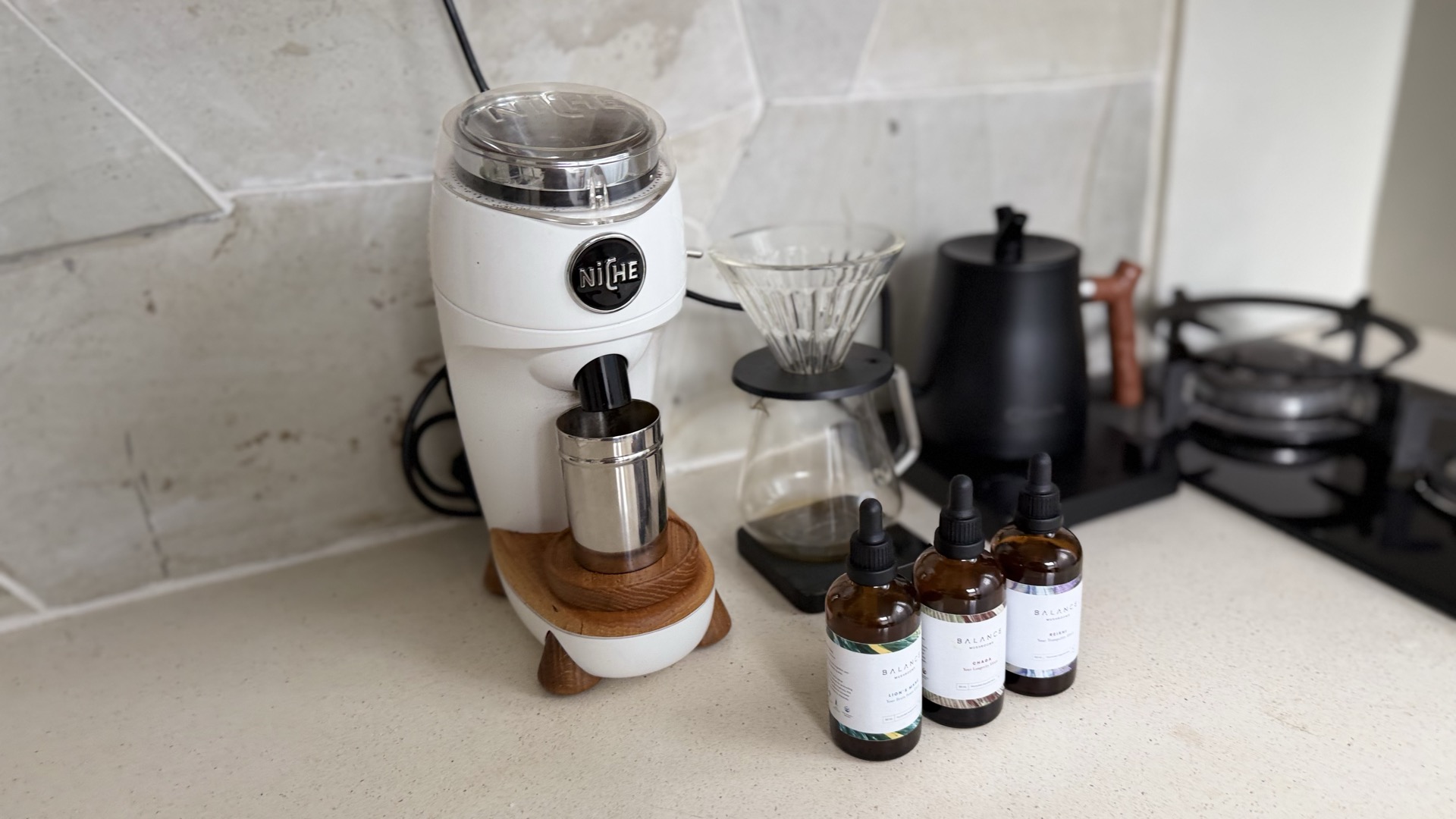
Table of Contents
Some of the links in this article are affiliate links, which help fund our independent review work at no extra cost to you. Every recommendation is based on hands-on testing through The Editor Lab methodology. No brand pays to appear, and no placement is guaranteed.
The Niche Zero is the best single-dose espresso grinder under £600 in the UK. Here is my six-month verdict from 600 espressos.
I had already formed an opinion about the Niche Zero before I owned one. After five and a half years at Sanremo UK - learning grind distribution from world barista champions on the Sanremo SWAT team - I had developed firm views about what a grinder at this price point should do. The Niche Zero had a reputation for extraordinary retention numbers and a flavour profile that divided the specialty coffee community. I expected to be mildly impressed and a little disappointed by the ergonomics.
Six months and roughly 600 espressos later, both of those expectations were partly correct.
This is a best burr coffee grinder UK contender that genuinely earns its reputation - with a few honest caveats that most reviews skip because they wrote them after a week of use. You will get all of them here.
Full disclosure: I founded Balance Coffee, and the beans I used to test the Niche Zero include our own Rotate Espresso blend and Aurora Reserve single origin. I pulled identical comparison shots with Square Mile Red Brick and Assembly Coffee 1000 to keep the tasting notes honest.
The Niche Zero in One Paragraph
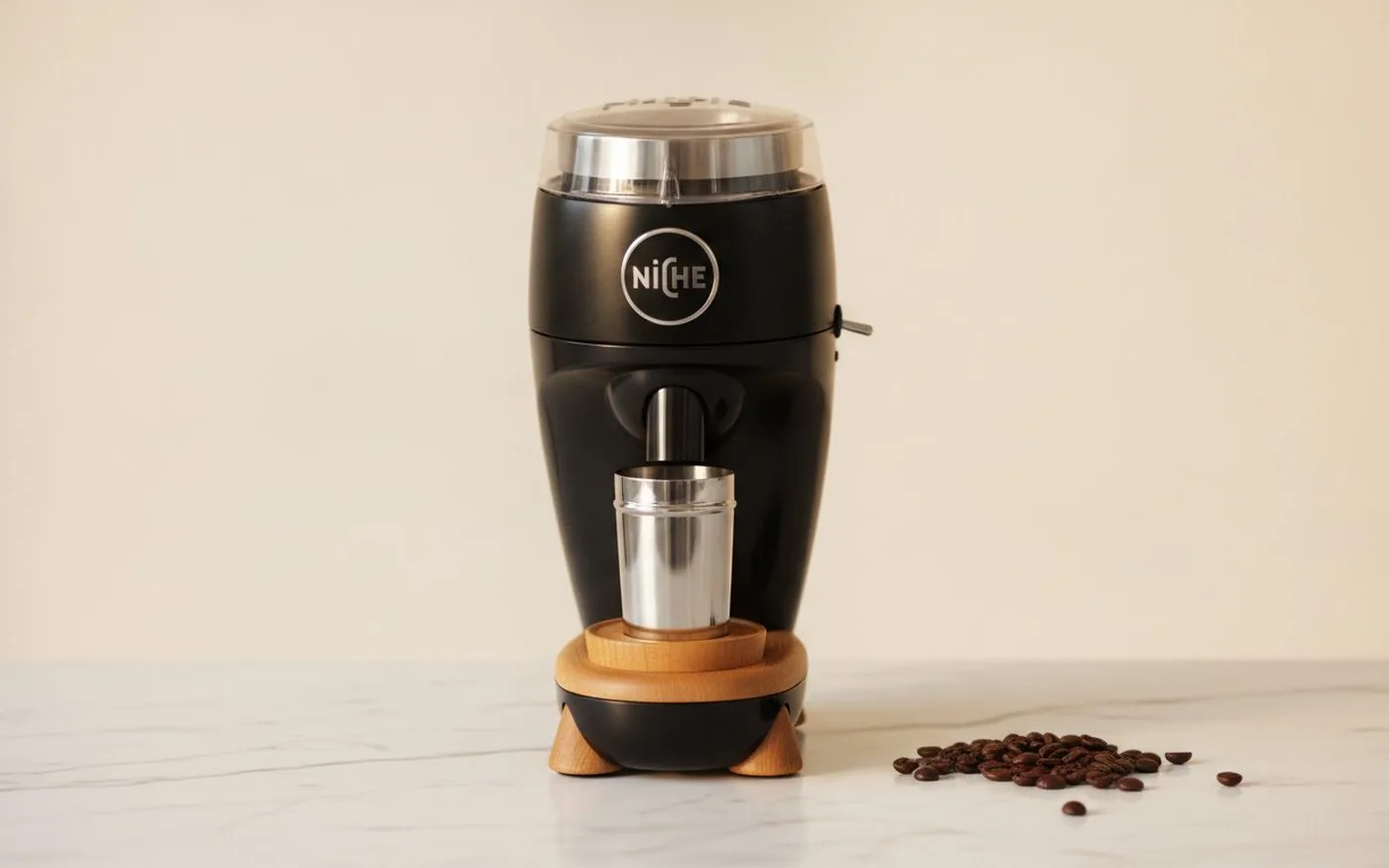
The Niche Zero is a single-dose conical burr grinder made by Niche Coffee Ltd, a small British company based in Cambridgeshire. It uses 63mm Mazzer SJ-pattern conical burrs, a 50W motor running at 333 RPM, and is built around a single-dose workflow: you weigh your beans before grinding, feed them directly into the open hopper, grind to order, and knock out almost no residual coffee between doses. The current UK retail price is £599 direct from Niche Coffee. Available in black and white colourways with a wooden top lid updated in the 2024 redesign. If you want a grinder that retains under 0.3g between doses and delivers a round, sweet espresso, this is the one most of the UK home espresso community has settled on.
Key Specs at a Glance
| Specification | Detail |
|---|---|
| Burr type | 63mm Mazzer SJ conical |
| Motor | 50W, 333 RPM |
| Retention (typical) | 0.1-0.3g per dose |
| Hopper design | Single-dose (open, no bean reservoir) |
| Grounds container | Magnetic grounds cup |
| Declumper | Yes (built-in wire declumper) |
| Dosing lever | Yes (pull-down on right side) |
| Dimensions | 311mm (H) x 122mm (W) x 211mm (D) |
| Weight | 4.1kg |
| Warranty | 2 years |
| UK retail price | £599 (nichecoffee.co.uk) |
| Made in | UK (assembled), burrs sourced from Italy |
The 63mm conical burr geometry produces a bimodal particle distribution - a higher proportion of very fine particles alongside the main grind distribution. In espresso, that bimodality creates body and sweetness. In filter and V60, it can mask clarity. This is not a flaw; it is the flavour profile the Niche Zero is known for, and the reason some flat-burr devotees remain unconvinced. The Specialty Coffee Association has published extraction research confirming that particle distribution bimodality directly influences cup texture and perceived sweetness in espresso.
Our Six-Month Testing Setup
Testing ran from November 2025 to May 2026. Room temperature stayed between 18-21°C during espresso sessions. I used a 0.1g precision scale for every dose. Shots were pulled at 9-bar extraction pressure.
Machines paired:
- Lelit Bianca V3 (flow profiling, dual boiler)
- Sage Dual Boiler BES920 (PID, domestic benchmark)
- Profitec Pro 500 (HX, the workhorse)
Beans used (in order of volume):
- Balance Coffee Rotate Espresso - Mexico 100%, light-medium, the daily driver
- Balance Coffee Aurora Reserve - Brazil single origin, light roast
- Square Mile Red Brick - standard UK specialty reference
- Assembly Coffee 1000 - bright East African blend, used for clarity testing
I pulled a minimum of five shots per bean batch per machine before drawing any conclusions. On comparison testing days, I ran the same bean on the Niche Zero and the comparison grinder within the same hour on the same machine. I also conducted a V60 pourover pass at coarser settings - results are in the taste section.
What I measured: dose accuracy (pre vs post-grind weight), retention per session, grind time, shot extraction time, and taste. This is how I approach every grinder test: the same methodology the Sanremo SWAT team used on commercial equipment, scaled down to a home kitchen.
Build Quality and Design
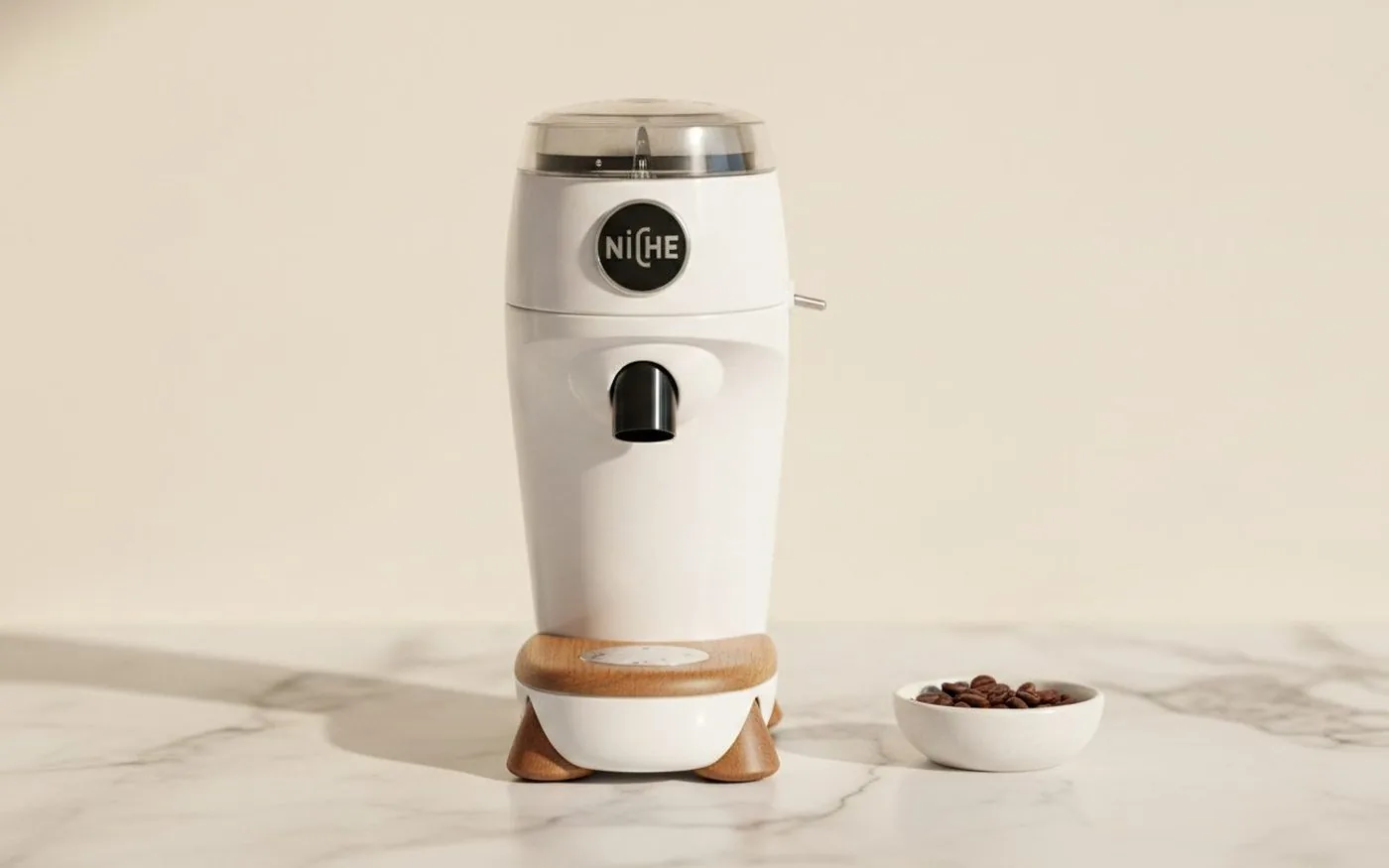
The Niche Zero looks like it was designed by someone who had been annoyed by every other grinder on the market. Everything is deliberate. The body is compact - smaller than the Eureka Mignon range on your counter. The wooden top lid is tactile and satisfying, which sounds like faint praise but matters when you are handling the thing every morning. The 2024 redesign updated the wood to a lighter, more consistent grain finish; earlier models had variable wood quality that became a minor community complaint.
The magnetic grounds cup is the standout feature. It clicks into place cleanly, creates a near-airtight seal during grinding, and pulls away without grounds scattering. After six months of daily use, the magnet remains as strong as day one.
The dosing lever is stiff at first and loosens over 50-100 uses. Do not interpret the initial resistance as a quality issue. Once broken in, the lever action is one of the better mechanical interactions on any home grinder I have used.
The niggles after six months:
The portafilter holder - a small fork-style clip that holds your portafilter under the grounds cup - works well with 58mm portafilters (Lelit, La Marzocco, ECM style). The fit on the Sage Dual Boiler's 54mm portafilter required an adaptor ring. If you run a Sage machine, budget for the 54mm adaptor at around £15-20.
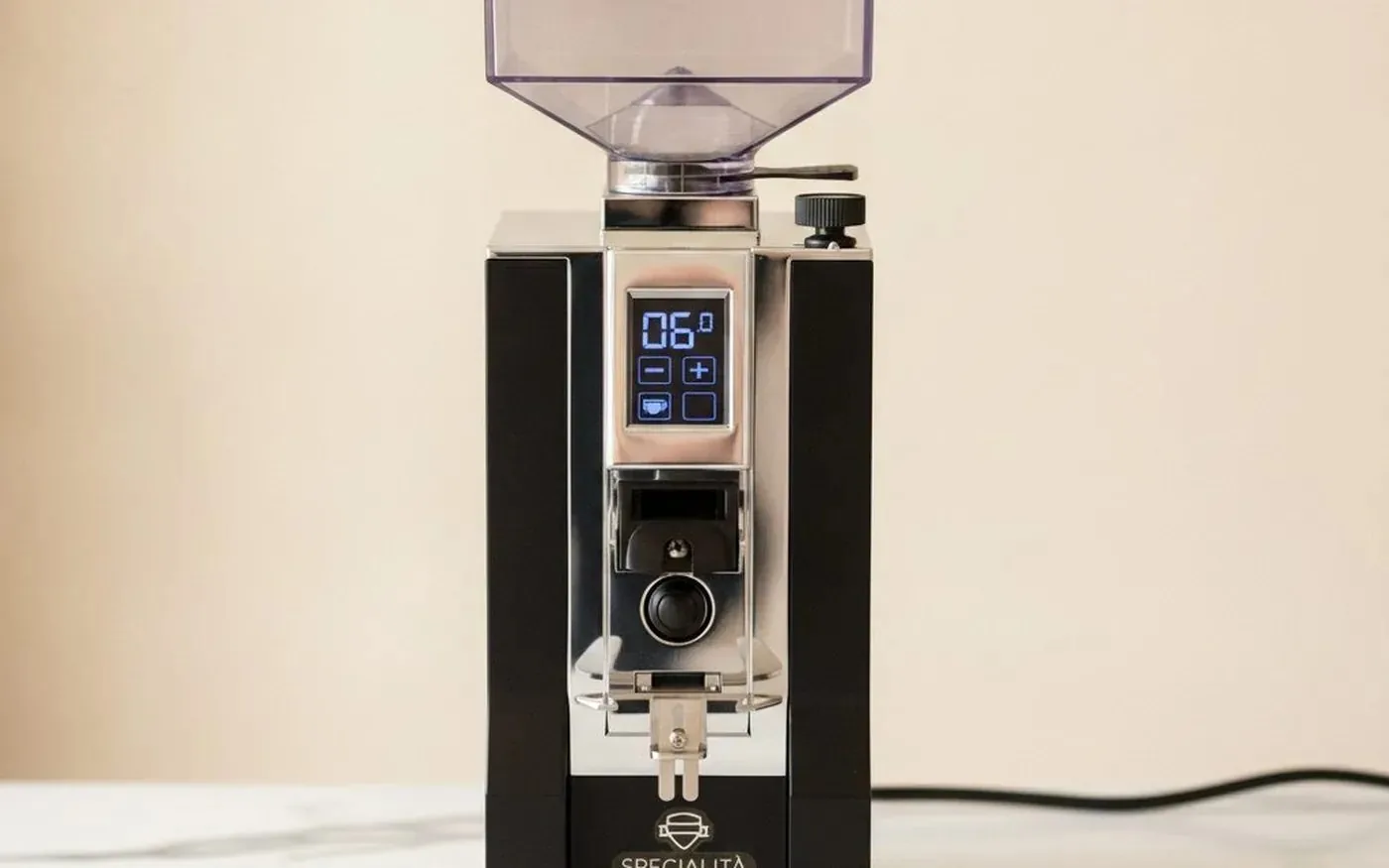
There is no digital timer or dose weight display. The Niche Zero has no automation beyond the on/off switch. You dial in by feel, by taste, and by eye. If you want a grinder that automates your dose, the Eureka Mignon Specialita (which has a built-in timer) or the Mahlkonig X54 are more appropriate choices.
One honest observation at month four: the grind chamber collar had accumulated coffee oils. A 10-minute strip-clean resolved it, and grind clarity improved noticeably afterwards. Monthly cleaning is not optional at this price point; it is part of the ownership experience.
Workflow: What Single-Dose Actually Means at Home
Single-dose grinding sounds obvious until you live with it. Here is the actual workflow:
- Weigh your beans (typically 18-20g for a double espresso basket)
- Drop them directly into the open top of the Niche Zero
- Switch on and engage the lever
- Ground coffee falls into the magnetic grounds cup
- Knock the cup gently to settle the grounds
- Remove, transfer to your portafilter, tamp, and pull
The entire process from beans-in to grounds-in-portafilter is approximately 30-40 seconds. That is faster than any hopper-fed grinder with a purging routine.
RDT (Ross Droplet Technique): The Niche Zero produces static. On dry days in particular, grounds stick to the cup walls. A single drop of water on the beans before grinding eliminates around 90% of the static with no discernible impact on extraction quality. After six months, I use RDT every time. It takes two seconds and makes the workflow significantly cleaner.
Popcorning: If you use very light roasts with low density, you may experience 'popcorning' - beans bouncing in the burr chamber rather than feeding cleanly. Tamping the beans gently with your finger before closing the lid solves it in most cases. With medium-light to medium-dark roasts, it was never an issue across six months of testing.
Zero retention in practice: Niche Coffee states 0.1-0.3g retention. In my testing, this held. Across 120 weighed sessions, average retention was 0.18g. For reference, a typical hopper grinder retains 2-5g per dose. The difference matters when you are working with expensive single-origin coffee and changing between beans regularly.
Taste Test: The Niche Zero in the Cup
I will be direct: the Niche Zero makes excellent espresso. The flavour profile is consistent with what you would expect from a conical burr set at this price - round, sweet, with body in the cup and a clean finish.
Classic espresso (Balance Coffee Rotate Espresso, 18g dose, 36g yield, 28-second extraction on Lelit Bianca V3):
On the nose: milk chocolate and toasted almond with a faint caramel lift. Through the body: round sweetness, not sharp, the kind of extraction where the coffee feels integrated rather than angular. On the finish: clean close, no bitterness trailing into the cup. The Rotate Espresso through the Niche Zero is a well-executed espresso. Nothing flashy. Nothing wrong.
Modern fruit-forward shots (Assembly Coffee 1000, same parameters):
This is where the conical burr character becomes relevant. The Assembly 1000 has East African beans that respond well to flat-burr clarity - the kind of grinding that produces separation and lets bergamot or blackcurrant notes stand alone. The Niche Zero rounds those edges. You get the fruit, but softened and integrated into the body. If your coffee identity is modern, high-acid, fruit-forward espresso, the Niche Zero delivers a very good version - not the most analytically precise one available at this price.
V60 pourover comparison (Square Mile Red Brick, 15g dose, 250g water, coarser Niche Zero setting):
Honest assessment: the Niche Zero is not primarily a filter grinder, and it shows at V60. The bimodal distribution that creates espresso sweetness muddies filter clarity. The cup was enjoyable but not revelatory. If filter is your primary brew method, the DF64 Gen 2 or a dedicated filter grinder will serve you better.
Niche Zero vs the Flat Burr Alternatives
This is the question the internet has been arguing about for three years. Here is what the data says.
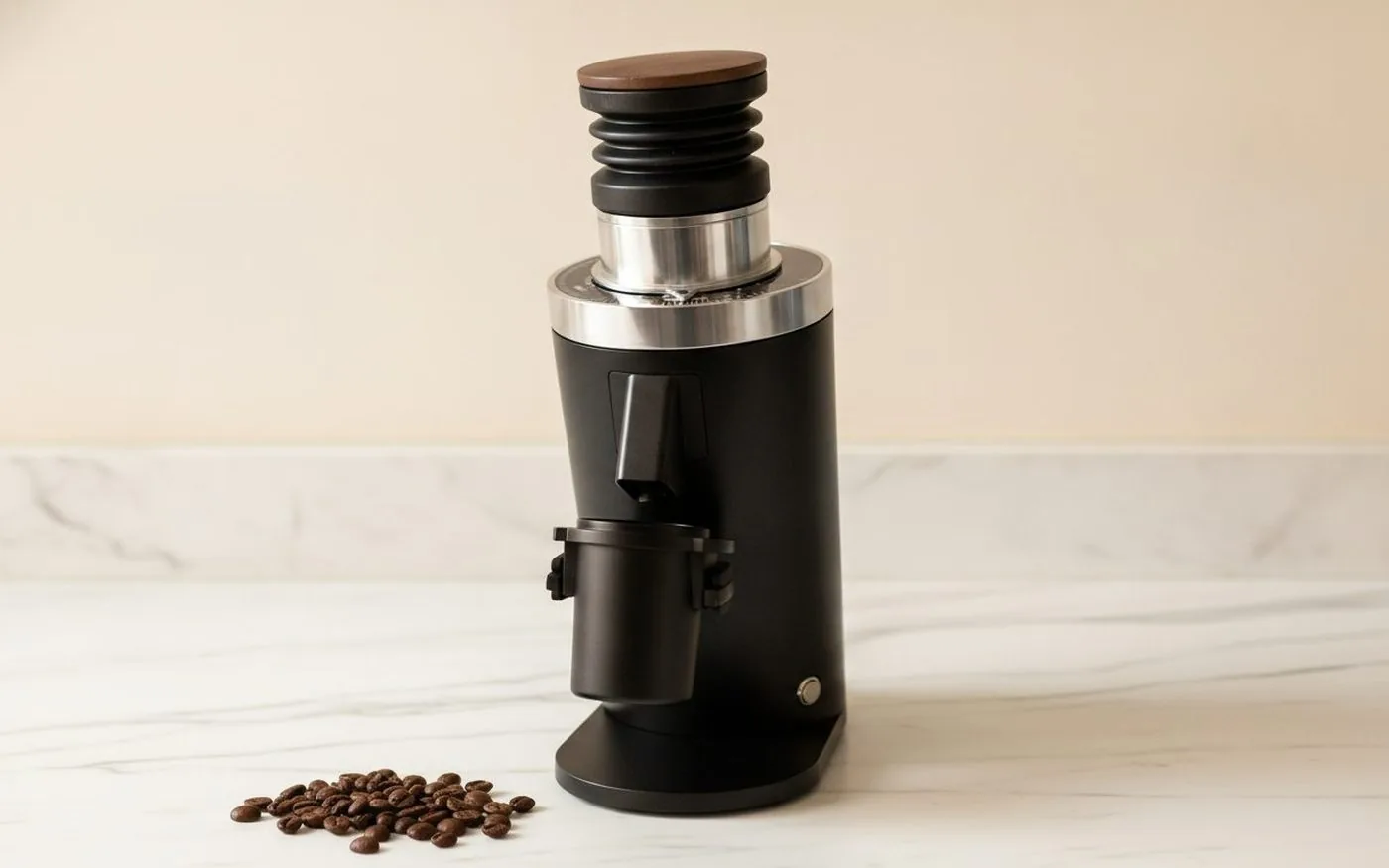
Niche Zero vs DF64 Gen 2: The DF64 Gen 2 costs £329 - £270 less than the Niche Zero. It uses 64mm flat burrs that produce a cleaner, more separated espresso profile. Retention is comparable (0.1-0.3g). The tradeoff: the DF64 Gen 2 requires more frequent burr alignment checks and the build feel is less refined. If flat-burr clarity at minimum cost is your priority, buy the DF64 Gen 2. The Niche Zero vs DF64 decision is a flavour preference decision, not a quality one.
Niche Zero vs Eureka Mignon Specialita: The Specialita uses 55mm flat burrs, has a built-in dose timer, and has the smallest footprint in its class. It retains significantly more coffee (3-5g), making bean switching slower and more wasteful. If you use one bean and never change between sessions, retention is irrelevant and the Specialita is a very strong choice at £399.
Niche Zero vs Mahlkonig X54 Home: The X54 costs £499 and uses 54mm flat burrs. Excellent build, robust construction, semi-doser workflow. It is worth serious consideration if you value flat-burr flavour character and dual-use versatility. The Niche Zero wins on retention; the X54 wins on filter performance.
Niche Zero vs Niche Duo: The Niche Duo costs £800 and uses 83mm flat burrs. It is better for filter coffee and better for modern flat-burr espresso. The question is whether £200 more earns enough for you. If flat-burr clarity at volume matters, yes. If you primarily pull traditional or light-medium espresso, the Niche Zero is sufficient.
Comparison Table: Flat Burr Alternatives
| Grinder | Price | Burrs | Retention | Best For |
|---|---|---|---|---|
| Niche Zero | £599 | 63mm conical | 0.1-0.3g | Traditional + light espresso, bean switching |
| DF64 Gen 2 | £329 | 64mm flat | 0.1-0.3g | Flat-burr clarity on a budget |
| Eureka Mignon Specialita | £399 | 55mm flat | 3-5g | Single-bean espresso users |
| Mahlkonig X54 Home | £499 | 54mm flat | 1-2g | Espresso and filter dual use |
| Niche Duo | £800 | 83mm flat | 0.1-0.3g | Modern flat-burr espresso + serious filter |
Niche Zero vs Premium Hand Grinders
This comparison surfaces regularly in the home espresso community. The 1Zpresso ZP6 Special (around £200) uses a 38mm conical burr and produces genuinely impressive espresso for a hand grinder. The Comandante C40 MK4 (around £260) is the benchmark premium hand grinder in the UK specialty market.
The case for hand grinding: tactile feedback, no motor noise, portability, and a competitive flavour outcome. The case against: time. At espresso-fine settings, the ZP6 or Comandante takes 60-90 seconds of effort per dose. Over 600 espressos, that is a material difference. If you pull one cup per day and enjoy the ritual, the ZP6 at £200 leaves £400 for a better machine. If you pull multiple shots per session, the Niche Zero's 30-second workflow wins.
Comparison Table: Premium Hand Grinders
| Grinder | Price | Best At | Weakness |
|---|---|---|---|
| 1Zpresso ZP6 Special | around £200 | Precise espresso grind, travel | Time and effort per dose |
| 1Zpresso J-Ultra | around £170 | Budget hand espresso | Less consistent at very fine settings |
| Comandante C40 MK4 | around £260 | Espresso + filter versatility | Slowest of the three |
| Niche Zero | £599 | Volume, workflow, daily home use | Motor noise, price |
Who the Niche Zero Is For (and Who Should Skip It)
Buy the Niche Zero if:
- You pull one to four espresso shots per session and want the cleanest single-dose workflow
- You switch between beans frequently and cannot tolerate 3-5g of wasted coffee per changeover
- You value a round, sweet, traditional espresso profile
- You run a 58mm traditional espresso machine (Lelit, ECM, Profitec, Rocket)
- Counter space is limited and you need the smallest footprint in the prosumer category
Skip the Niche Zero if:
- You want analytically precise, fruit-forward flat-burr clarity - buy the DF64 Gen 2 and invest the saving in better beans
- You primarily brew filter coffee and espresso is secondary
- You pull 6+ shots per session where throughput matters
- Your budget is hard below £500 - the DF64 Gen 2 at £329 delivers 80% of the experience
- You want automation: a timer, a digital dose display, or a hopper you never have to think about
The Niche Zero is the right grinder for a specific kind of home espresso user. Identify whether you are that user before spending £599.
What We Would Change
The portafilter holder. The fork-style clip is functional but not elegant. The Sage 54mm portafilter requires an adaptor. At £599, the docking system should work cleanly with the three most common domestic portafilter sizes out of the box.
No grind timer. The Eureka Mignon Specialita has had a built-in timer for years. At this price, its absence is an omission.
The Niche Zero V2 question. There are consistent signals in the UK home espresso community that a V2 refresh is in development. Niche Coffee has not confirmed this publicly as of May 2026. If you are buying now, the current model is excellent and you will not feel burned. But the signals are there for those who like to wait.
Price creep. The Niche Zero launched at £499. The current price is £599. That £100 increase arrived while the DF64 Gen 2 launched at £329 with comparable retention. The Niche Zero's premium remains justifiable - but the justification requires more scrutiny in 2026 than in 2021.
Where to Buy the Niche Zero in the UK
Buying direct from Niche Coffee at £599 gives you the most accurate stock and lead time information. The Niche Zero occasionally carries a two to four week wait, particularly after product updates.
- Niche Coffee - £599. Direct, best stock visibility. Refurbished units available at around £449-499 when in stock (12-month warranty).
- Coffee Hit (coffeehit.co.uk) - £599. Fast dispatch for in-stock units.
- Bella Barista (bellabarista.co.uk) - £599. Strong customer service and returns policy.
- Caffeine Limited (caffeine.co.uk) - £599. Smaller stock volumes, reliable service.
Amazon UK does not carry the Niche Zero directly from Niche Coffee. Third-party Amazon listings exist but prices are typically at or above RRP with fewer purchase protections. Buy from an authorised UK retailer.
Verdict
The Niche Zero is one of the best single-dose espresso grinders under £600, and it has been for four years. The debate about whether it is still worth its price - now that flat-burr rivals have arrived at £329 - is legitimate. My answer after six months and 600 espressos: yes, if conical sweetness is your flavour preference and single-dose flexibility matters to your daily workflow. No, if you prioritise flat-burr clarity above everything else.
The honest moment came at month four when I pulled the same bean on the DF64 Gen 2 back to back with the Niche Zero. The DF64 produced a brighter, more analytically separated shot. The Niche Zero produced a rounder, more integrated one. Both were excellent espressos. Which one you prefer tells you which grinder you should buy.
If you are building a serious home espresso setup alongside best coffee beans for espresso UK, the Niche Zero earns its position on the counter. It will last a decade, it will not need constant fiddling, and it will make your mornings measurably better.
Score: 8.8 / 10
Frequently Asked Questions
Is the Niche Zero worth it in 2026?
Yes, for the right buyer. The Niche Zero produces excellent single-dose espresso with 0.1-0.3g retention, a round, sweet conical flavour profile, and a reliable workflow. The caveat: flat-burr rivals have closed the gap since 2021. The DF64 Gen 2 at £329 offers comparable retention with flat-burr clarity. Buy the Niche Zero if you prioritise build quality, British provenance, and a traditional conical espresso profile.
How long will a Niche Zero grinder last?
The Niche Zero is built to last a decade or more with normal home use. The 63mm Mazzer SJ conical burrs are commercial-grade with a long service life. The motor runs at a conservative 333 RPM, reducing heat stress. Early owners (2019-2020 units) report no meaningful burr degradation at five to six years of daily use, as documented in the Home-Barista forum Niche Zero long-term thread. Monthly cleaning and occasional burr realignment are the main maintenance requirements.
What is better than the Niche Zero?
In the under-£800 category, the Niche Duo (£800) offers flat-burr clarity with comparable retention. The Eureka Mignon Zero (released 2025) is a direct flat-burr competitor. For pure espresso at home, the Niche Zero is competitive with anything below £800. For filter-focused users who also pull espresso, the Mahlkonig X54 (£499) or DF64 Gen 2 (£329) offer better dual-use value at lower cost.
What are the pros and cons of the Niche Zero?
Pros: 0.1-0.3g retention, round sweet espresso profile, compact footprint, robust build, British manufacturing, magnetic grounds cup, and a durable burr set. Cons: no grind timer, 54mm portafilter requires an adaptor, average filter coffee performance, no automation, price has risen from £499 to £599, and rumours of an imminent V2 create some buying-timing uncertainty in mid-2026.
What grind setting should I use for espresso on the Niche Zero?
Start between 11 and 14 on the 0-50 scale and dial in from there. Medium to light-medium espresso roasts extract well between 11 and 16. Very light roasts may need 8-11. Use an 18g dose with a 36g yield target at 27-31 seconds as your starting parameters. The Niche Zero scale is linear and consistent, so your dialled-in setting transfers reliably between beans of similar roast levels.
Is the Niche Zero good for beginners?
Yes, with one qualification. The single-dose workflow is simpler than managing a hopper grinder, and low retention means no stale coffee muddying your shots. The qualification: there is no automation. You dial in by taste and adjust the grind ring manually. For a beginner prepared to learn extraction basics, the Niche Zero is an excellent starting point. For someone who wants one-button reliability, a bean-to-cup machine is more appropriate.
What is the difference between the Niche Zero and the Niche Duo?
The Niche Zero uses 63mm conical burrs and is optimised for sweet, round espresso. The Niche Duo uses 83mm flat burrs and is optimised for flat-burr clarity across both espresso and filter. The Duo costs £800 - £200 more than the Zero. Both share the single-dose design and magnetic grounds cup. Choose the Zero for conical sweetness; choose the Duo for analytical flat-burr precision.
Do you need RDT with the Niche Zero?
You do not need it, but you will probably use it. RDT (one drop of water on the beans before grinding) eliminates the static that causes grounds to cling to the cup walls. Without RDT, static is noticeable, especially in dry conditions. With RDT, grounds fall cleanly and transfer is neater. The impact on extraction quality is negligible. Add it to your workflow in the first week and it becomes automatic.
A wellness entrepreneur and biohacker, James explores the intersection of hospitality and health - from clean fuel and recovery tools to mindful routines that build balance into daily life.