Sage Barista Pro Review: Is It Worth £729 in 2026?

Coffee & Wellness Writer
Most reviews skip the grinder caveats. This one does not.
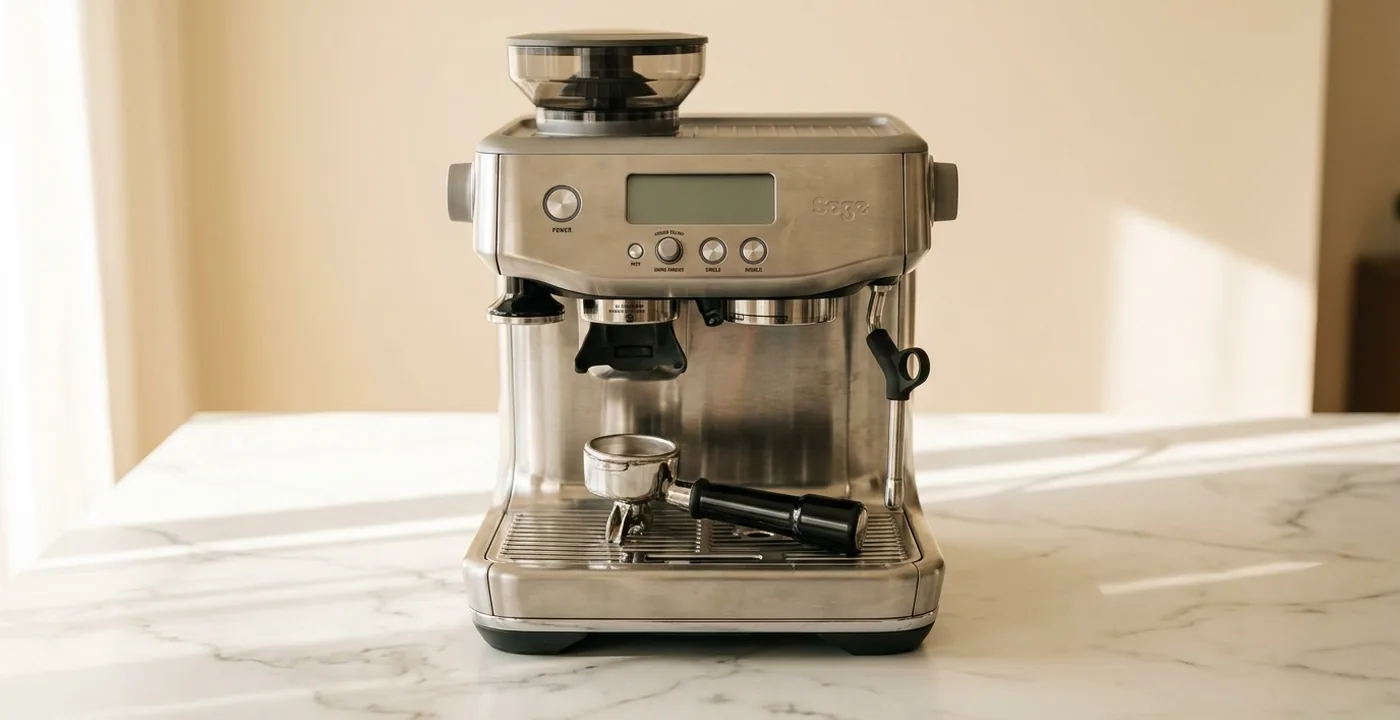
Table of Contents
Some of the links in this article are affiliate links, which help fund our independent review work at no extra cost to you. Every recommendation is based on hands-on testing through The Editor Lab methodology. No brand pays to appear, and no placement is guaranteed.
At £729.95, the Sage Barista Pro is the kind of machine most review sites either oversell or misrepresent. The espresso hardware is excellent for the price. The grinder is where the honest caveats live, and most reviews skip past them quickly.
This review covers both. The short version: buy it if you are willing to develop technique across the espresso and milk sides. Skip it if grinder precision is your first priority, or if you want pressure-gauge feedback for dialling in.
Editor's Note
Quick Verdict
Recommend with caveats. The Barista Pro makes excellent espresso, the LCD gives you real-time shot feedback, and the ThermoJet heat-up is genuinely three seconds. The grinder is capable but inconsistent over time: it will need recalibrating more often than the marketing suggests, and anyone coming from a dedicated single-dose grinder will notice the step down. For most home baristas who want a grinder-inclusive machine at this price, it makes the right trade-offs.
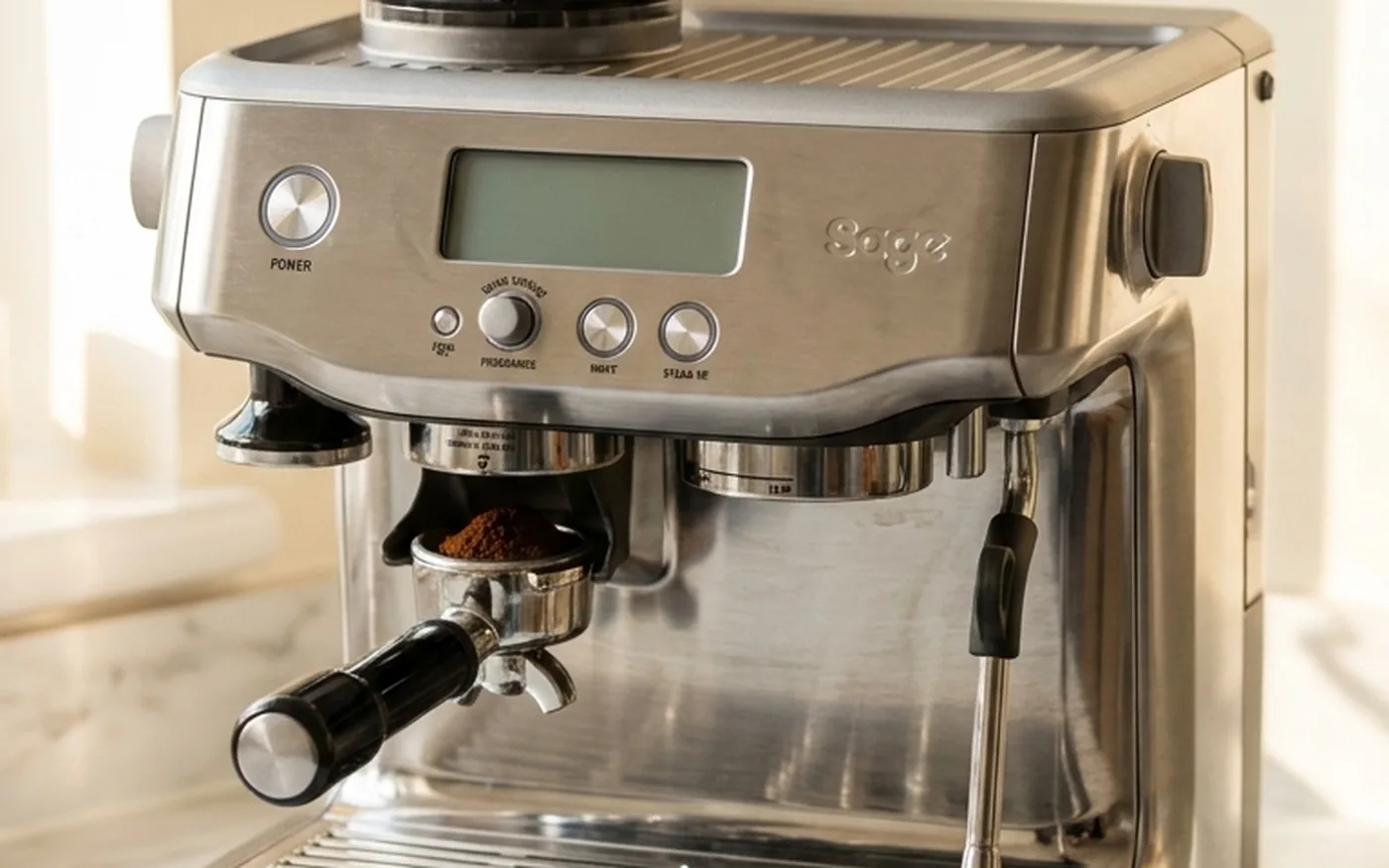
Sage Barista Pro (SES878)
£729.95- + ThermoJet 3-second heat-up keeps you in flow
- + LCD display with real-time shot timer
- + 30-setting conical burr grinder built in
- + 4-hole manual steam wand produces good microfoam
- + Strong build quality - expect five to ten years
- + 2L water tank suits a two-person household
- - No pressure gauge - you dial in by shot time and taste
- - Integrated grinder needs recalibrating several times a year
- - Grinder ceiling shows with light-roast speciality beans
- - Larger footprint than the Bambino range - check counter depth
The right machine for home baristas who want grinder-inclusive espresso and are prepared to develop their technique. The espresso hardware at this price is hard to beat.
What the Sage Barista Pro Actually Is
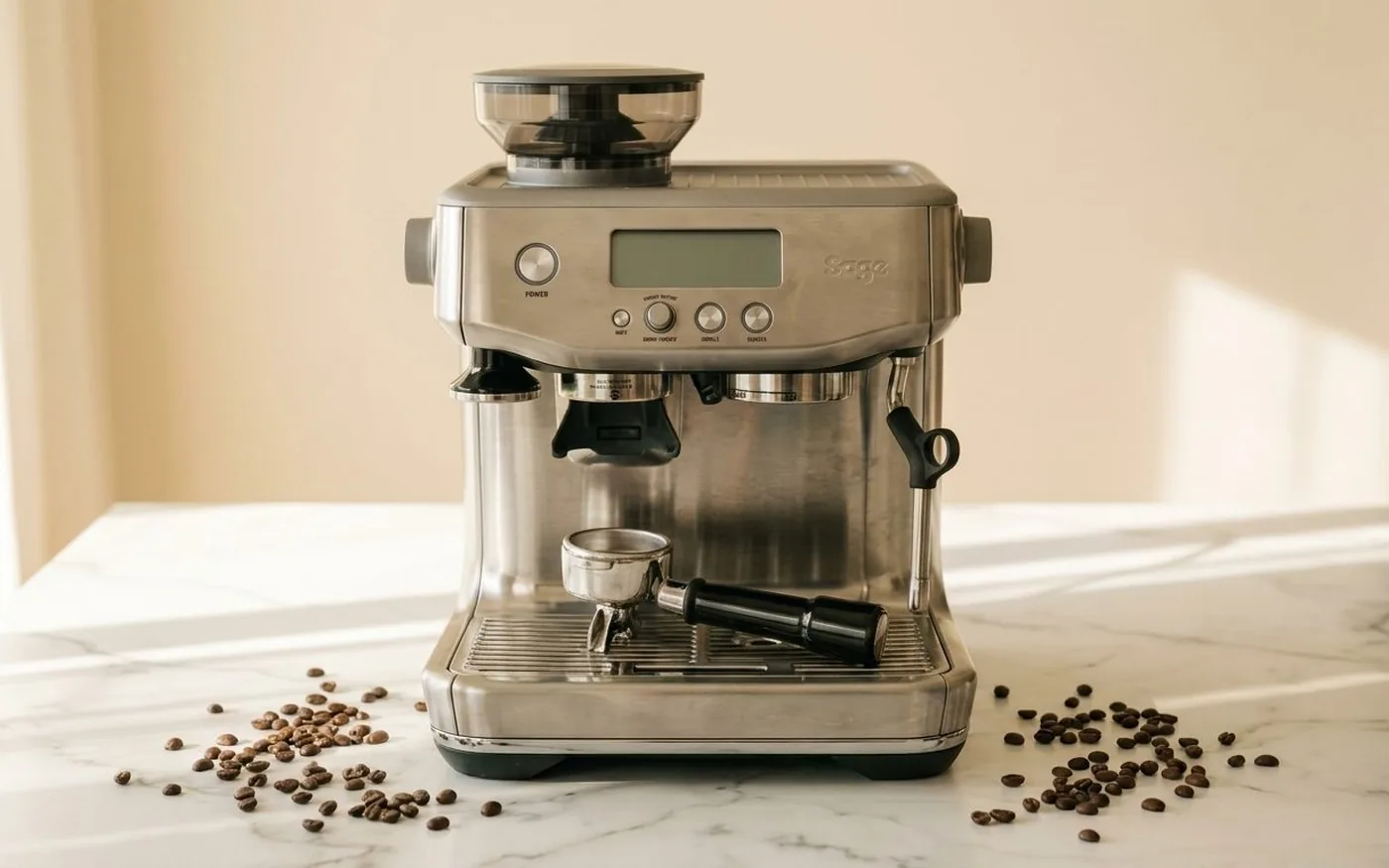
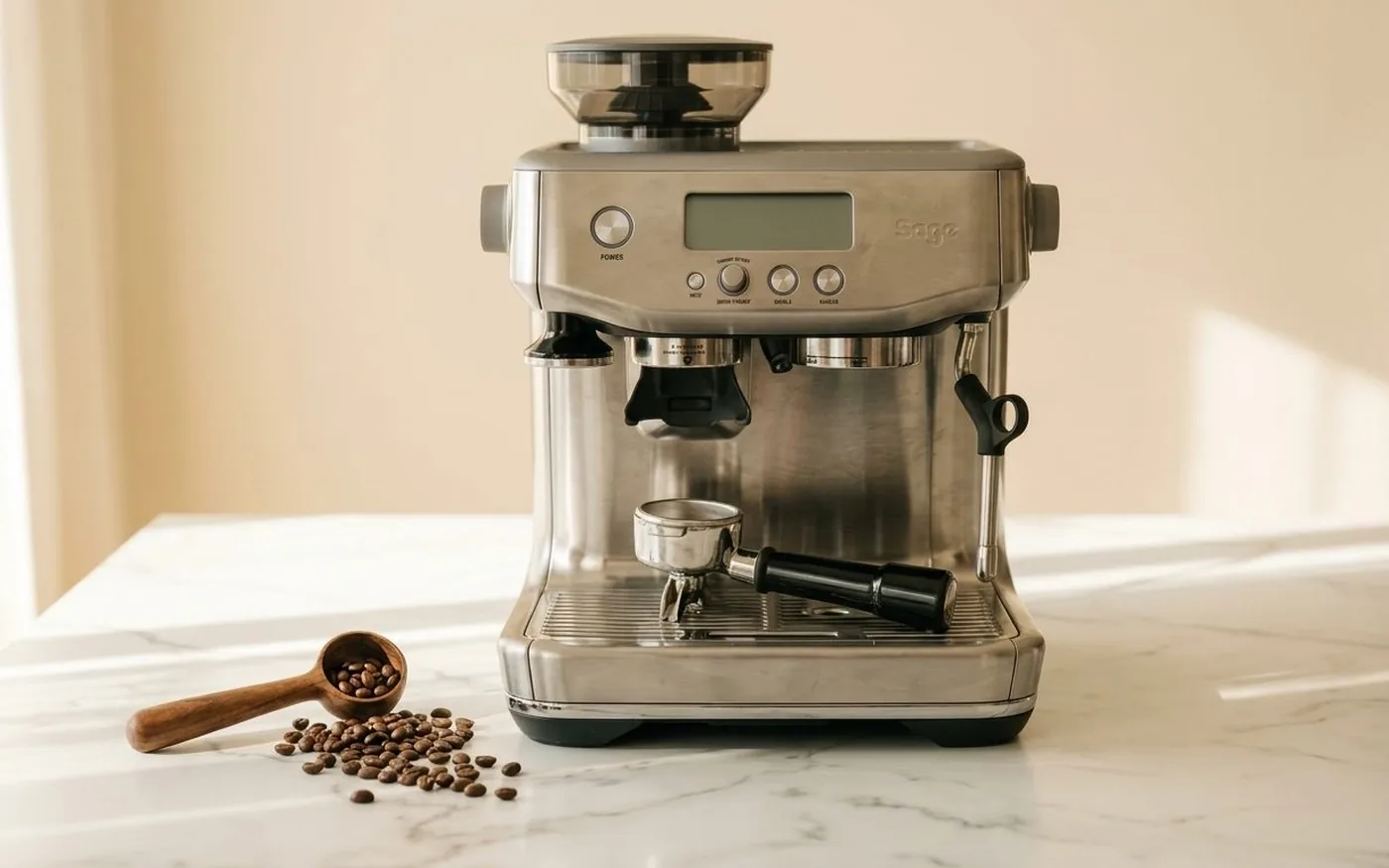
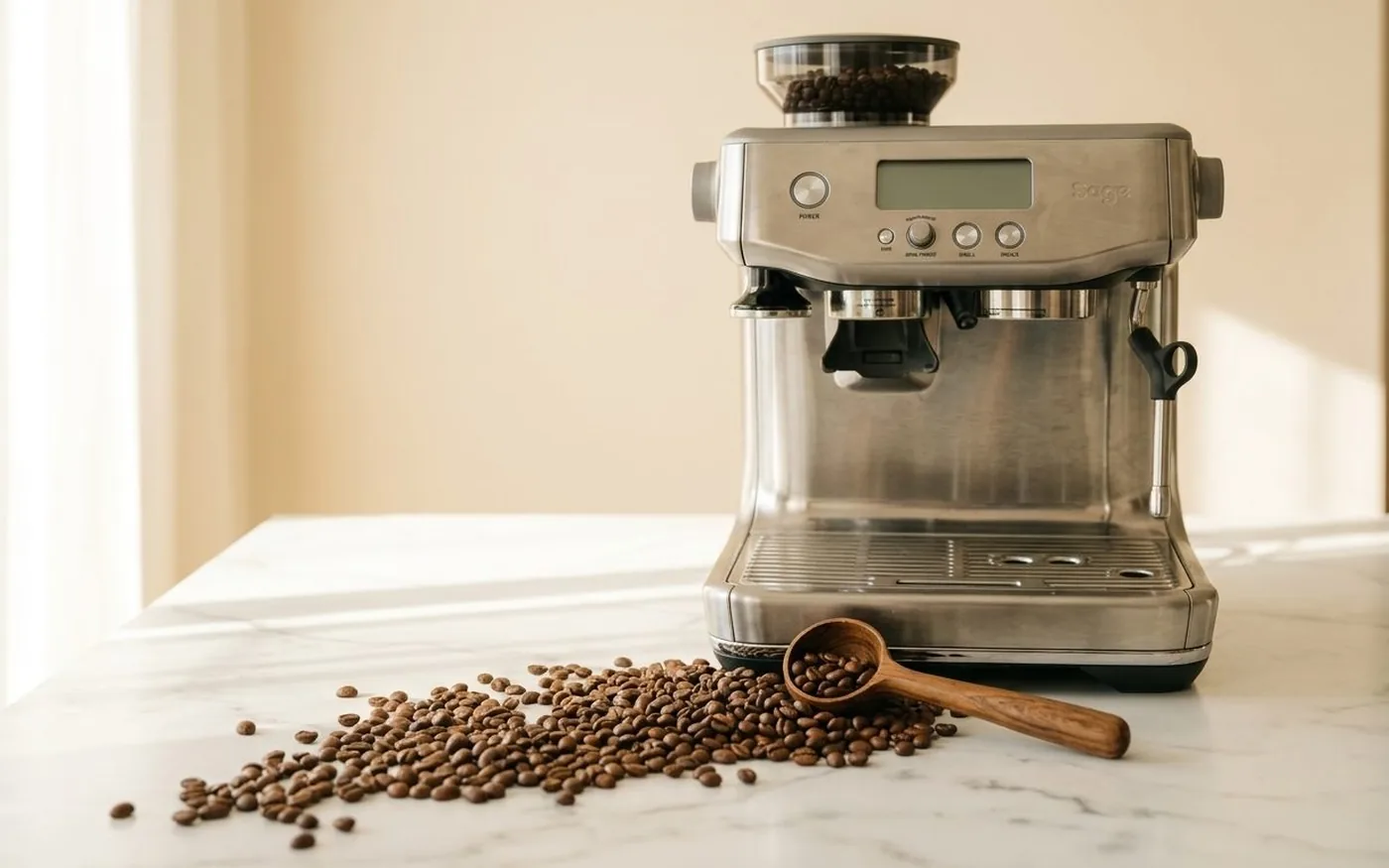
The Sage Barista Pro (SES878) is a semi-automatic espresso machine with an integrated conical burr grinder, ThermoJet 3-second heat-up, and a manual steam wand, designed for home baristas who want grinder-inclusive espresso at the £700 price point.
That sentence matters because it positions the machine correctly. It sits above the Sage Bambino range in both complexity and price, and it sits above the Barista Express on hardware quality. It sits below the Barista Touch on automation. If you are browsing the best sage coffee machine roundups and have landed here, this is the machine for buyers who want manual control across every step - grind, extraction, and milk - with better hardware than the Express and without paying for a touchscreen they may not need.
Key features in practice: 30 grind settings on an integrated conical burr grinder that doses directly into the portafilter, an LCD display showing shot time with grind and temperature adjustment controls, a 4-hole steam tip, a 2L water tank, and a 60-minute auto-off. The machine is notably larger than the Bambino range - check your counter depth before ordering.
A note for 2026 shoppers: Sage's UK retail listings show the SES878 under two names depending on where you shop. Currys lists it as 'the Barista Pro'; John Lewis lists the same model as 'the Barista Pro Luxe'. Both carry the SES878 model code and the same core specification at the same £729.95 RRP. If you are seeing both names while comparing retailers, you are looking at the same machine.
Is the Sage Barista Pro Worth the Money?
Honest answer: yes, with conditions.
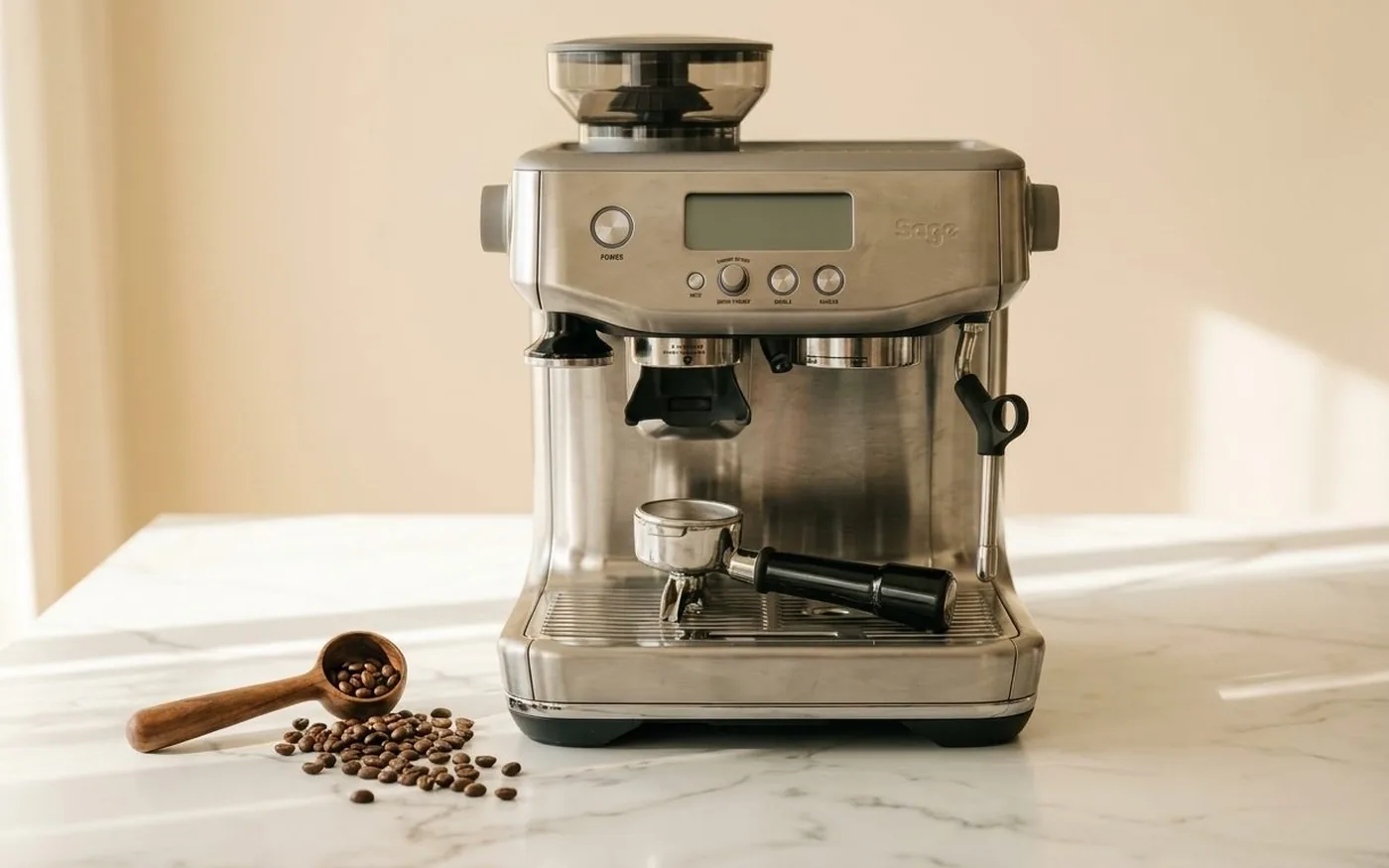
The Barista Pro is worth £729 for home baristas who want grinder-inclusive espresso without a touchscreen. It is not worth it if you want pressure-gauge feedback for dialling in, or if you want a grinder you can set once and leave for weeks at a time.
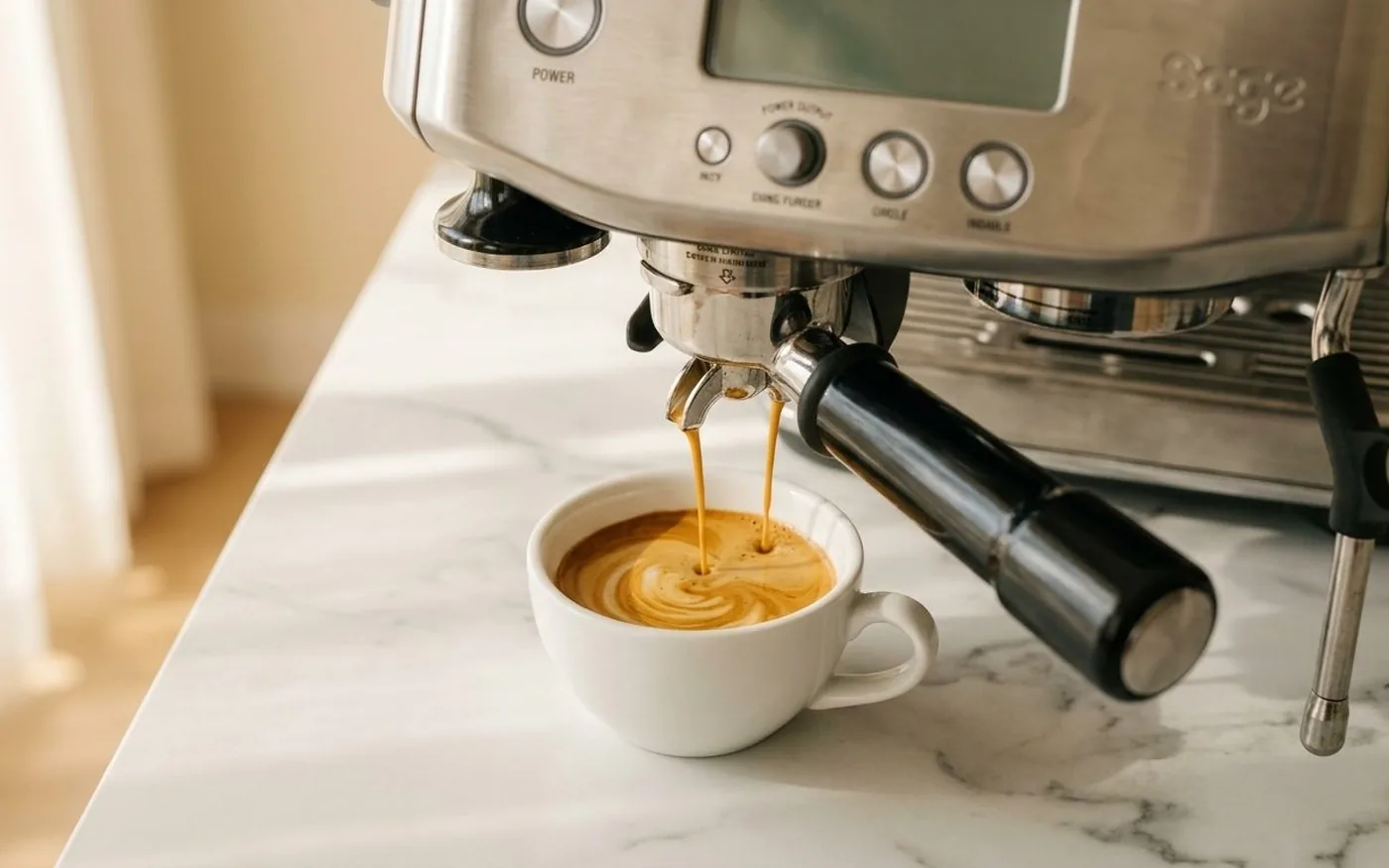
What the espresso quality is actually like in daily use: genuinely good. In the weeks I spent with this machine at my parents' house during COVID, the espresso it produced was consistently better than most UK coffee shops. The ThermoJet system reaches brew temperature in three seconds, the PID temperature control keeps it stable through back-to-back shots, and the pre-infusion cycle produces good extraction evenness on medium roasts. You do not need manufacturer-level engineering training to pull a technically correct shot on this machine. You do need the willingness to spend time dialling in.
The grinder is where the honest caveat lives. In normal use with medium-roast beans, the 30-setting burr grinder produces consistent enough results for the first few weeks. Over two or three months, most owners find they need to re-dial after bean changes, and sometimes between bags of the same bean. This is not a defect - it is the expected trade-off of an integrated grinder at this price point. The burr geometry and adjustment increment design prioritise convenience over the kind of particle distribution precision you get from a standalone single-dose grinder. For someone making two drinks a day with good whole-bean coffee, it is more than adequate. For someone working with light-roast speciality beans who expects a tight particle distribution every time, the ceiling will show.
One more honest note: the machine has no pressure gauge. You dial in by shot time and taste, which is how most experienced home baristas work anyway. If you are coming from a machine with a pressure gauge, you will miss it initially.
Sage Barista Pro vs Barista Express: Which One to Buy
If you are torn between these two machines - and the sage barista express review covers the Express in full - here is the short version.
The core differences are: the Pro has 30 grind settings, the Express has 16. The Pro has an LCD display; the Express has a dial. The Pro uses ThermoJet heating (3 seconds to brew temperature); the Express uses an older thermoblock system that is slower and less temperature-stable. The Pro has a 4-hole steam tip; the Express has a 2-hole tip, which is noticeably less capable for milk texturing. The current price gap is approximately £180 at UK retail (Pro at £729.95, Express at around £549).
The verdict: in 2026, buy the Barista Pro if you are spending more than £400 on an espresso machine. The grinder improvement, the LCD shot timer, and the better steam wand all make a practical difference in daily use. The Express made more sense when the price gap was wider. At £180 apart, the Pro's advantages are worth paying for.
One caveat: if your budget is fixed at £549 and the extra £180 requires cutting something else, the Express does the job. It has been making good espresso since 2019 and continues to do so. The Pro is simply better in every dimension that matters at this price point. If you are not coming from a Barista Express already, there is no reason to buy backwards in the lineup.
What the Grinder Is Actually Like to Live With
Most Barista Pro reviews reach a point in the grinder section and go quiet. The integrated grinder is the machine's main selling point and, over time, its most common source of friction.
At Sanremo, I worked alongside engineers and baristas who thought about grinder performance in terms of particle distribution - the spread of ground coffee particle sizes that determines extraction evenness. A tight, consistent distribution means the water extracts evenly across the puck. A loose distribution means some particles over-extract while others under-extract in the same shot, producing a muddled cup. The Barista Pro's conical burr produces an acceptable distribution for medium-roast espresso. For light roasts, which have higher bean density and require a finer grind and tighter distribution to extract properly, the grinder's ceiling shows earlier.
Two specific issues come up consistently across owner feedback. First: grind recalibration. As the burrs wear and settle, the grind size at a given setting changes - a grind that produced a 28-second shot in month one may produce a 35-second shot in month six at the same setting. You adapt by adjusting the grind, which is straightforward, but it is a process you will repeat several times a year. Second: clumping. Freshly roasted beans produce CO2 which causes some clumping as grounds fall into the portafilter. A light knock on the portafilter or a distribution tool before tamping resolves it, and both become routine quickly. Building that step into your morning is, depending on how you look at it, either slightly obsessive or just sensible. Both are probably accurate.
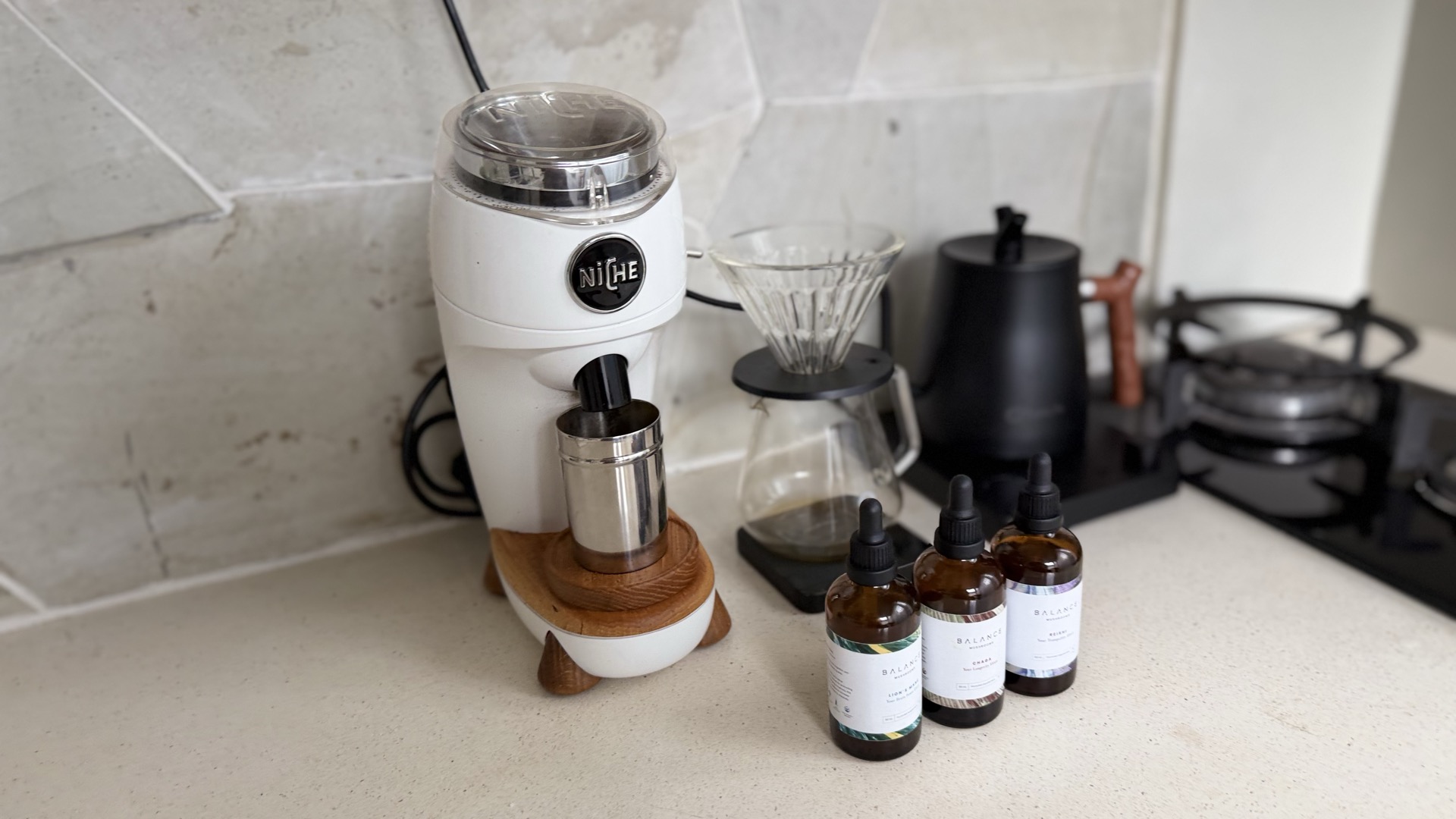
The honest comparison: at home I use a Niche Zero, a single-dose grinder that sits in a different performance class. If you have used a Niche Zero or any dedicated single-dose grinder, the Barista Pro's grinder will feel like a step down. If you have not, it will feel more than adequate.
The Specialty Coffee Association specifies brew temperature stability and extraction yield ranges for espresso. The Barista Pro meets both with good beans and a clean grind. The grinder limits show most noticeably with light-roast speciality coffee - which is worth knowing if that is how you intend to brew.
Steam Wand Performance
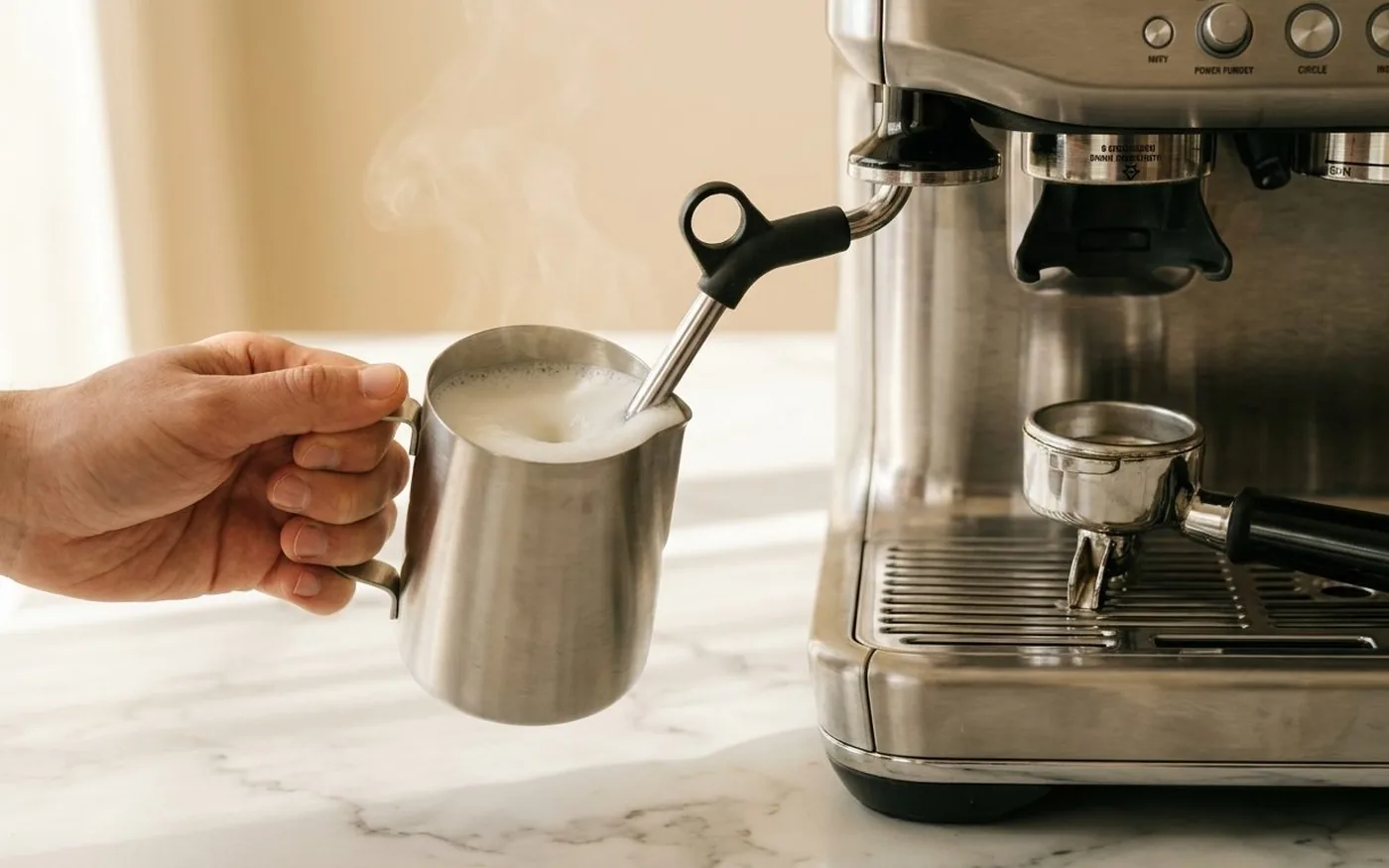
A 4-hole manual steam tip is a meaningful upgrade over the Barista Express's 2-hole version. More holes means more steam velocity, which means you can texture milk faster and produce finer microfoam. It is still a domestic machine running at domestic steam pressure, and that framing matters.
Having worked at Sanremo on commercial machines that most home baristas will never use - Opera, La Marzocca, Victoria Arduino Eagle - there is a real and noticeable gap between those machines and a domestic wand. Higher steam pressure means faster milk texturing and less margin for error on positioning. The Barista Pro's domestic wand does not close that gap, and you should not expect it to. What it gives you is a capable manual wand that produces technically correct microfoam once you have developed the technique. Pitcher angle, submersion depth, and the moment you cut the steam - those variables do not disappear because the tip has four holes instead of two.
If consistent milk texture from day one matters more than the process of developing that skill, look at the sage barista pro vs barista touch comparison before deciding. The Barista Touch's automatic milk texturing removes technique from the equation entirely. The Barista Pro does not offer that. For buyers committed to the manual process, the Barista Pro's wand is genuinely capable. For buyers who want the machine to handle milk for them, the Touch is the right machine.
Practical note for plant-based milk users: barista-edition oat or almond milk (Oatly Barista, Alpro Barista) is the correct product to use with this wand. Standard supermarket versions lack the protein content to foam adequately on any manual steam wand.
Common Problems with the Sage Barista Pro
Two issues come up consistently across owner feedback, and both are worth understanding before you commit.
The first is internal water flow blockage. Fix My Coffee Machine documents the specific failure mode: water stops passing through the group head, steam wand, or hot water outlet. The machine sounds as if it is attempting to push water but produces very little flow. The cause is limescale build-up in the internal water path. The fix is a descale cycle, which Sage recommends every 2 to 3 months depending on water hardness. In hard-water areas such as London or the south-east of England, do it more often. This is standard maintenance for any pressurised machine with a boiler - ignore the descale alerts for long enough, and the blockage becomes a repair job rather than a routine clean.
The second is grinder inconsistency over time - covered in full in the grinder section above. Briefly: grind output changes as burrs settle, and you will recalibrate several times a year.
Beyond those two, there are honest frictions that come with the machine's price point. The Barista Pro has no pressure gauge - you dial in by shot time, which is workable but limits feedback compared to a machine with a gauge. The drip tray fills faster than most owners expect in a two-person household making several drinks a day. Neither is a dealbreaker. Both are the kinds of trade-offs that make the Barista Pro appropriate for its price bracket rather than the £2,000-plus class above it. A pressure-profiling machine with a dedicated grinder costs three to five times more. The Barista Pro's limitations are calibrated to where it sits.
How Long Does the Sage Barista Pro Last?
Expect five to ten years with regular maintenance. The main failure points are grinder burr wear - the burrs are replaceable, and Sage sells replacement sets for the SES878 - and internal blockages caused by limescale, which are almost always self-fixable with a descale cycle before they become structural issues.
Sage's standard two-year UK warranty covers manufacturing defects. The machine's build quality at this price point is strong: stainless steel construction holds up to daily use without the cosmetic deterioration common in cheaper machines. Owner feedback and independent review coverage, including coverage from Perfect Daily Grind on espresso machine longevity, consistently cites the Barista Pro range as a better long-term investment than similarly priced alternatives.
The most common route to a shorter machine life is neglected descaling. In a hard-water area, ignoring the descale alert for six months or more can allow limescale to work into the heating element or boiler, at which point the repair cost can approach or exceed replacement value. Set a calendar reminder for every eight weeks and it is unlikely to become a problem.
What to Brew in Your Barista Pro
Roast selection matters more than most Barista Pro reviews acknowledge.
Light-to-medium roasts reward this machine's espresso hardware most. Coffees with enough density to engage the conical burr properly and enough flavour complexity to justify the manual dial-in process - a medium Ethiopian, a clean Colombian, a natural-processed Rwandan - all give you the best return on the machine's capabilities. Dark roasts are more forgiving at a technical level, but the margin between correct extraction and over-extraction narrows at a very fine grind, and the flavour profile gives you less feedback when calibrating.
Use whole beans and grind fresh. The machine includes a dual-wall filter basket that works with pre-ground coffee and produces acceptable espresso. The single-wall basket - also included - requires freshly ground coffee at the correct particle size, and that is where the Barista Pro's espresso quality actually lives. For guidance on choosing whole beans, the best espresso machine UK guide covers bean pairing across the category.
Sage Barista Pro vs Barista Touch: Is the Upgrade Worth It?
If you have narrowed your shortlist to these two, the decision comes down to one question: do you want to develop manual milk steaming as a skill, or do you want the machine to handle it?
The Barista Touch (SES880) adds a touchscreen interface and an automatic milk texturing system at approximately £799 - roughly £70 more than the Barista Pro at current UK retail. The touchscreen replaces the LCD dial interface and allows you to save your espresso and milk preferences as drink profiles. The automatic milk texturing works on the same principle as the Bambino Plus's auto wand: select a texture setting, the machine handles the rest.
The espresso is identical on both machines. Both use the same grinder family, the same extraction parameters at the same 9 bar pressure, and produce the same shot quality. The price difference buys the touchscreen and the automated milk system. Nothing changes on the brew side.
If manual steaming is a barrier - because you do not want to develop the skill, or because consistent results across multiple users in the household matters more than craft - the Touch is worth the extra spend. If you are willing to put in the practice, the Barista Pro delivers equivalent espresso quality for less. The honest framing: the Barista Pro is a more rewarding machine once you have the skill. The Barista Touch is a more consistent machine from day one.
Verdict
Buy the Barista Pro if you want an integrated grinder and espresso machine in one unit, you are prepared to develop your technique on both the espresso and milk sides, and you have counter space for a machine of this size.
Do not buy it if you want pressure-gauge feedback for dialling in, if grinder precision ranks above counter convenience, or if you want automatic milk texturing from the start. For those buyers: the Touch handles the last requirement, and a dedicated grinder paired with a Bambino Plus handles the first two with more precision at a lower combined cost.
If the Sage Bambino vs Bambino Plus is the right machine for people who want espresso without the work, the Barista Pro is for people who want to do the work themselves - and do it properly.
Two things to hold in mind: the espresso hardware at this price point is hard to beat. The grinder you may upgrade eventually. The machine you probably will not.
Frequently Asked Questions
Is the Sage Barista Pro worth the money?
What is the difference between the Sage Barista Pro and the Barista Express?
What are the common problems with the Sage Barista Pro?
How long does the Sage Barista Pro last?
Is the Sage Barista Pro Luxe worth the upgrade?
What does the Sage Barista Pro come with in the box?
Does the Sage Barista Pro have a pressurised basket?
Should I buy the Sage Barista Pro or the Barista Touch Impress?
Both the Barista Pro and Barista Touch specifications were verified against Sage UK product pages (May 2026). Barista Express specs confirmed via Currys and manufacturer documentation. All prices reflect current UK retail RRP at time of writing.
| Specification | Barista Pro (SES878) | Barista Express (SES875) | Barista Touch (SES880) |
|---|---|---|---|
| Price (UK RRP, May 2026) | £729.95 | £549 | £798.95 |
| Heating system | ThermoJet | Thermoblock | ThermoJet |
| Heat-up time | 3 seconds | 30 seconds | 3 seconds |
| Steam wand | Manual, 4-hole | Manual, 2-hole | Automatic texturing |
| Interface | LCD display | Dial display | Touchscreen |
| Grinder settings | 30 | 16 | 30 |
| Grinder type | Conical burr | Conical burr | Conical burr |
| Portafilter | 54mm | 54mm | 54mm |
| Pump pressure | 15 bar (9 bar extraction) | 15 bar (9 bar extraction) | 15 bar (9 bar extraction) |
| Water tank | 2L | 2L | 2L |
| Warranty (UK) | 2 years | 2 years | 2 years |
A wellness entrepreneur and biohacker, James explores the intersection of hospitality and health - from clean fuel and recovery tools to mindful routines that build balance into daily life.