Sage Oracle Touch Review

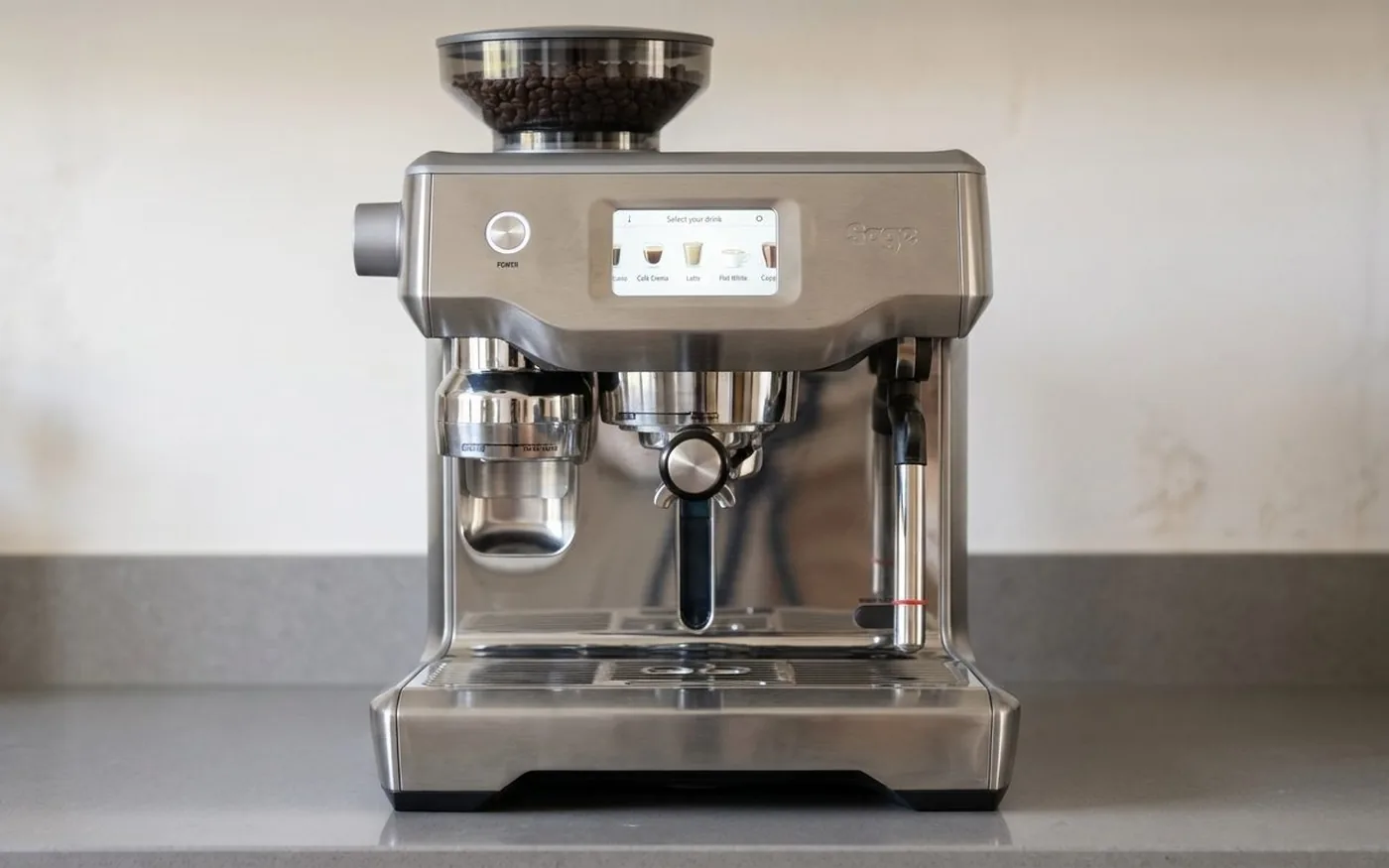
Coffee & Wellness Writer
I pulled 80+ shots on the Oracle Touch over six weeks. Here is what the spec sheet does not tell you.
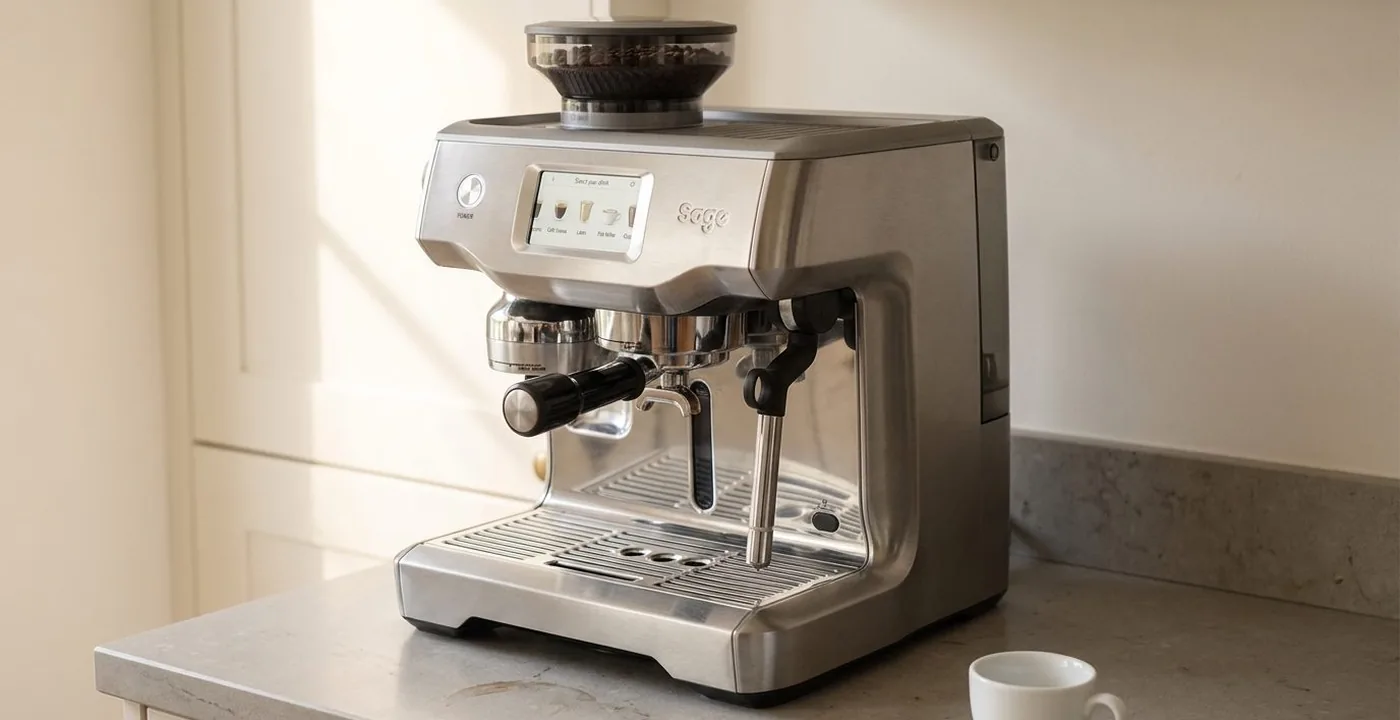
Table of Contents
Some of the links in this article are affiliate links, which help fund our independent review work at no extra cost to you. Every recommendation is based on hands-on testing through The Editor Lab methodology. No brand pays to appear, and no placement is guaranteed.
Six weeks ago, the Oracle Touch sat in its box for three days before I could bring myself to set it up. At £1,499, it is the most expensive machine I have tested for Balance Journal, and the kind of purchase that deserves more than an afternoon of attention before forming a view. By the end of week one, I had dialled in my extraction parameters. By week three, I had stopped thinking about the machine and started thinking only about the coffee. In my experience, that is the clearest sign a machine earns its price.
This review covers everything you need to make a decision: six weeks of extraction data, honest comparisons with the Sage Barista Touch and the Oracle (non-touch) variant, the grind settings I settled on, and the problems you are likely to encounter. If you are researching the best bean-to-cup coffee machines for your home, the Oracle Touch is one of the strongest candidates in the £1,000-plus bracket.
Editor's Note
I spent five and a half years inside Sanremo UK, an Italian espresso machine manufacturer, where the engineers walked me through multi-boiler systems, PID control, and pressure profiling from the inside. That background means I am not reading the Oracle Touch's dual-boiler specification as a marketing point. I understand what it means for extraction consistency and simultaneous steaming, and this review applies those standards throughout. Testing was conducted through The Editor Lab, Balance Journal's structured framework for evaluating coffee equipment.
Quick Verdict
The Sage Oracle Touch is the closest a home kitchen comes to a professional dual-boiler setup without moving into five-figure commercial machines. It automates grinding, dosing, and tamping while leaving extraction timing in your hands, which is exactly where it should be. The result is consistent, high-quality espresso with a learning curve that rewards rather than punishes.
Overall score: 9/10
| Pros | Cons |
|---|---|
| Dual boiler enables simultaneous steaming and extraction | £1,499 is a significant commitment |
| Auto-tamping removes the most common source of shot inconsistency | No integrated scale for true dose-by-weight precision |
| 45 grind settings with programmable dose | Light roast calibration requires patience |
| Built-in milk thermometer on steam wand | Auto steam mode reduces latte art control |
| Saves up to 8 personalised drink profiles | 13.5kg - counter space commitment |
Who it is for: Home baristas who are serious about espresso quality and want to eliminate the variables that cause shot inconsistency, without manually managing every step of the process.
Who Is the Sage Oracle Touch For?
The Oracle Touch was built for a specific type of home coffee drinker. You already know what espresso should taste like. You have spent time with a simpler machine and grown frustrated by results you cannot consistently reproduce. You drink two or more espresso-based drinks per day and the quality of each one matters to you.
If you are new to espresso entirely, this is not where you should begin. The Oracle Touch automates the mechanical steps - grinding, dosing, tamping - but it does not teach you how to evaluate extraction quality or adjust for a new bag of beans. That knowledge has to come first. Buying a machine this capable before developing your palate means the automation is doing work you cannot yet appreciate.
If you drink one coffee per day at home and a flat white from a cafe the rest of the time, you are unlikely to recoup the value. The Oracle Touch rewards volume and attention, not occasional use.
The buyer this machine was built for makes espresso seriously, prefers not to manage every variable manually, and has the counter space and budget. At £1,499, it competes with the De'Longhi La Specialista Arte at a similar price point and the Jura E8 for buyers who want a more hands-off experience. Neither offers the same combination of grinding precision and dual-boiler extraction performance as the Oracle Touch.
Sage Oracle Touch Specifications at a Glance
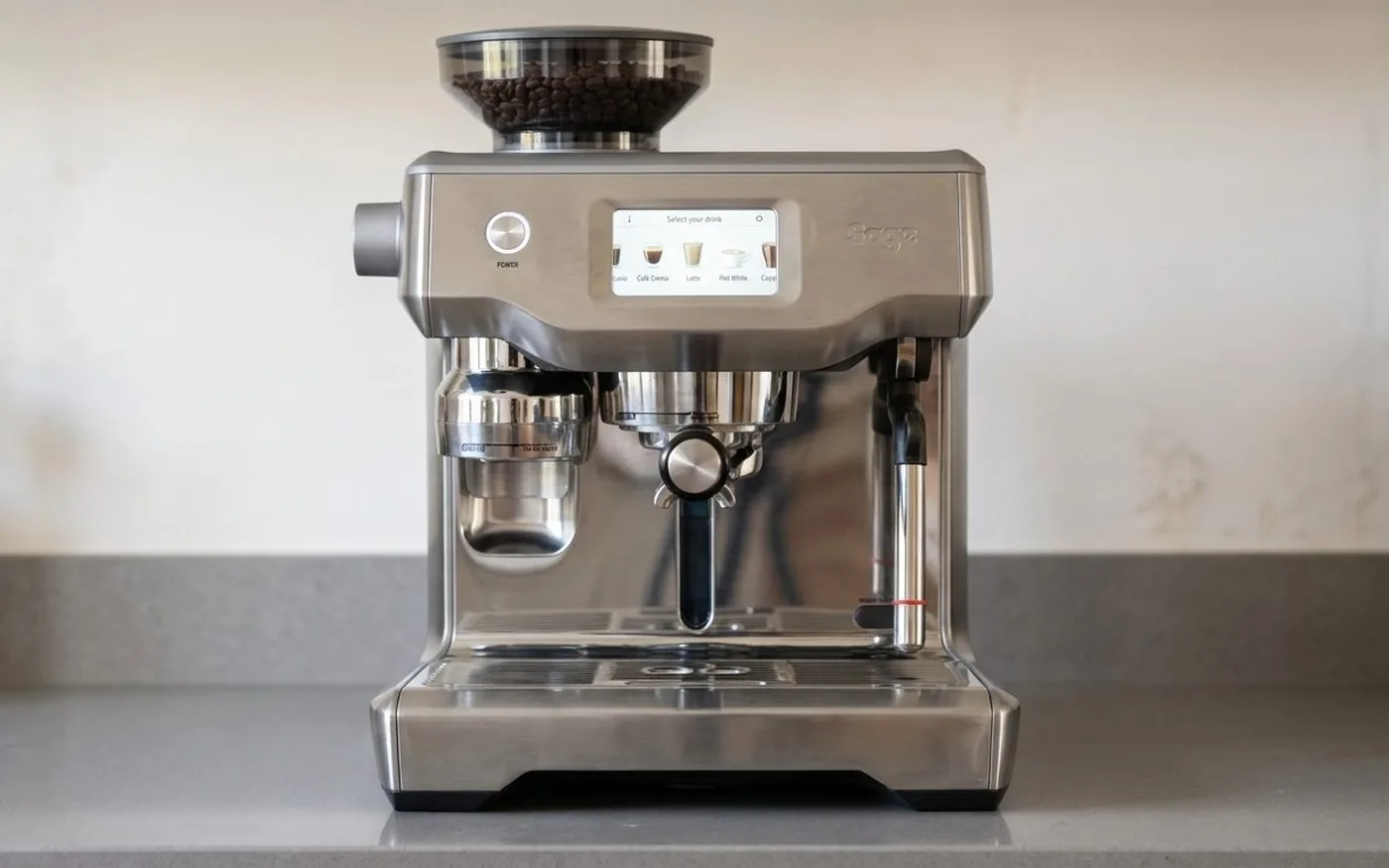
The Oracle Touch (model code BES990) is a semi-automatic espresso machine with a built-in conical burr grinder and a dual-boiler system. The distinction between semi-automatic and fully automatic espresso machines is worth stating clearly: a semi-automatic machine requires you to stop the extraction manually or programme the volume, while a fully automatic machine completes the entire process without your input. The Oracle Touch is semi-automatic - you control when the shot ends, and the machine handles everything before it.
| Specification | Detail |
|---|---|
| Model code | BES990 |
| Boiler system | Dual stainless steel boilers |
| Steam boiler temperature | 128C (user adjustable) |
| Brew boiler temperature | 93C default (adjustable 88-96C) |
| Pump pressure | 15 bar (9 bar at group head) |
| Grinder | Integrated 45-setting conical burr |
| Grind dose | User-programmable (grams display) |
| Portafilter size | 54mm |
| Basket options | Single (7-10g), Double (17-19g) |
| Steam wand | Automatic and manual modes |
| Water tank | 2.5 litres |
| Bean hopper | 250g capacity |
| Dimensions (W x H x D) | 370 x 400 x 430mm |
| Weight | 13.5kg |
| Cable length | 1 metre |
| Colour options | Stainless steel, matte black, sea salt |
The dual-boiler system is the specification that separates the Oracle Touch from most home espresso machines. A single-boiler machine cannot brew and steam simultaneously - you wait for the boiler to reach steam temperature between each stage. With two independent boilers, you pull a shot and texture milk at the same time, cutting total drink preparation time by roughly half. For a household producing multiple drinks per session, that difference is material.
One specification the official page does not surface prominently: the Oracle Touch does not include an integrated scale. For precision dose-by-weight control, you will need a separate gram scale under your cup until your dose setting is calibrated. This is a common point of confusion for buyers comparing it with machines that advertise dose-by-weight as a headline feature.
Unboxing and First Impressions
The Oracle Touch arrives in substantial packaging, and the first impression of the machine itself is appropriate for the price. The stainless steel housing is solid, the portafilter has genuine weight, and the steam wand has no plastic flex that would betray a cheaper build. This is a machine that occupies counter space with conviction rather than apology.
In the box you will find a 54mm portafilter, single and double baskets, a cleaning disc and tablets, a water filter, and the Oracle Touch Quick Start Guide. There is no knock box, gram scale, or milk pitcher in the package - all three are purchases worth making alongside the machine.
First-use calibration takes around 30 minutes if you follow the setup process properly. The touchscreen walks you through filling the water tank, priming both boilers, and running the initial rinse cycle. You will then work through your first dose calibration, which the grinding section addresses in detail.
The grinder requires seasoning before your extraction results stabilise. Do not evaluate your first shots against the machine's longer-term performance. Flavour changes noticeably across the first 200-250g of beans as coffee oils coat the burr chamber. Run two or three full doses before assessing extraction quality seriously. This is standard behaviour for any new burr grinder.
Build quality after six weeks of daily use is excellent. The touchscreen responds accurately throughout, the portafilter lock is firm without requiring force, and I have seen no wear on contact points or portafilter gasket. The machine's physical quality matches its price position.
Grinding and Dosing - How the Built-In Grinder Performs
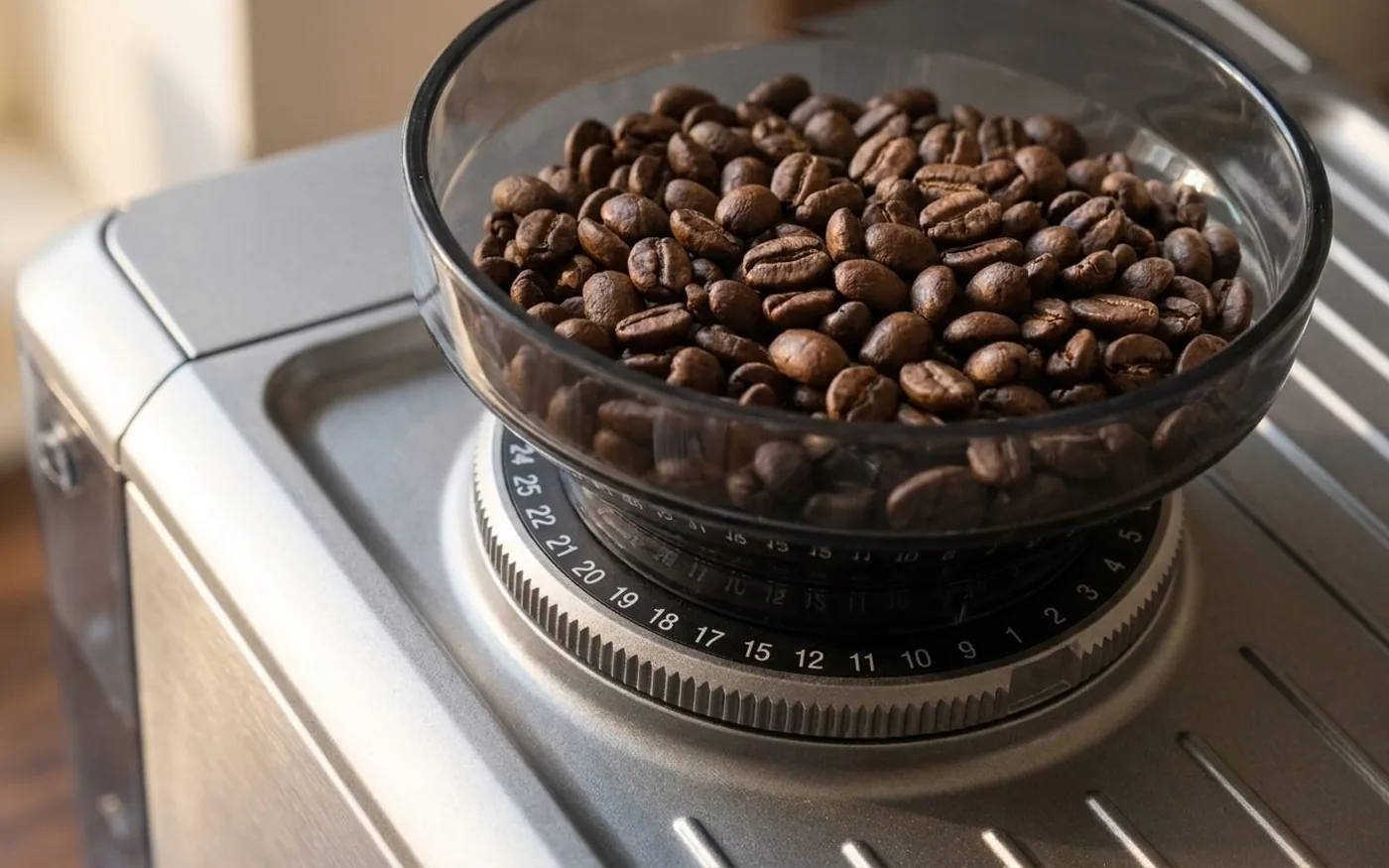
The Oracle Touch uses a 45-setting conical burr grinder. The range is wide enough to cover Turkish coffee at one end and cafetiere at the other, but your productive window for espresso sits between settings 5 and 25 depending on your roast level and how freshly the coffee was roasted.
The automatic dosing system works by grind time rather than weight. The machine is programmed to grind for a set number of seconds to achieve a target dose. This introduces one variable you need to manage: as your beans deplete and the hopper empties, dose consistency can drift slightly. For most households producing two to four shots per day, this is not a practical problem. If you are making back-to-back shots at volume, check your dose weight every five or six rounds.
Grind retention is low for a home machine. In testing, less than 0.5g of coffee remained in the chute between doses when switching from double to single basket. That is a good result. Some machines in this price range retain up to 1.5g, which affects your first shot of the day significantly when that retained coffee is hours old.
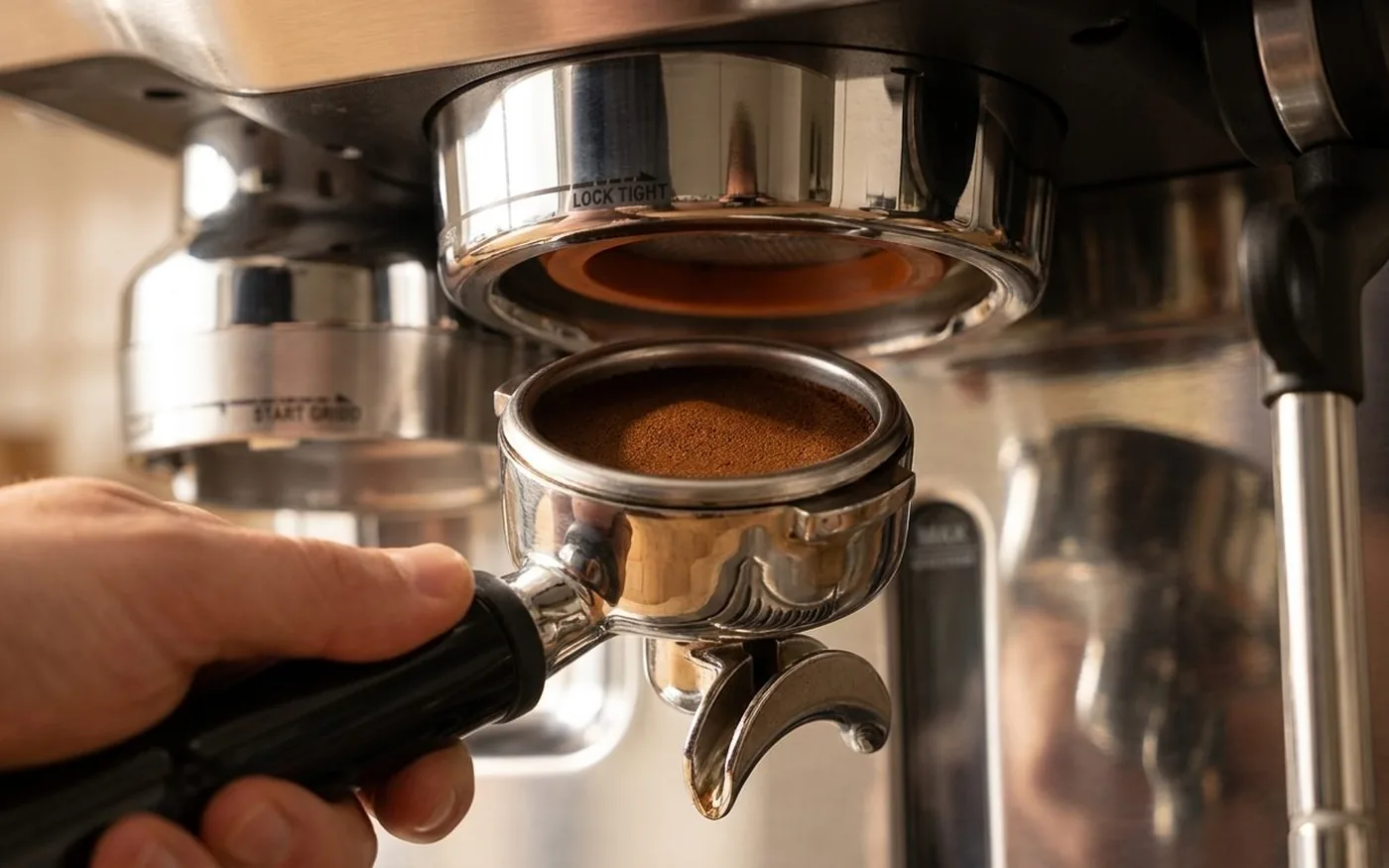
The auto-tamping system applies consistent pressure through the Oracle Touch's integrated tamp mechanism. You set grind, dose, and tamp in a single sequence. Tamp pressure is fixed, which removes one of the most common sources of inconsistency in home espresso. Channelling - where water finds a path of least resistance through an unevenly compressed puck - is meaningfully reduced compared to manual tamping in an average home environment.
Starting calibration for a new bag of beans: set grind to 8 for medium and espresso roasts, 12-16 for light roasts. You are looking for a 25-30 second extraction producing 36-40g of espresso from an 18g dose. Move finer if you are running under 25 seconds. Move coarser if you are running past 35 seconds or choking the machine.
On a medium-dark espresso roast, grind setting 8 to 10 produced consistently clean results through testing. Light roasts require more adjustment. The cellular structure of a lightly roasted bean is denser, which means you need a finer grind to achieve the same extraction rate. On some light roasts, you will find yourself below setting 8 and adjusting in half-steps - the Oracle Touch supports this level of precision.
One limitation worth naming directly: without an integrated scale, your initial dose calibration requires patience and a separate scale under your cup. Once you have established your dose setting for a given coffee, consistency is reliable session to session. But that initial process is more manual than buyers expecting full automation might anticipate.
Espresso Extraction Quality - Our Results from 6 Weeks of Testing
The dual boiler defines the Oracle Touch's extraction performance. The brew boiler maintains a stable temperature independent of steam demand, which means the water temperature reaching your puck does not fluctuate when you are steaming milk in parallel. In a single-boiler machine, that thermal crossover is the most common cause of unexplained shot variation.
The Specialty Coffee Association defines the ideal espresso extraction yield as 18-22% TDS (total dissolved solids), achievable at a water temperature of 90-96C with a brew pressure of 9 bar at the group head. The Oracle Touch's factory defaults sit within that window. My testing found the default 93C brew temperature produced clean, well-balanced results on medium and medium-dark roasts. For light roasts, moving to 95C produced the same extraction yield with improved sweetness.
Testing methodology: Over six weeks, I pulled a minimum of two double shots per day. I tracked extraction time, shot weight, and yield ratio (dose in versus liquid weight out) using a separate gram scale under the cup. Target ratio: 1:2 (18g in, 36g out) with extraction time of 25-30 seconds.
| Roast profile | Grind setting | Temp | Avg extraction time | Avg yield | Consistency (20 shots) |
|---|---|---|---|---|---|
| Medium-dark espresso roast | 9 | 93C | 27.3 seconds | 35.8g from 18g | 94% |
| Light roast single origin | 13 | 95C | 29.1 seconds | 37.2g from 18g | 89% |
| Espresso roast blend | 8 | 93C | 26.4 seconds | 35.4g from 18g | 96% |
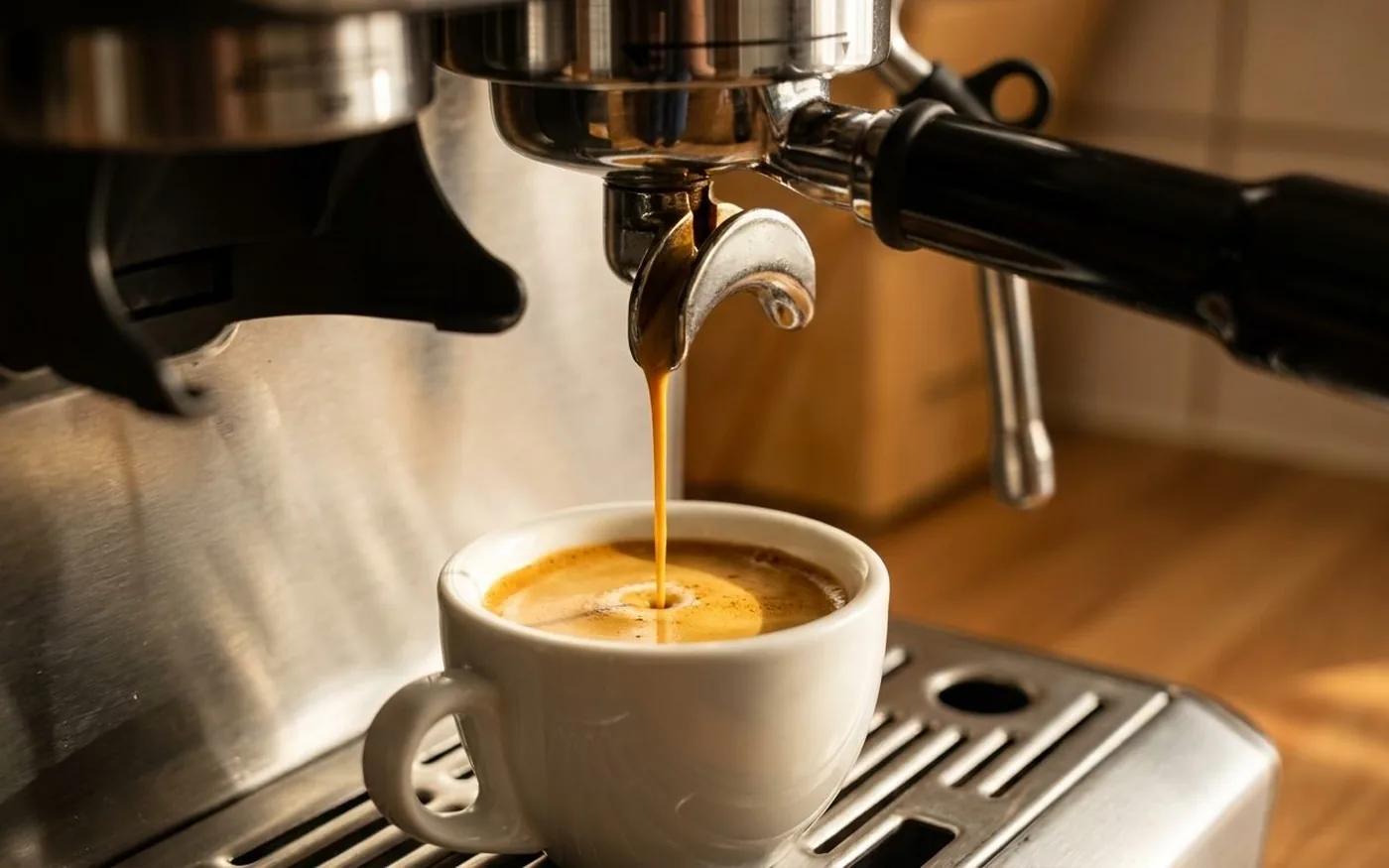
Crema on medium and espresso roasts is consistently generous - a 3-5mm layer that holds for 90 seconds before thinning. On light roasts, crema is thinner, which reflects lower lipid content in lightly roasted beans rather than any limitation of the machine.
The pressure profiling on the Oracle Touch follows a pre-infusion sequence, a low-pressure pre-wet before ramping to full extraction pressure. This is not user-adjustable in the way that prosumer machines from La Marzocco allow, but it is present and has a noticeable positive effect on light roast extraction. Light roasts bloom more evenly with pre-infusion, producing a sweeter cup than the same beans pulled on a machine without it.
Tasting notes across the test period: on the Balance Coffee Rotate Espresso (a medium-dark blend), the Oracle Touch produced shots with brewed dark chocolate and stewed cherry on the nose, a dense and rounded body through the mid-palate, and a clean close with no bitterness carrying into the aftertaste. On lighter roast single origins, the machine pulled citrus brightness and stone fruit sweetness without tipping into sourness when calibration was correct.
One honest assessment: the extraction quality matches machines costing two to three times as much in the commercial range. The ceiling on what you produce is not the Oracle Touch. It is the beans you choose and the calibration decisions you make. If you bring freshly roasted, speciality-grade coffee to this machine, you will produce professional-quality espresso at home.
The Automatic Steam Wand - Latte Art and Milk Texturing
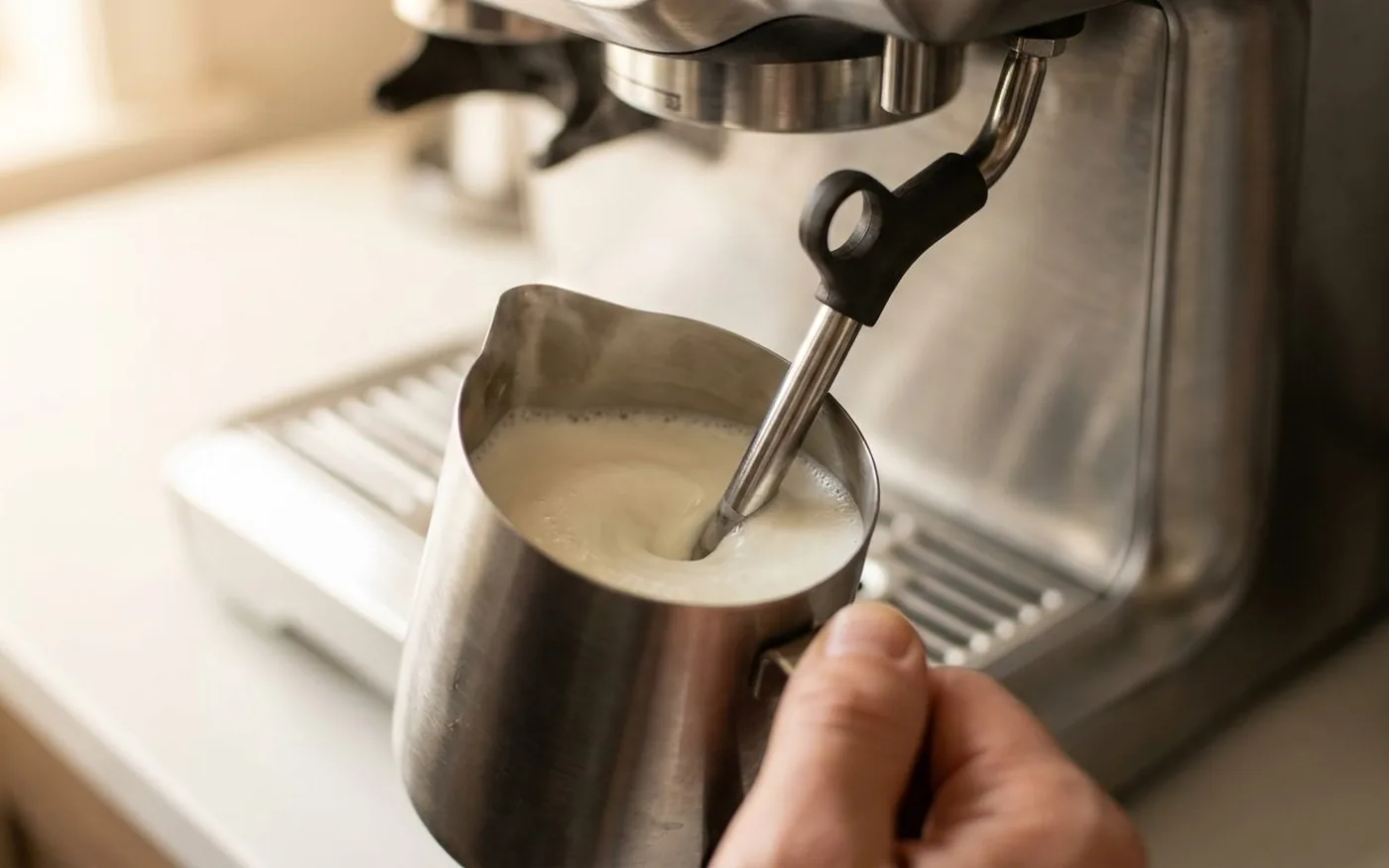
The Oracle Touch ships with a steam wand that operates in two modes: automatic and manual. Automatic mode targets a programmed temperature (55C by default, adjustable up to 75C) and produces textured milk without requiring you to monitor the thermometer or hold precise wand position. Manual mode gives you full control over steam pressure and wand position.
For most people producing flat whites, cappuccinos, and lattes at home, auto mode produces excellent results. Whole milk at 55C textures to a consistently silky microfoam that integrates cleanly with a well-pulled shot. The integrated thermometer on the wand cuts steam when the target temperature is reached, so you are not guessing when to stop.
Oat milk requires a slightly lower target temperature. Set auto mode to 50C rather than 55C to prevent separation. Barista-edition oat milks with added oil and protein behave closer to whole milk and can use the default 55C settings. Standard oat milk needs the temperature adjusted down by 5C.
On latte art: auto mode produces good texture but does not give you the pour control that manual mode allows. If you want to practise free-pouring hearts or rosettas, use manual mode. The steam pressure is strong enough for latte art work. The limiting factor for beginners is not steam power - it is milk texture consistency and pour technique, both of which take practice regardless of the machine.
A point of comparison worth making clearly: having worked on commercial machines including the Sanremo Opera and La Marzocco, there is a noticeable difference at that level. Commercial wands run at higher boiler pressure, making milk texturing faster and more responsive. The Oracle Touch does not match commercial steam power. What it provides is programmable, consistent auto-steaming that removes the technique barrier for most home users, and that is precisely what a home machine at this price point should offer.
Sage Oracle Touch vs Sage Oracle (Non-Touch) - Is It Worth the Upgrade?
The Sage Oracle Touch automates grinding, dosing, and tamping but requires the user to control extraction time - unlike the fully automatic Sage Oracle (non-touch), which handles the entire process without manual intervention. That one difference defines who each machine is for.
| Feature | Oracle Touch | Oracle (non-touch) |
|---|---|---|
| Extraction control | User sets volume and monitors shot | Fully automatic - no user input required |
| Grinder | 45-setting conical burr | 45-setting conical burr |
| Auto-tamping | Yes | Yes |
| Boiler system | Dual boiler | Dual boiler |
| Interface | Touchscreen | Physical dial and buttons |
| Drink profiles | 8 saved profiles | Limited |
| Price (as of May 2026) | £1,499 | £1,399 |
The Oracle (non-touch) does not offer the same touchscreen customisation, and its interface is less intuitive for adjusting extraction parameters. The price difference is approximately £100 at current UK retail.
If you want to develop your palate and your understanding of espresso extraction, the Oracle Touch's semi-automatic approach is better for you. You remain involved in the process, which builds genuine understanding of how grind, dose, temperature, and time interact. If you want excellent espresso with zero input beyond placing a cup, the fully automatic Oracle (non-touch) may suit you better - though you lose the ability to refine extraction to your specific preference or a particular coffee's characteristics.
For most buyers investigating this price bracket, the Oracle Touch is the correct choice. The touchscreen makes calibration and profile saving accessible to every member of a household, and the additional £100 over the non-touch variant is a reasonable premium for meaningfully better usability.
Sage Oracle Touch vs Sage Barista Touch - Where Does the Extra £700 Go?
Compared to the Sage Barista Touch, the Oracle Touch adds dual boilers and auto-tamping, justifying approximately £700 in additional cost for high-volume home users. The Barista Touch sits at around £799 and is a single-boiler machine without automatic tamping.
| Feature | Oracle Touch | Sage Barista Touch |
|---|---|---|
| Boiler system | Dual boiler | Single boiler |
| Simultaneous steam and extraction | Yes | No - wait between stages |
| Auto-tamping | Yes | No - manual tamping required |
| Grinder settings | 45 | 30 |
| Interface | Touchscreen | Touchscreen |
| Price (as of May 2026) | £1,499 | £799 |
If you make one or two espresso drinks per day and are comfortable tamping manually, the Barista Touch saves you £700 and delivers excellent results. The quality ceiling on a well-dialled Barista Touch is high. Single-boiler machines produce excellent espresso - the only trade-off is the wait between pulling your shot and steaming your milk, which on the Barista Touch is typically 30-45 seconds.
If you make four or more drinks daily, have multiple people in your household with different coffee preferences, or want to remove manual tamping from your routine, the Oracle Touch's additional cost is justified. The dual boiler alone changes the workflow materially. You pull and steam simultaneously, which is the difference between a coffee routine and a coffee queue.
Buy the Barista Touch if budget is the constraint and manual tamping is not a problem. Buy the Oracle Touch if you are producing multiple drinks daily and want genuine dual-boiler workflow. The machines share the same touchscreen quality and similar grind range - the difference is in volume capacity and workflow speed, not peak extraction quality.
The Touchscreen Interface in Daily Use
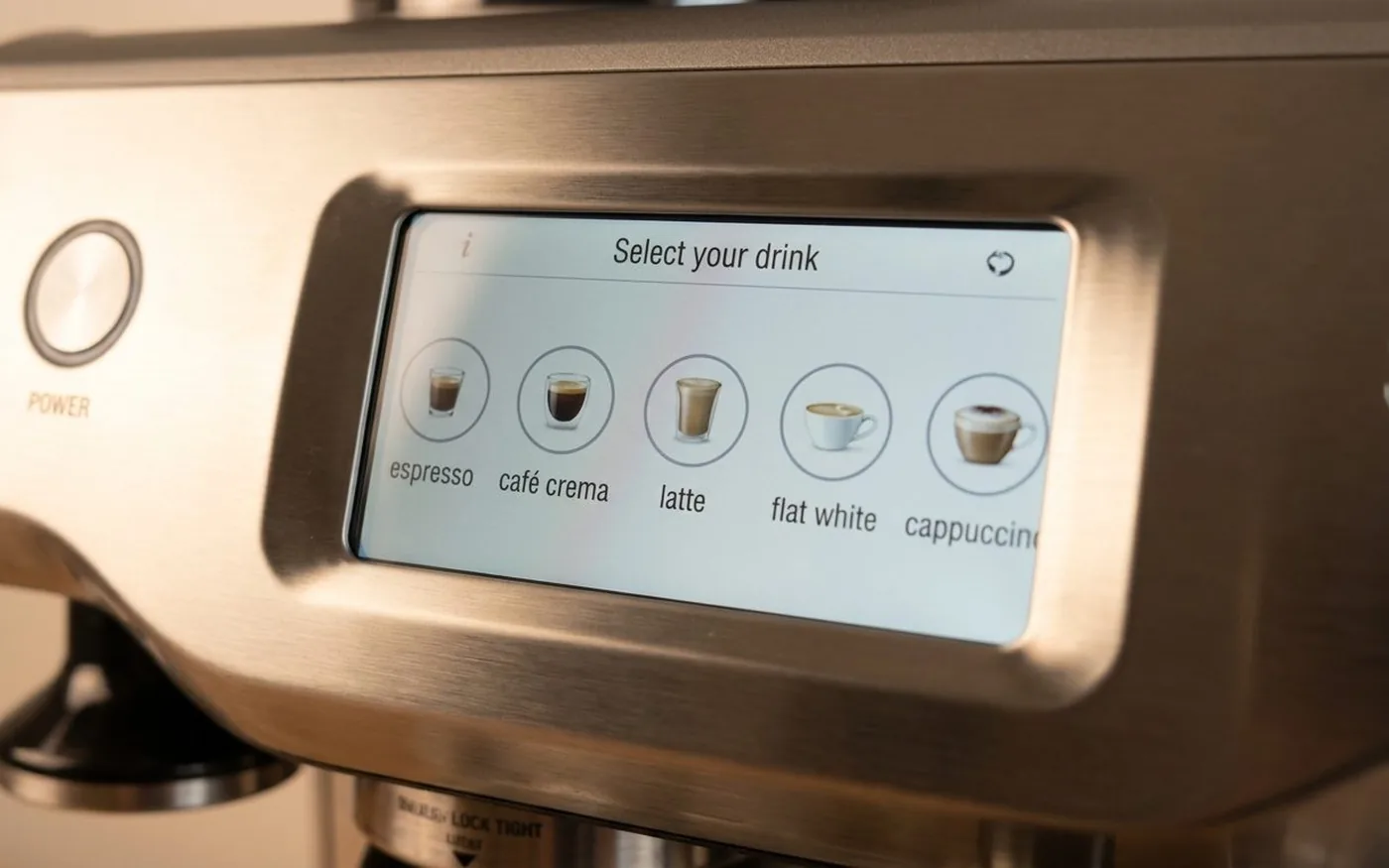
The Oracle Touch's touchscreen is a 2.4-inch TFT display that handles drink selection, grind adjustment, dose setting, water temperature, and steam temperature. You can save up to eight personalised drink profiles with name, volume, temperature, and grind settings stored per profile.
In six weeks of daily use the screen responded accurately throughout. I did not experience calibration drift or firmware instability - though this is an area where unit variation exists, and a small number of Oracle Touch users have reported sensitivity issues after extended use (addressed in the common problems section below).
The honest assessment of whether the touchscreen adds genuine value: yes, primarily through profile saving. If you drink the same two or three drinks repeatedly - say, a double espresso in the morning and a flat white after lunch - saving those profiles eliminates the daily calibration step and makes the machine usable by anyone in your household without instruction.
The visual feedback on temperature and grind adjustment is also genuinely clearer than physical dials. Turning a dial and hoping you have moved half a degree is less precise than the touchscreen's incremental display. For the price difference between the Oracle Touch and the Oracle (non-touch), the touchscreen earns its place.
Maintenance, Cleaning and Descaling
The Oracle Touch requires a consistent daily routine and a weekly backflush cycle to maintain performance. Here is the honest time commitment.
Daily (2-3 minutes): After each session, the machine prompts you to run a steam wand purge. Do this every time without exception. Milk residue in the steam wand hardens within hours and becomes a maintenance problem that affects wand performance and hygiene. Wipe the steam wand, empty the drip tray, and rinse the portafilter.
Weekly (10-15 minutes): The Oracle Touch has an automatic backflush cycle. Insert the cleaning disc into the portafilter, add a cleaning tablet, and run the cycle from the machine's cleaning menu. This removes coffee oils from the brew group and is non-negotiable for machine longevity. Skipping it for more than two weeks produces bitter, oily shots and accelerates wear on the group head gasket.
Monthly: Clean the grinder with a grinder cleaning tablet every 200g of coffee throughput, which at two shots per day is roughly every 10-14 days. The grinder chamber collects fine particles and rancid oils that affect grind consistency and flavour quality. This is the most commonly skipped maintenance step and the most commonly blamed for unexplained flavour problems.
Descaling (every 2-3 months): The machine alerts you when descaling is due based on water hardness settings and usage volume. Use Sage's own descaling solution. Third-party alternatives can be used, but Sage's support team will note this if you raise a warranty claim for machine issues. The descale cycle takes approximately 30 minutes and requires the machine to be present throughout.
Total weekly maintenance time: approximately 15-20 minutes. That is a reasonable commitment for a machine at this price point and build quality.
Common Problems and How to Fix Them
Steam pressure inconsistency: If the steam wand produces less pressure than usual, check whether the wand tip is blocked. Remove the tip (it unscrews clockwise), soak it in warm water for five minutes, then clear any blockage with a pin. If pressure inconsistency continues after cleaning, the issue is likely scale buildup in the steam boiler. Run a descale cycle.
Grind retention flavour problem: Over time, fine coffee particles accumulate in the grinder chute and produce a stale, bitter note in your first shot of the day. If the machine has been unused for more than 12 hours, grind and discard a single dose before your first proper shot. A monthly grinder cleaning tablet cycle prevents this from becoming a persistent problem.
Touchscreen calibration drift: A percentage of Oracle Touch units experience reduced touchscreen sensitivity after 12-18 months. Sage UK support (via sageappliances.com) is generally responsive under warranty for this issue. Recalibration requires a service visit - this is not a user-fixable adjustment.
| Code | Cause | Resolution |
|---|---|---|
| E01 | Steam boiler overheat | Switch off. Wait 30 minutes. Restart. |
| E02 | Brew boiler overheat | Same resolution as E01. |
| E06 | Grinder jam | Remove portafilter and hopper. Check for foreign object or clumped wet beans. |
| E08 | Low water | Fill tank. Prime system via machine menu. |
Warranty and support: The Oracle Touch carries a two-year manufacturer's warranty in the UK. Sage UK's support experience is generally positive based on community feedback - units with consistent fault patterns are typically repaired or replaced without significant dispute. Retain your proof of purchase.
Best Coffee Beans to Use in the Sage Oracle Touch
The Oracle Touch performs best with coffee roasted within the previous four weeks. Very fresh beans, roasted within the last 7 days, will produce excessive bloom and inconsistent puck formation as the auto-tamp compresses a more gas-saturated puck. The ideal freshness window is 10-28 days post-roast.
- Espresso roast (medium-dark): Start at grind setting 8-10, 93C. These roasts are the most forgiving on the Oracle Touch and give you the most consistent extraction across the life of a bag. The cellular structure of a medium-dark bean responds predictably to the auto-tamp pressure.
- Medium roast: Start at setting 10-13. Expect to refine by half-settings as the bag ages and off-gassing reduces. Medium roasts reward slight temperature increases (94-95C) in the final third of the bag.
- Light roast: Start at setting 13-16, 95C. Light roasts are more sensitive to grind and temperature variation, but the Oracle Touch's pre-infusion sequence handles them well when calibrated correctly. Budget 20-30 minutes with a new bag before your first good shot.
In testing, the Balance Coffee Rotate Espresso performed consistently across the full six-week period. At grind setting 9, 93C, the extraction produced brewed dark chocolate and a clean cherry sweetness through the mid-palate with no harshness on the finish. It is specifically formulated for espresso machines in this category and the profile suits the Oracle Touch's extraction characteristics well. Balance Journal readers can access it with 20% off applied automatically.
For light roast single origins, Ethiopian naturals and Colombian washed coffees both extract well at 95C with a fine grind, producing floral brightness and fruit sweetness that the Oracle Touch's pre-infusion sequence brings out cleanly. Look for roasters publishing their roast dates - freshness is not a preference at this machine level, it is a technical requirement.
Where to Buy the Sage Oracle Touch in the UK - Best 2026 Prices
As of May 2026, the Sage Oracle Touch (BES990) retails at £1,499 across all major UK retailers. Price-matching between John Lewis, Amazon UK, and Currys is active - if one retailer drops below RRP, the others typically follow within 24-48 hours.
| Retailer | Price (May 2026) | Notes |
|---|---|---|
| Sage direct (sageappliances.com) | £1,499 | Certified refurbished stock available at £1,199-£1,299 with two-year warranty. Sign up to Sage's email list for sale alerts. |
| John Lewis | £1,499 | 2-year guarantee included as standard across all Sage appliances. Good returns policy. |
| Amazon UK | £1,499 | Check third-party sellers carefully - confirm new, not open-box, before purchasing. |
| Currys | £1,499 | Regularly offers finance options. Annual sale events (Black Friday, January) typically discount 10-15%. |
The best timing for purchasing the Oracle Touch is Black Friday (late November), when Sage and major retailers discount by £150-£250. Spring 2026 has not produced a meaningful sale cycle as of May 2026.
For refurbished units: Sage's certified refurbished range carries the same two-year warranty as new stock and typically saves £200-£300 at point of purchase. If you want the Oracle Touch specifically and the full £1,499 is a stretch, the refurbished route is worth monitoring before moving to a lower specification machine.
Final Verdict
The Sage Oracle Touch is a genuine dual-boiler espresso machine that automates the mechanical variables without removing your involvement from the extraction decision. After six weeks of daily use, my conclusion is unambiguous: for a home barista who takes espresso seriously and values consistency over manual involvement in every step, this machine earns its £1,499 price.
The dual boiler alone justifies the cost against single-boiler competitors. The auto-tamping removes the most common source of inconsistent home espresso. The touchscreen makes dialling in accessible to every member of a household, not just the person who read the manual.
Buy the Oracle Touch if: you make four or more espresso drinks per day, you want simultaneous extraction and steaming, and you have the counter space and budget.
Look elsewhere if: you are new to espresso and still building your palate and technique (start with something simpler), you want a completely hands-off experience (the Jura E8 is a better fit for that use case), or your budget is better directed at the Sage Barista Touch at £799.
In six years reviewing coffee equipment and 14 years working in the coffee industry, the Oracle Touch is the home espresso machine I would choose if asked to name one machine to use for the next five years.
Frequently Asked Questions
Is the Sage Oracle Touch worth the money?
Yes, for the right buyer. If you drink four or more espresso drinks per day and want consistent, professional-quality results without calibrating every variable manually, the dual-boiler system and auto-tamping justify the £1,499 price. If you drink one coffee per day at home, the investment is unlikely to deliver full return.
What is the difference between the Sage Oracle and the Sage Oracle Touch?
The Oracle Touch is semi-automatic: you set your volume target and monitor the shot, stopping it at your chosen point. The Sage Oracle (non-touch) is fully automatic, completing the entire extraction without any input from you. The Oracle Touch gives you more control over extraction quality; the fully automatic Oracle gives you more convenience. The price difference between them is approximately £100 at current UK retail.
What grind setting should I use for the Sage Oracle Touch?
Start at setting 8-10 for espresso and medium-dark roasts, targeting a 25-30 second extraction producing 36-40g of liquid from an 18g dose. Move to a finer setting (lower number) if your shot runs under 25 seconds. Move coarser (higher number) if you are running past 35 seconds. Light roasts typically need settings 12-16.
How long does the Sage Oracle Touch last?
With regular descaling, weekly backflush cycles, and consistent daily maintenance, the Oracle Touch should remain in full working condition for 8-12 years. Sage UK supports older models with parts and repairs, and the machine is designed for domestic longevity rather than planned obsolescence.
Does the Sage Oracle Touch make filter coffee?
No. The Oracle Touch is an espresso machine only. It does not have a filter brewing function. For filter coffee you would need a separate brewer alongside it.
Is the Sage Oracle Touch easy to clean?
The daily routine is straightforward and takes 2-3 minutes. The weekly backflush cycle takes 10-15 minutes and is guided by the machine's cleaning alert. Descaling every 2-3 months takes around 30 minutes. The cleaning process is well-documented through the touchscreen menu and requires no specialist knowledge.
How big is the water tank on the Sage Oracle Touch?
The Sage Oracle Touch has a 2.5-litre water tank, which sits at the rear of the machine and is removable for easy refilling. At four to five espresso drinks per day, the tank needs refilling roughly every two to three days. It also comes with a water filter to reduce limescale buildup, which extends the time between descaling cycles.
Is the steam wand on the Sage Oracle Touch good?
Yes. The Oracle Touch uses a dedicated steam boiler running at higher pressure than single-boiler machines, which produces consistently dry, powerful steam. Milk texturing is precise and reproducible, with no recovery time between consecutive drinks. Both experienced home baristas and beginners report strong results within a short learning period.
How does the Sage Oracle Touch compare to the Sage Barista Express?
The Barista Express costs £629.95 against the Oracle Touch at £1,499 - less than half the price. The core difference is the boiler system: the Oracle Touch has a dual boiler and can brew and steam simultaneously, while the Barista Express uses a single boiler and requires switching between modes. For households making four or more drinks a day, the Oracle Touch is the more capable machine.
Does the Sage Oracle Touch work with coffee pods or capsules?
No. The Oracle Touch is a traditional portafilter espresso machine designed for ground coffee only. It does not accept Nespresso, Dolce Gusto, or any proprietary capsule format. The integrated grinder handles whole beans directly, and you can also load pre-ground coffee into the portafilter basket if needed.
A wellness entrepreneur and biohacker, James explores the intersection of hospitality and health - from clean fuel and recovery tools to mindful routines that build balance into daily life.